Submission to Strathfield Council – draft Heritage Development Control Plan 2025

The Strathfield-Homebush District Historical Society has submitted detailed comments on the draft Heritage Development Control Plan (DCP) 2025. A primary focus of the submission is the mapping and classification of Heritage Conservation Areas (HCAs).

The Society questions the criteria used to assess properties, particularly the broad definition of ‘neutral’ properties, which uses the same definition for historic buildings with minor modifications as those that are substantially altered or new development. This may undermines incentives for property owners to restore or maintain heritage features. There are examples in Strathfield where properties have been restored from poor condition to significant heritage status, highlighting the need for a more nuanced and dynamic approach to classification.

The use of the term ‘intrusive’ for non-original properties is also challenged, as it carries negative connotations. The Society suggests ‘infill’ as a more appropriate term, noting that some new developments are sympathetic to the heritage character and should not be automatically deemed detrimental. They advocate for clearer guidelines on how infill properties can be designed to support HCAs and call for stricter enforcement against unsympathetic developments and violations such as illegal demolitions.

Submission Strathfield Heritage DCP draft – November 2025

Request to preserve historic street lettering

A letter was sent to Strathfield Council to request that historic street lettering be preserved with upgrades or replacements to footpaths.

The Society expresses concern over the removal of historic street lettering, a feature dating back to around 1926, which involved embedding red street names into concrete footpaths. This practice was not unique to Strathfield and has been preserved in other areas, but recent upgrades in Strathfield have led to the loss of these historical markers. The Society requests that the Council restore the removed lettering and adopt a policy to preserve and reinstate existing historic street name lettering, emphasizing its cultural and historical value to the community.

Letter Historic Street Lettering 20-11-2025

Objection to proposal to redevelop Carnarvon Golf Course and Coleman Park into a cemetery extension

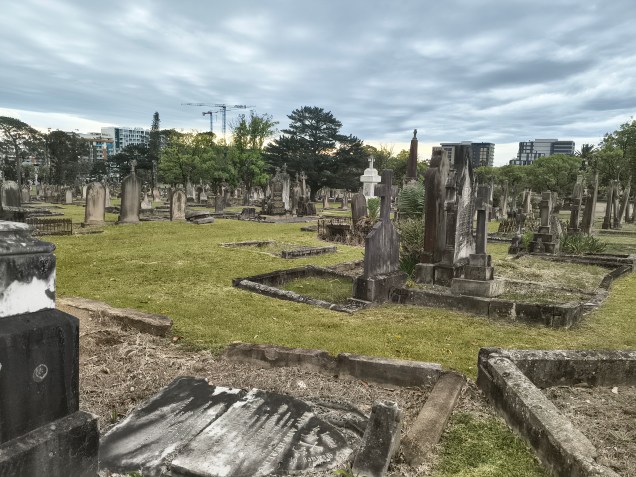
The Strathfield-Homebush District Historical Society has formally objected to the proposal to redevelop Carnarvon Golf Course and Coleman Park in Lidcombe as an extension of Rookwood Cemetery. They also oppose any suggestion to convert Hudson Park in Strathfield into cemetery land. Their objections are based on several key points:

Carnarvon Golf Course and Coleman Park are Crown Land designated for public recreation, and converting them to cemetery land would contradict their intended purpose. These areas provide vital recreational opportunities for the community, including sports, walking, and family gatherings. The loss of these spaces would negatively impact the health, social, and cultural well-being of local residents, especially as population growth and unit developments reduce private open space.

While acknowledging the need for more burial land in Sydney, the Society contends that repurposing these parks would only offer a temporary solution. We urge the government to seek long-term alternatives further west, rather than taking away land currently used for recreation.

The Society specifically objects to suggestions about converting Hudson Park into cemetery land, noting its historic, environmental, and recreational significance.  The Society highlights the investments made by Strathfield Council to upgrade Hudson Park for current and future needs.

The Society warns that repurposing these lands sets a dangerous precedent, undermining the integrity of public open spaces. That the proposals be rejected  alternative solutions for burial space be investigated that do not involve the loss of parkland.

Submission objection to Cemetery land expansion Sept 2025

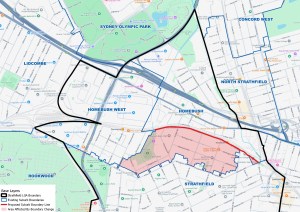
Proposal to rename parts of Homebush as Strathfield

The Strathfield-Homebush District Historical Society is a community-based, incorporated organisation dedicated to conserving, protecting, and promoting the history and heritage of the Strathfield–Homebush district. Due to the impact of the proposal to rename parts of Homebush as Strathfield, the Society opposes the proposal and urges Council to withdraw it.

Letter objection to Homebush renaming proposal – SHDHS September 2025

The key reasons for our position are:

  • Homebush is one of Sydney’s oldest suburb names, dating back to the early 19th century, and has been part of the Strathfield Municipality since its incorporation in 1885. Removing or replacing this name would blur the historic and geographic distinction between neighbouring suburbs and risk erasing an important part of Sydney’s heritage.
  • Council’s notification does not provide background studies, costings, or a balanced analysis of the proposal’s impacts. Further, the notification information appears to assume that the impacts are wholly positive, despite clear and significant consequences for community identity, local institutions, and heritage.
  • Claims of “confusion” regarding location are not substantiated. On the contrary, renaming an area serviced by Homebush Railway Station and containing long-established institutions such as Homebush Public School, Homebush Boys High School, Homebush Village Shopping Centre and Homebush Post Office as Strathfield would increase confusion for residents, businesses, and visitors.
  • If clarity of location is the actual concern, a more obvious issue is the shared postcode (2140) for the distinct suburbs of Homebush and Homebush West. This anomaly regularly causes misreporting in postal, demographic, and statistical records and is more deserving of correction.  Council could also consider restoring Flemington as the suburb name of Homebush West, which would provide greater differentiation with the suburb of Homebush.
  • The Society has no objection to the inclusion of the isolated property ‘Strathbelle’ on Beresford Road (which does not contain an address on the notification) being included in the suburb of Strathfield which is consistent with other properties in this street location.
  • Renaming a suburb involves significant practical costs, from updating signage, maps, and government records to requiring businesses, schools, and households to amend their documentation and communications. These resources could be better directed towards improving community facilities and infrastructure

Strathfield 140th Anniversary celebrations

An exhibition will be opening soon on to celebrate Strathfield Council’s 140th Anniversary of incorporation in 1885.

The exhibition will be held at Strathfield Library and Innovation Hub from 28 May to 27 July 2025.  This exhibition is a collaboration between Strathfield Council and Strathfield-Homebush District Historical Society.

Opening Night

The Opening Night will be held at 6pm on Thursday 5 June 2025 at the Library.

This is a free event and everyone is welcome.  Refreshments will be served.

Please RSVP to assist with catering by sending an email to  exhibitions@strathfield.nsw.gov.au

If you have any questions, contact Cathy Jones at email: strathfieldhistory@gmail.com

Seniors Morning Tea

Celebrating Strathfield: 140 Years Seniors Morning tea will take place at the Ironbark Room in Strathfield Library on Friday 13 June from 10am – 12pm. Registrations can be made via this link.

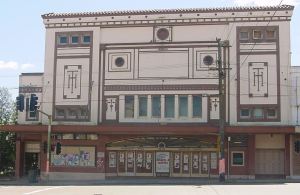
Homebush Theatre

A recent newsletter for the Strathfield-Homebush District Historical Society features a detailed history of the Homebush Theatre.   SHDHS Newsletter Vol. 6 Issue 6 Nov-Dec 2024 Homebush Theatre

The Homebush Theatre was built in 1925 and operated as a cinema until 1960.  Later it contained an Ice Skating rink and a theatre restaurant.

A copy of the Newsletter is attached.  The article also featured in Cinema Record, the quarterly journal of the  Cinema and Theatre Historical Society of Australia Inc in December 2024.   

Strathfield History talk – February 2025

A talk on the history of Strathfield will be held on Sunday 23rd February 2025 from 2.30pm to 4.30pm at the Ironbark Room at Strathfield Library.  The talk will discuss many historic topics and include a Question and Answer session at the end.

Afternoon tea will be served at 2.30pm.  This is a free event with support of Strathfield Council.  Everyone is welcome.

The speaker is Cathy Jones, Secretary Strathfield-Homebush District Historical Society.

If you have any questions, email: strathfieldhistory@gmail.com

To book a place at the talk, please scan this QR codeIMG_0083

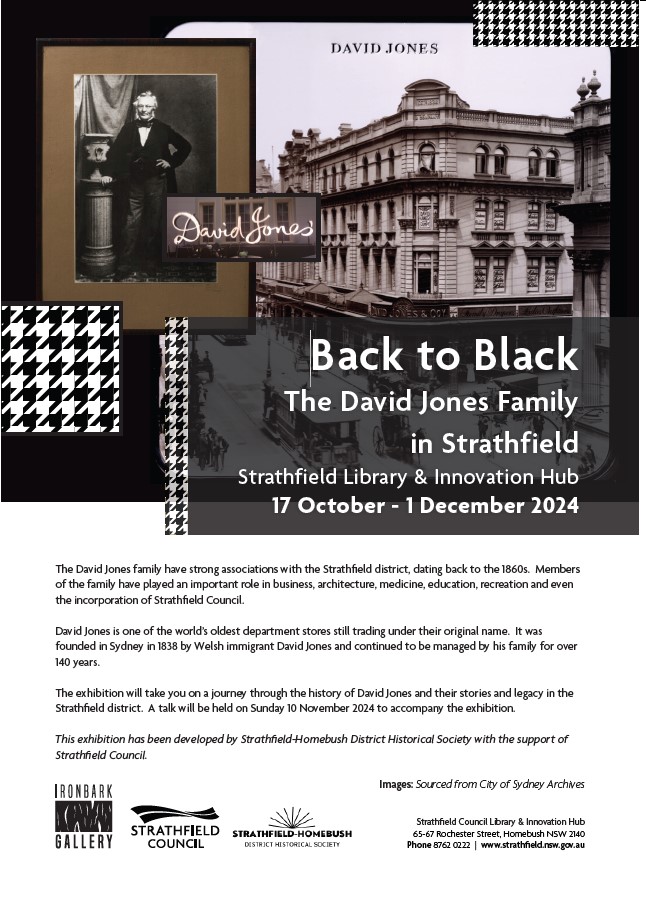
Back to Black – David Jones family in Strathfield

This new exhibition will be open from 17 October to 1 December 2024 at Strathfield Library.  It has been developed by Strathfield-Homebush District Historical Society with the support of Strathfield Council.

David Jones exhibition full page

OFFICIAL OPENING: Thursday 17 October 2024, 6pm. (Free entry)
RSVP: Thursday 10 October 2024
Bookings are required for the opening for catering purposes.
To book, please reserve at exhibitions@strathfield.nsw.gov.au

EXHIBITION:
17 October – 1 December 2024 at Strathfield Library & Innovation Hub (during opening hours)

TALK: Sunday 10 November 2024, 2.30pm – 4.30pm
Speaker: Cathy Jones, Secretary, Strathfield-Homebush District Historical Society

Entry is free. Afternoon tea provided, but you must book to attend.

BOOKINGS:

or
Bookings for David Jones exhibition talk

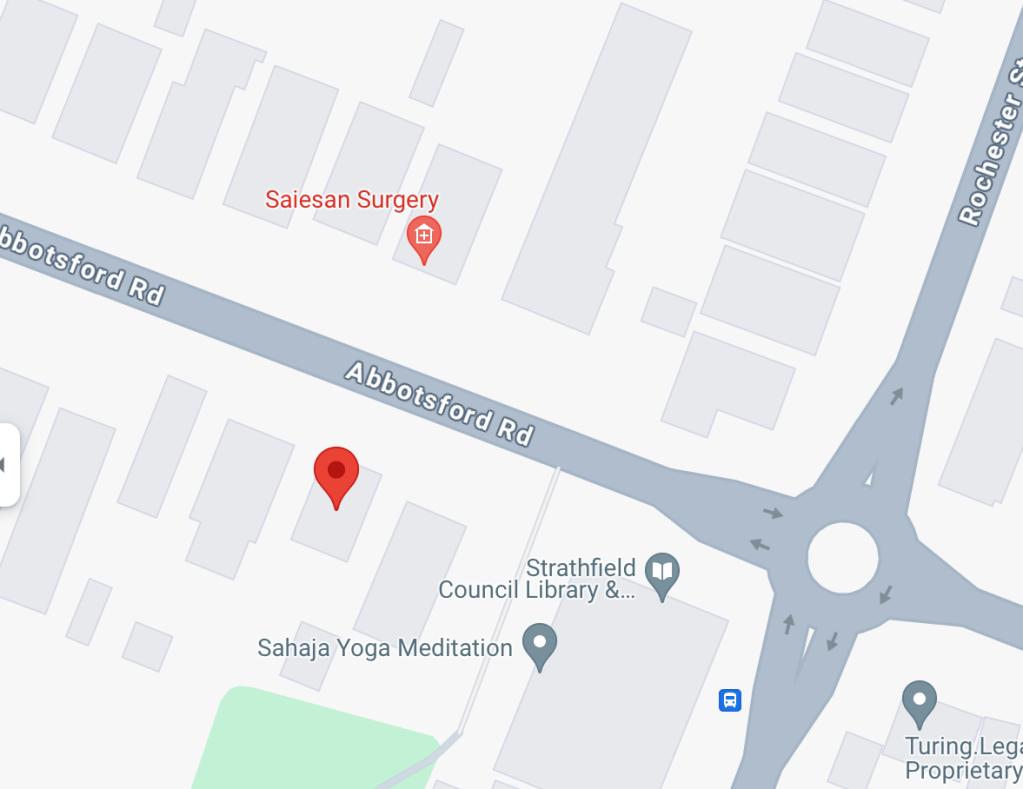
Demolition of heritage property 40 Abbotsford Rd Homebush


The Strathfield-Homebush District Historical Society have written to Strathfield Council to demand action on the demolition of a heritage property at 40 Abbotsford Road, located within the Abbotsford Road Heritage Conservation area

.Complaint demolition of 40 Abbotsford Road – Historical Society

History 40 Abbotsford Road Homebush 

Real Estate advertisement 2023 – contains photos and floor plans

Recently approval for extension of a rear addition was granted.  However, local residents have observed, behind large black fencing, the increasing demolition of the front of the house facing Abbotsford Road which was supposed to remain in-tact.  Last weekend, the rest of the house appeared to be demolished.

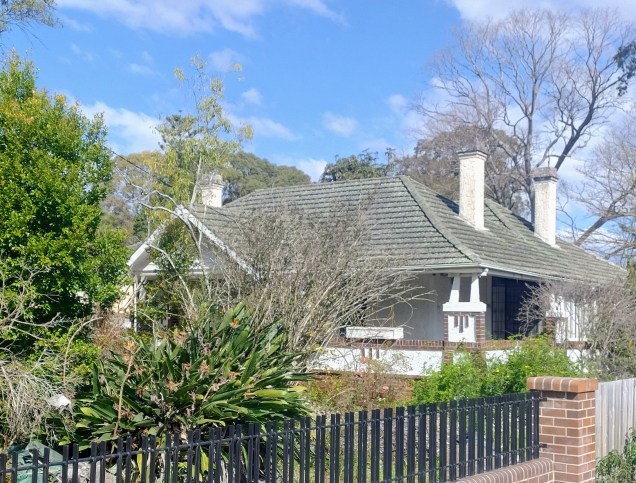
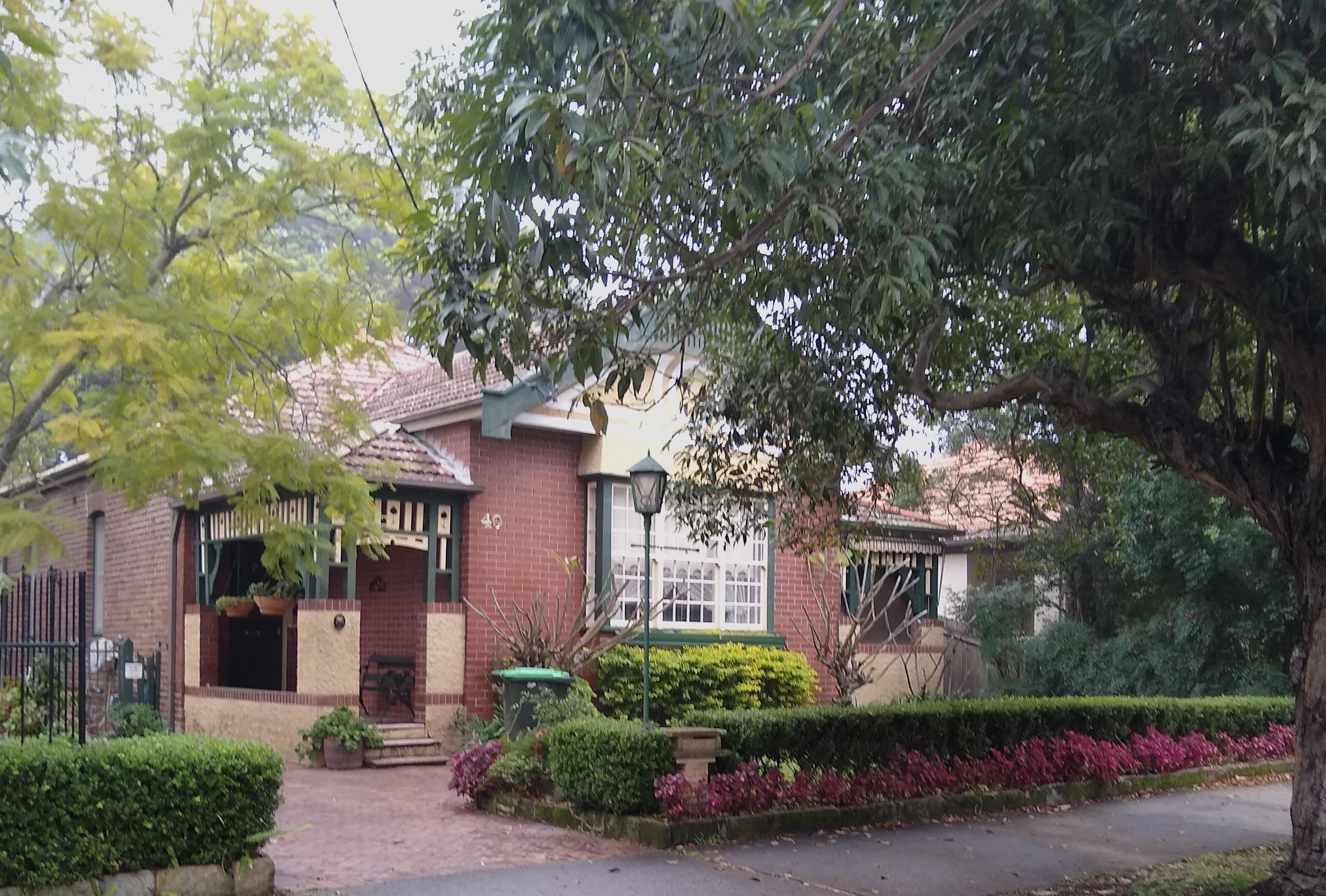
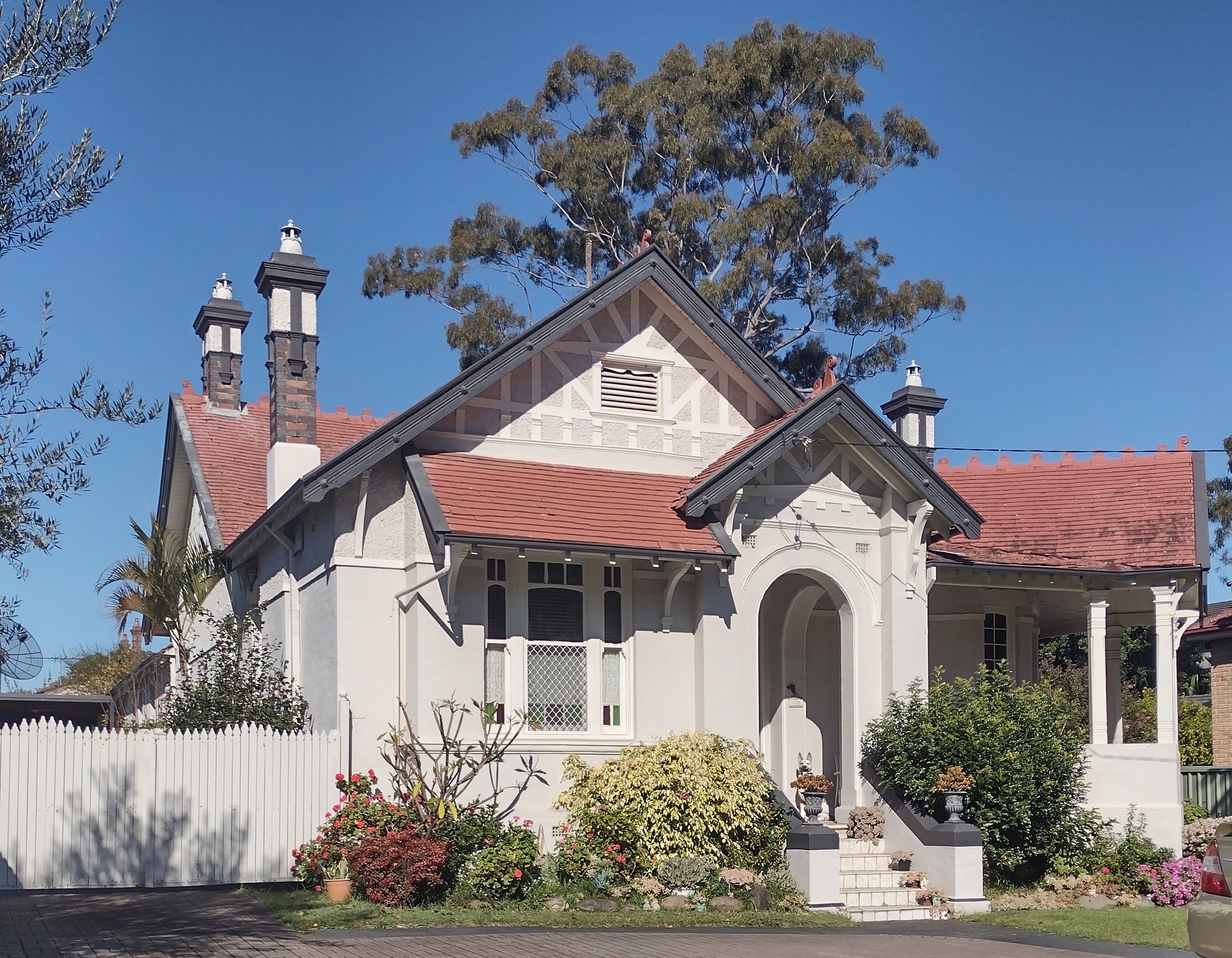
The house ‘Kiloyth’ was built in 1915/16 and is a late Federation bungalow.  It shares a history with 38 Abbotsford Rd, both built by the same owner/builder and both contribute to this much loved heritage conservation area of Strathfield and Homebush. They are located close to the Strathfield Library.

Please contact Strathfield Council and Jason Ya-Sen Li, State MP for Strathfield to support our actions.

  • Strathfield Council, phone: 02 9748 9999, email: council@strathfield.nsw.gov.au, mail: 65 Homebush Road Strathfield.
  • Jason Yet-Sen Li MP,  Phone 9747 1711, email strathfield@parliament.nsw.gov.au
Kiloyth’ 40 Abbotsford Road (pre-demolition)
40 Abbotsford Rd.  Photo Cathy Jones 2019
40 Abbotsford Rd. Photo Cathy Jones 2019

Condition of property June 2024

Talk on Victorian Italianate Architecture

Ethelstone 60 Broughton RdjpgA talk on Victorian Italianate architecture will be held on Sunday February 18th from 1.30pm to 3.30pm at Strathfield Library.

The speaker is Mark Sabolch who will be speaking on the ‘Italianate’ architectural style. Mark is from the inner west’s Ashfield and District Historical Society and has been studying the Italianate style in detail for the last half decade and recently visited England to investigate early examples of the style.  The “Italianate” architectural style is one of the dominant styles for substantial Victorian period dwellings throughout Sydney.  Mark will explore some fascinating questions: Where does the Italianate style come from? How have our places been influenced by English traditions? How did the Italianate style transition into the Federation style that shortly became so popular in Australia after the Victorian period?

This event is open to all members of the public.  An afternoon tea will be served.  Admission free.

Please book your attendance to help us with organising and catering.

https://events.humanitix.com/talk-on-victorian-italianate-architecture

Opening of Cooks River Exhibition 14 December 2023

The Cooks River: Yesterday, Today and Tomorrow is a new exhibition prepared by Strathfield Council and the Strathfield-Homebush District Historical Society.  The exhibition will be open from 14 December 2023 to 11 February 2024 at the Ironbark Gallery, Strathfield Library, 65-67 Rochester Street Homebush.

The official opening of the exhibition will be held on 14 December 2023 at 4.30pm.  To attend the opening, please RSVP by Monday 11 December.  Bookings are required and can be made at exhibitions@strathfield.nsw.gov.au

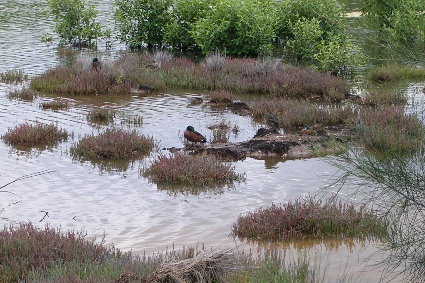
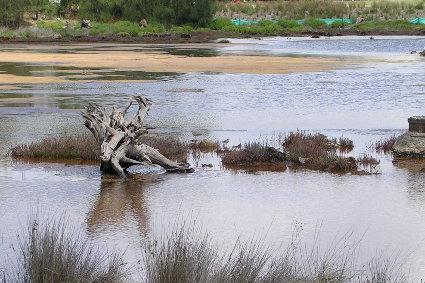
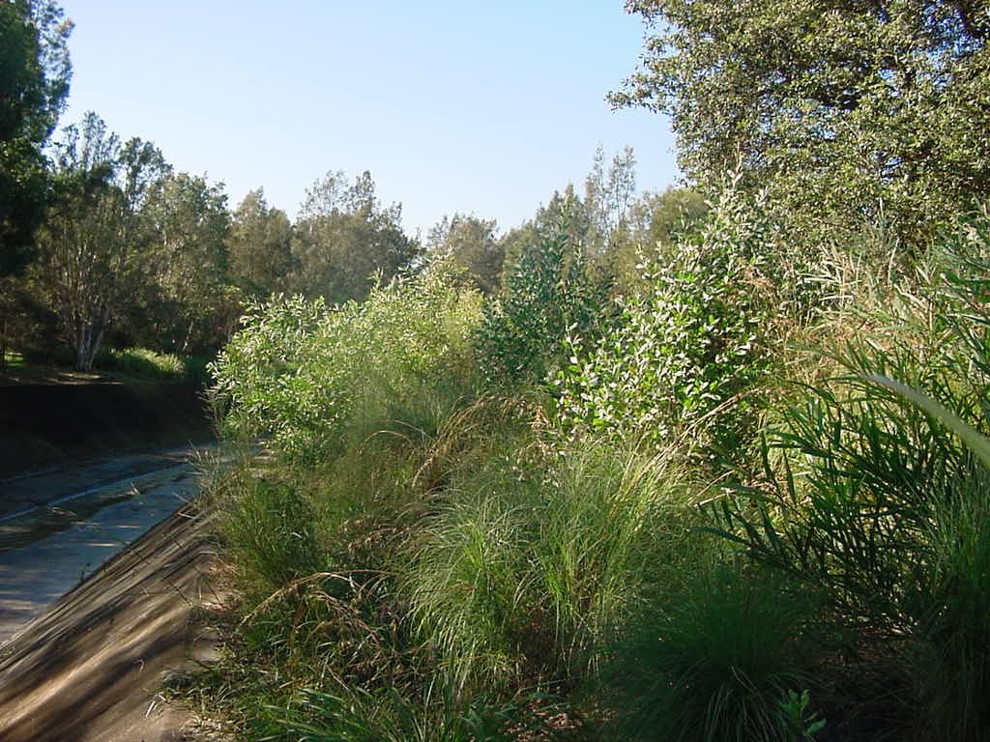
From its source at Yagoona to its mouth at Botany Bay the Cooks River passes through
Wangal, Gadigal and Gameygal lands. It provides an important biodiversity corridor of
vegetated habitat in parks, reserves and gardens adjacent to the river. Over the years Cooks
River has been fished, dammed, concreted, diverted and polluted – and rehabilitated.
Strathfield Council is custodian of the Cooks River as it meanders through its LGA and
partners with other organisations to improve both the health of the river and the liveability
of the communities within its catchment.

This exhibition will take you on a journey through the river’s rich history culminating in
recent projects and initiatives that protect and conserve the river and its biodiversity.
How can you contribute to its future?

Free talk – history of Strathfield Town Hall

IMG_2417The Strathfield Town Hall is 100 years old in 2023. For over 100 years, the Strathfield Town Hall has brought together the members of the local community, whether debating issues of the day, attending joyous social events, participating in civic defence and emergency services, celebrating arts and performance or commemorating wartime service and remembering the passing of loved ones.

To celebrate the 100th anniversary of Strathfield’s Town Hall, Strathfield Council has been hosting a number of events to commemorate the milestone.  One of these events is the Town Hall exhibition, which will open at Strathfield Library from Wednesday 1 November 2023 to 10 December 2023.  This exhibition was organised by Strathfield Council in collaboration with the Strathfield-Homebush District Historical Society.

Free talk

On Sunday 19 November 2023, a talk and afternoon tea will be held with Jenny MacRitchie and Cathy Jones as they highlight stories of the Town Hall’s rich history.

When: Sunday 19 November 2023, 2pm to 4pm

Where: Strathfield Library, 65-67 Rochester Street, Homebush

Registrations are essential for catering purposes.  Attendance is free.

For more information, please contact me at strathfieldhistory@gmail.com

Vale George Hallworth

I note the sad news of the passing of George Hallworth at age 98 years.

George Thomas Hallworth (1925-2023) was elected as an Alderman on Strathfield Council in 1980.  He served from 20 September 1980 to 23 September 1983.  He successfully contested the 1987 Council election and served a second term from 26 September 1987 to 13 September 1991.  

He served as Vice-Chairman of the Parks Committee in 1982-1983, Deputy Chairman of Community Services Committee in 1988 and Chairman in 1989-1990 and Chairman of the Library Committee in 1989, 1990 and 1991.

For many years, George operated a general store at Cave Road Strathfield.  He was very involved with the community life of the Strathfield area with his work for many organisations including Rotary, Meals on Wheels, Red Cross and Probus.  

He was married to Catherine Hallworth and had four children Vivien (dec), Lesley, Susan and Peter and had many grandchildren and great-grandchildren.

His funeral service to be held at St Anne’s Anglican Church, cnr Homebush and Beresford Rds Strathfield on Friday 3rd November 2023, appointed to commence at 11am.

The family had requested that In lieu of flowers a donation may be made to the Cancer Council.

St Ann’s Catholic Church Anniversary

In 2023, St Ann’s Catholic Church, Strathfield South is celebrating it 70th anniversary of becoming a Parish.  In 1953, the Rev. Father Patrick Kennedy was established as the first Parish Priest and served at St Ann’s until his death in 1971.  A full history of this historic Church is detailed in the attached newsletter.

SHDHS Newsletter Vol. 3 No5 St Ann’s Catholic Church

Strathfield Town Hall 100th Celebrations

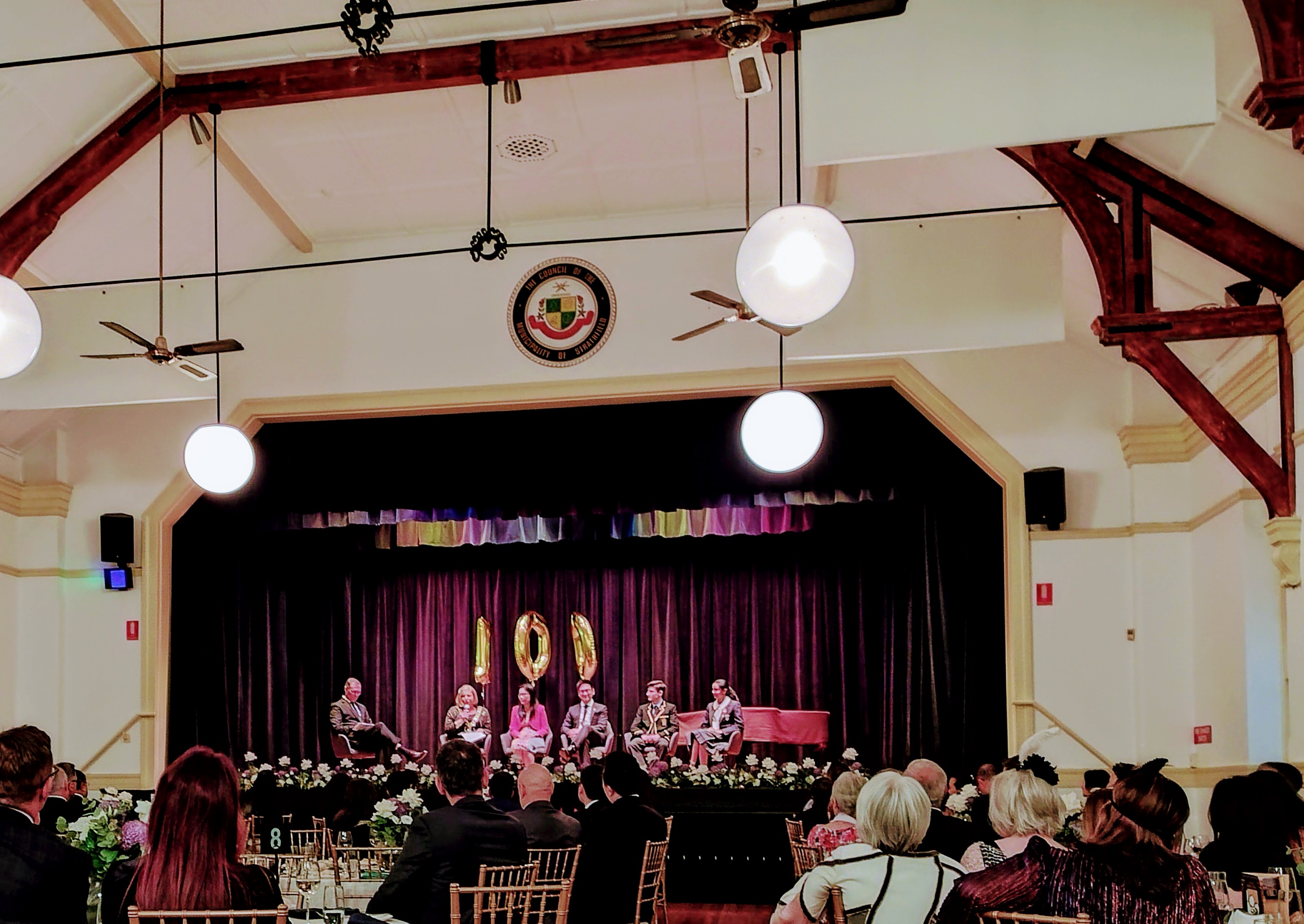
Strathfield Town Hall opening 9 October 2023. Photo Cathy Jones 2023.

The Strathfield Town Hall celebrated the 100th anniversary of its opening at an event held on Monday October 9 2023.  The event featured a history talk, panel discussion with the Mayor, local MPs and students from St Patrick’s College and Strathfield Girls High with music by the Strathfield Symphony Orchestra. The Town Hall History Exhibition was opened and available for viewing from 10 – 14 October 2023. The exhibition and talks were a collaboration between Council and the Society.

An expanded history talk was held on Wednesday 11th October at a well attended event at the Town Hall. The talks were given by Jenny McRitchie, Council’s Local Studies Advisor and Cathy Jones, Secretary of the Historical Society (& Chief Strategy Officer, Strathfield Council).

The Town Hall History Exhibition will be exhibited from 1 November to 10 December 2023 at the Ironbark Gallery at Strathfield Library.  The exhibition will feature additional exhibits, videos and photographs.  A talk is likely to announced during November.  Details will be posted when dates confirmed.

Celebrating Strathfield Town Hall Centenary

IMG_2359The Strathfield Town Hall celebrates the 100th anniversary of its opening on October 9 2023.  The Town Hall has recently had significant restoration works.

The celebrations include an official opening dinner, a morning tea with a historical talk and a historical exhibition. The Town Hall History Exhibition will be open to the community from 10 – 14 October and will also be exhibited at the Ironbark Gallery at Strathfield Library in late 2023. This exhibition was organised in collaboration with the Strathfield-Homebush District Historical Society.

Morning Tea Historical Talk

Council, in collaboration with the Strathfield-Homebush District History Society, will exhibit and host a historical morning tea.

Join us for a historical talk with Jenny MacRitchie and Cathy Jones as they highlight stories of the Town Hall’s rich history.

  • When: Wednesday 11 October, 10am to 12pm
  • Where: Strathfield Town Hall
  • Registration: Registrations are essential for catering purposes. Please register via this link or by emailing Council’s Events team on events@strathfield.nsw.gov.au

Historical Exhibition

This exhibition is open to the community at the Town Hall from Tuesday 10 October to Friday 13 October from 9am – 5pm, and Saturday 14 October from 10am to 2pm.

Official Opening Dinner

The event promises a special evening including live music performance by the Strathfield Symphony Orchestra, an enlightening historical discussion, and an engaging panel discussion.

  • When: Monday 9 October 2023
  • Cost: Tickets for this event will be $75 per person with all proceeds being donated to Suicide Prevention Australia.
  • Registration: Registrations are essential.

’Understanding Heritage’ talk

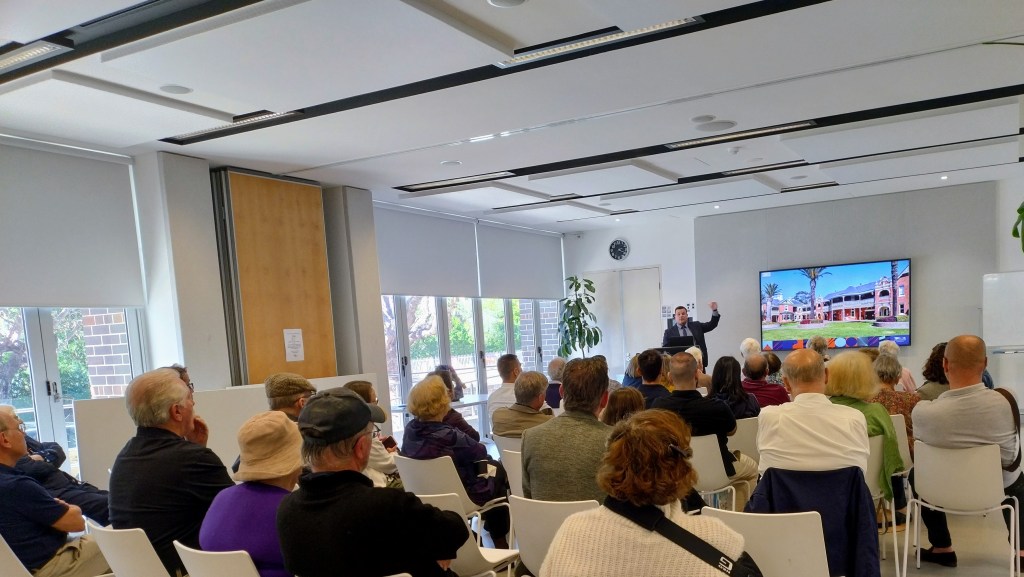
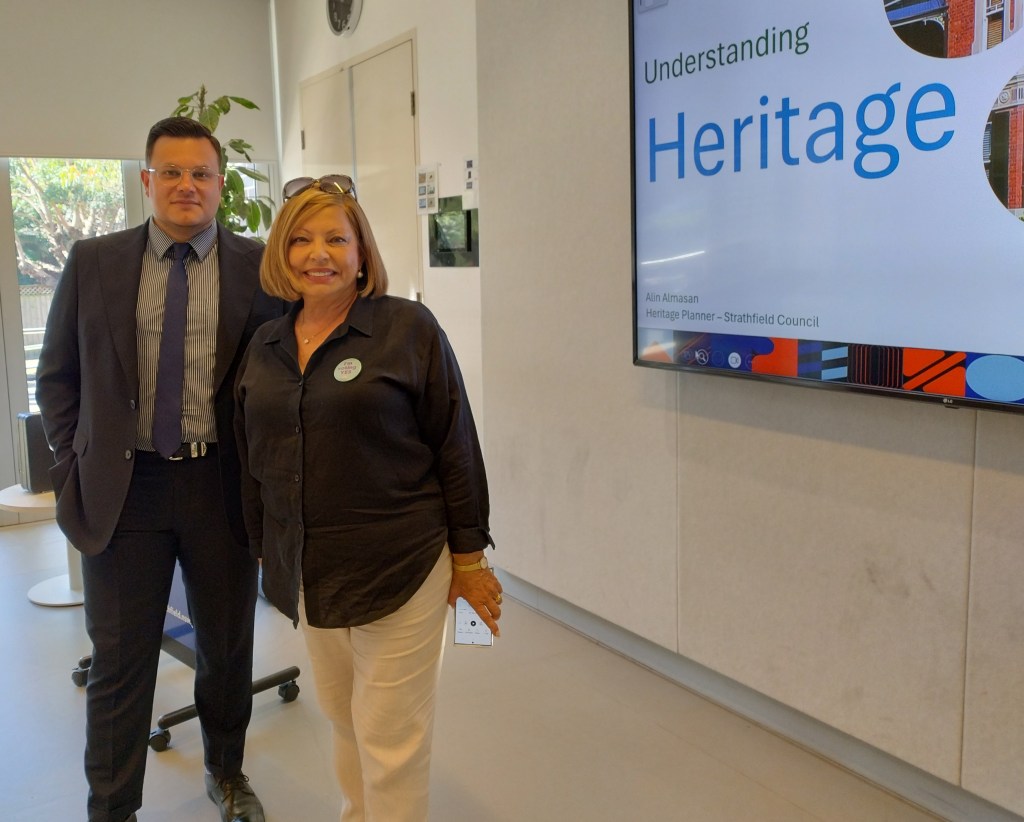
Thanks to everybody who attended the ‘Understanding Heritage’ talk yesterday at Strathfield Library. The afternoon session was opened by the Mayor of Strathfield Karen Pensabene followed by the talk by Alin Almasan, Strathfield Council’s Heritage Advisor, on heritage in the Strathfield area.

The talk provided an overview of heritage in the Strathfield area, many tips on maintaining older buildings and processes for development consent for alterations to heritage properties. The session was presented by the Strathfield Homebush District Historical Society, with support from Strathfield Council.

Watch this space for future events.

Talk – Understanding Heritage

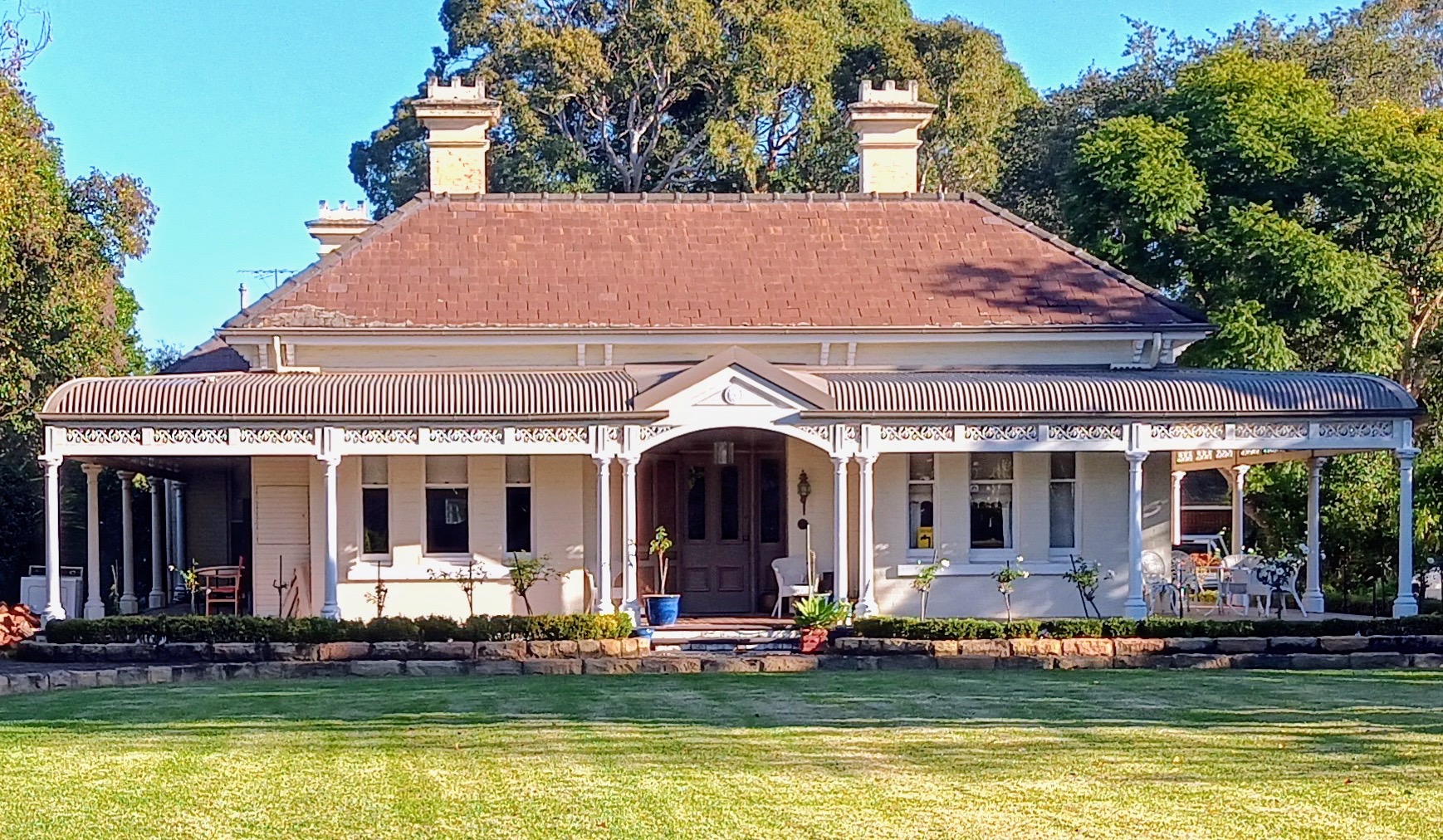
Hawthorne.  Photo Cathy Jones 2023
Hawthorne. Photo Cathy Jones 2023

Update: 22 September 2023

The booking system is not working properly.   If you want to come, please attend on the day.  There should be space.  Any problems, contact Cathy on 96421345 or email strathfieldhistory@gmail.com

A talk ‘Understanding Heritage’ will be held at 2pm Sunday 24 September by Strathfield’s Council’s Heritage Advisor.

Bookings: https://www.eventbrite.com.au/e/understanding-heritage-in-strathfield-tickets-709248590627?aff=ebdssbdestsearch

Join us for a talk that discusses the diversity of Strathfield’s cultural and built heritage and provides tips on how to maintain residential heritage properties. This in-person event will take place on Sunday Sep 24 2023 at 2pm.

We invite you to attend an interesting talk and afternoon tea.  This is a free event.

Also submit any history questions (relating to the Strathfield district) prior to the talk and hopefully we may have the answers!

Location: 65-67 Rochester Street, Homebush

Don’t miss out on this unique opportunity to expand your knowledge and gain a fresh perspective on our shared heritage. Mark your calendars and join us for an afternoon of learning. We can’t wait to see you there!

This event is organised by the Strathfield-Homebush District Historical Society. Thanks to Strathfield Council for their support.

Any inquiries, contact Cathy Jones at strathfieldhistory@gmail.com or phone 96423145

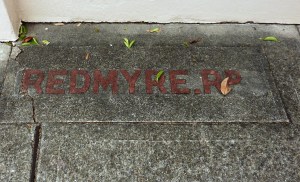
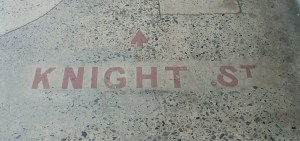
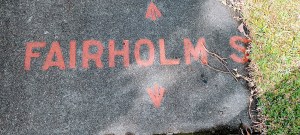
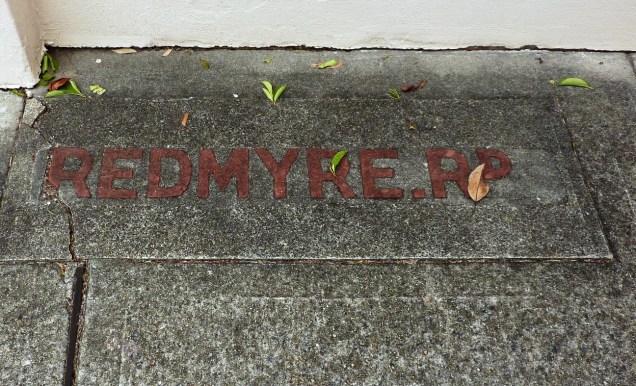
Street lettering on footpaths

Redmyre Rd
Redmyre Rd

There are still some streets with the historic red lettering in the Strathfield area.  Strathfield Council started installing metal plate street signs in the early 1920s along with numbering of streets.  There was an old metal street sign on a pole on Albert Road, near Homebush Road.

The majority of early footpaths appear to have been asphalted, while concrete was used on footpaths near shops with heavy foot traffic.  Council required that the owner contribute 50% of costs.

There is reference to the installation of the red lettered street names on footpaths in Strathfield Council minutes in 1926.  It is likely that as footpaths were increasingly concreted that lettering was added. The lettering was embedded into the concrete and was red coloured in contrast to the surrounding concrete. The red letters were made by a contractor and was held together by a wire formwork when the letters were set into the concrete. The footpath names are not stencilled.

It is unsure when Council stopped installing street name lettering on footpaths, however the practice of installing lettering on pavements was not unique to Strathfield Council. In Woollahra Council and parts of the former Municipality of Petersham (Petersham, Lewisham and Stanmore) which is now part of Inner West Council, street names were frequently embedded into footpaths.

Knight St
Knight St

Fairholm Street. Photo Cathy Jones 2023

Myrna Road. Photo Cathy Jones 2023

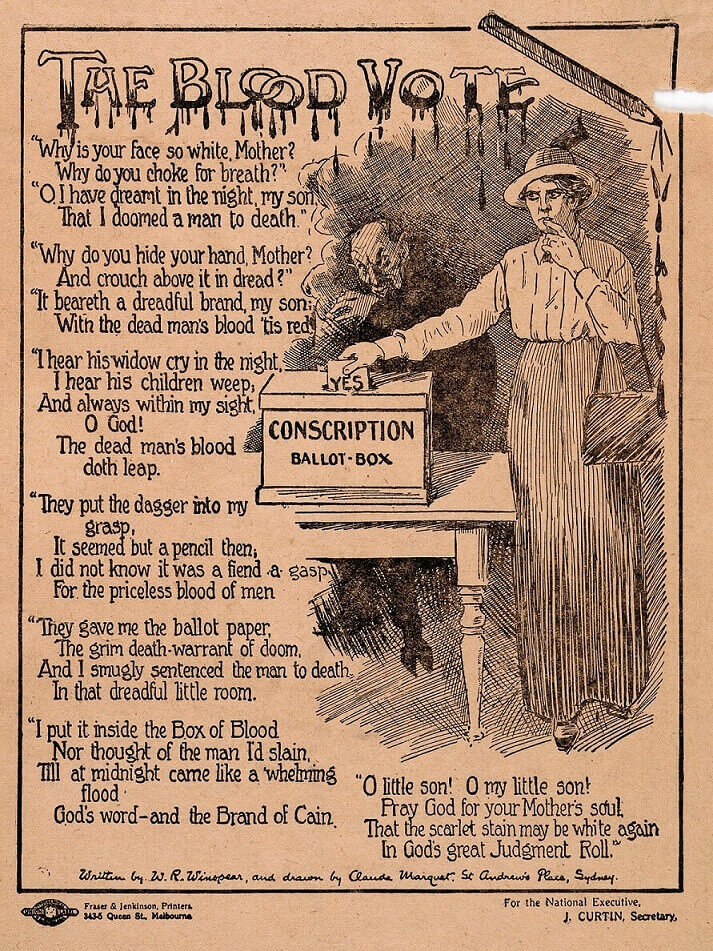
WWI and Conscription

The-Blood-Vote - Anti-Conscription poster
The-Blood-Vote – Anti-Conscription poster

ANZAC Day is commemorated on 25th April each year.  It marks the anniversary of the first major military action fought by Australian and New Zealand forces during World War 1. This March-April 2023 SHDHS newsletter features an essay by Cathy Jones discussing the impact of the World War 1 in the Strathfield district, particularly enlistment and the Conscription Referendums of 1916 and 1917.

An excerpt from the Newsletter:

“With the outbreak of World War 1 in 1914, recruitment of men and women to serve in the Australian Imperial Forces was on a voluntary basis only. Despite intense and divisive campaigns in Australia to introduce conscription to allow compulsory overseas military service, only Australia, South Africa, and India of the countries participating in the conflict did not introduce conscription during World War I.

The proposal to introduce conscription provoked furious debate within the Australian and local community. Both pro and anti-conscription meetings were held in Strathfield, Homebush and Enfield.  Meetings and rallies for and against conscription were held in Strathfield prior to the 1916 plebiscite. An anti-conscription meeting was held in Strathfield on 19 October 1916.  However, meetings and rallies against conscription appear to be out-numbered by those supporting conscription.

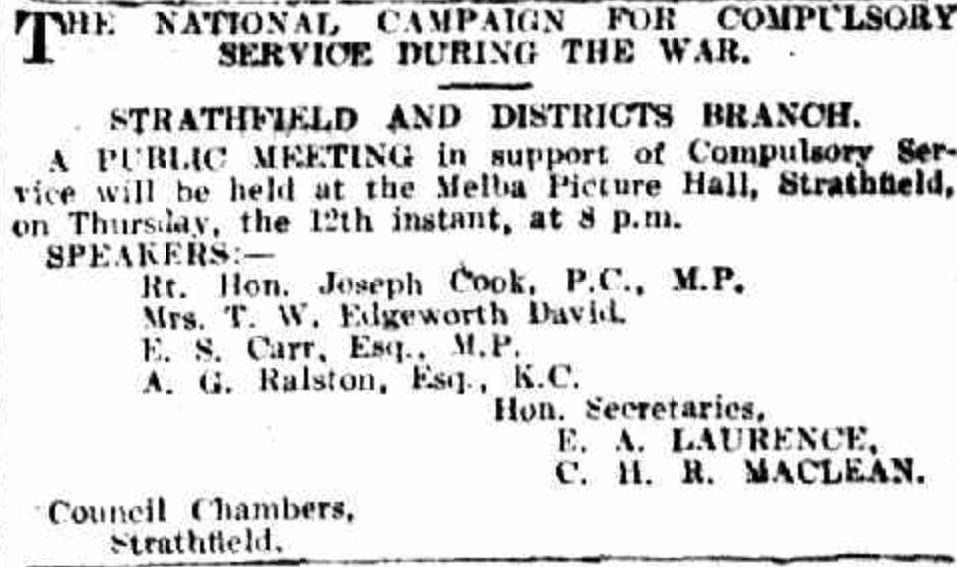
A pro-conscription meeting was held on Wednesday 11 October 1916 at Homebush at Railway Station near A G Ball’s Chemist Shop with Sgt Morehouse and W A Windeyer , at Enfield (opposite Ireland’s Hotel) with W E V Robson MLA  and Alexander Ralston. A large pro-conscription gathering was held at the Strathfield Melba Picture Show on October 1916 with the key speaker former Prime Minister Joseph Cook and Alexander G Ralston, barrister. Cook in his address argued for the need of conscription to recruit sufficient men to win the war. Alderman John Price of Strathfield Council told the gathering that the ‘said question to be decided was whether ……we were going to place Australia on a pinnacle of fame, or whether we should be disgraced forever among the nations’.

20210523_125708575_iOS

The referendum question on 28 October 1916, asked the nation ‘Are you in favour of the government having in this grave emergency, the same compulsory powers over citizens in regard to requiring their military service, for the term of this war, outside the Commonwealth, as it now has in regard to military service within the Commonwealth?’

In 1916, the areas of Strathfield and Homebush were located in the Homebush sub-division of the Electorate of Nepean. Polling booths were located at Flemington Public School, Homebush Public School, South Strathfield Public School and a temporary structure in Redmyre Road near The Boulevarde . While the Yes vote in the Nepean Electorate lost by a majority of 4272, the Homebush sub-division which included Strathfield defied the trend across the electorate and voted Yes (63%) for the referendum. The Yes vote in the Homebush subdivision was the highest in the Nepean electorate .

Women of Australia - Conscription - 1917Enfield and Burwood were sub-divisions of the Electorate of Parkes in the 1916 Referendum. Polling booths were located at Enfield Council Chambers, Croydon Public School, Burwood Public School and Milham’s Hall, Water St, West Enfield .

The results of the 1916 plebiscite were very close. 51.6% of the population voted against conscription and 48.4% for it. New South Wales returned majorities against and without a majority of states, the referendum was defeated.

In the ensuing political fall-out, the Labor Party split and Hughes formed a new political party called the Nationalist Party from the pro-conscriptionist Labor members. The Labor Party was severely divided on the issue and split within weeks of the ballot. After leaving the party, Prime Minister Hughes and other pro-conscription supporters created the ‘National Labor Party’, which was in competition with the Labor Party.

Enlistment numbers continued to fall, and in 1917 Hughes called for a second referendum for 20 December 1917.  The second referendum also failed to pass.

The debates concerning the second referendum were ‘vindictive and vicious’ following the aftermath of the great strikes in August and September 1917 and Third Battle of Ypres .  Hughes increased restrictions on reporting of anti-conscriptionist meetings, but ordered censors not to interfere with pro-conscriptionist reporting in the Sydney Morning Herald .  The ‘Yes’ campaign was strongly supported by Hughes and his political supporters, most Church and business leaders, and most newspapers .  Many in the ‘Yes’ camp hysterically portrayed anti-conscriptionists as the ‘enemy within’ .

The ‘No’ camp centred on the labour movement, many arguing that conscripting more men from Australia would have negligible impact on the fighting abroad and the final result .  While the union movement were short of funds after the recent strikes, the ‘no’ campaign was well organised based on its experience from the 1916 campaign.

SHDHS Newsletter Vol.5 Issue 2 March-April 2023 – WWI and Conscription Strathfield area

If you wish to receive newsletters, access to our archives and other benefits, please consider joining the Society

Trove Saved

Trove

In an announcement made on Monday 3 April 2023 the Arts Minister Tony Burke and Finance Minister Katy Gallagher has ended any funding uncertainty over the future of Trove.  Trove is a much used and beloved online access to a wide range of Australia’s cultural and social historical documents, photos, magazines etc.

The National Library will receive $33m over the next four years in the May Federal budget, then $9.2m per annum ongoing and indexed from July 2027, securing Trove’s future.

You can read the Library’s media announcement on its website (https://www.nla.gov.au/stories/news/2023/national-library-welcomes-announcement-ongoing-trove-funding) and in the Guardian (https://www.theguardian.com/books/2023/apr/03/trove-national-library-of-australias-digital-archives-thrown-33m-lifeline-by-federal-government) and the other newspapers.

Historic Houses Exhibit, Talk & Afternoon Tea – Jan 22 2023

cropped-cropped-albert-road-aerial-1922-document-size-117kb2-1.jpg

The Historic Houses of Strathfield exhibition will open on 20 December 2022 until 22 January 2023 at the Ironbark Gallery at Strathfield Library. 

Historic Houses of Strathfield explores the rise of the mansion houses in late 19th century and their eventual fate in the 20th and 21st centuries. The stories of the houses and the associated people also reflect the social, economic and political changes which occurred over a century of development in the Strathfield area. 

This exhibition will include photos, maps, videos and illustrations. 

Talk and Afternoon Tea

An afternoon tea and talk will be held on Sunday January 22 2023 at 2pm – 3.30pm at Strathfield Library.  

For bookings, go to https://www.eventbrite.com.au/e/strathfield-historic-house-exhibit-afternoon-tea-and-talk-tickets-489222396357

When: the exhibition is open from 20 December 2022 – 22 January 2023 2022 (during Strathfield Council Library opening hours)

Where: Ironbark Gallery – Strathfield Library, cnr Rochester Street and Abbotsford Road Homebush

Historical Plaques in Strathfield

The Strathfield-Homebush District Historical Society has installed historic plaques throughout Strathfield to commemorate historical places.  These plaques were installed by the Historical Society:

  1. Plaque located in Cotswold Road Strathfield outside ‘Strathfield Gardens’ (formerly ‘Fairholm’ built c.1880)
  2. Plaque located in Strathfield Avenue Strathfield where the house ‘Strathfield’ was formerly located
  3. Plaque located at 24 Homebush Road Strathfield outside the house ‘Verani’
  4. Plaque located at 65 Homebush Road Strathfield outside the Strathfield Council Chambers built 1887
  5. Plaque located on Homebush Road near where ‘Seven Oaks Farm’ first house on the 1867 Redmire Estate was located

Nigel Love and N B Love Industries

ž
ž

The November-December 2023 Newsletter features an article on Nigel Love and NB Love Industries which is still operating in Strathfield South.

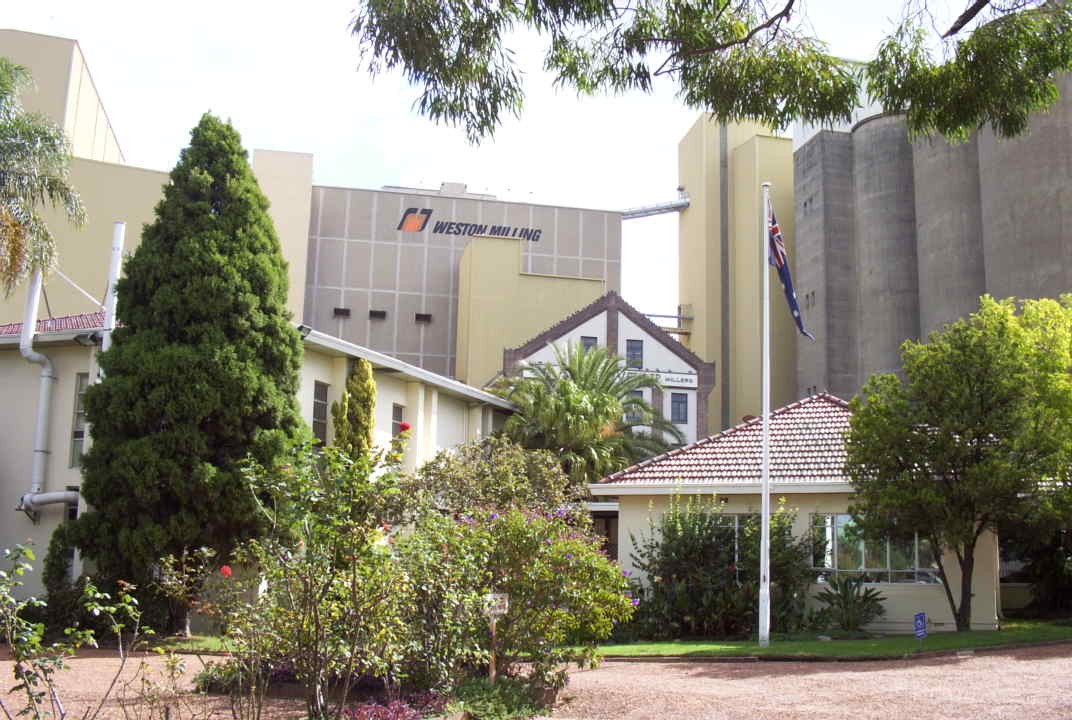
Nigel Love was an important figure in the history of aviation and flour milling in Australia.  He was born in Strathfield and spent much of life as a resident but also as founder of N B Love Industries at Enfield in 1935, a major local industry and employer which still trades at the same site today under George Weston Foods.

SHDHS Newsletter Vol. 4 Issue 6 N B Love Industries

If you wish to receive newsletters, access to our archives and other benefits, please consider joining the Society

Death of Queen Elizabeth

Figure 3 Newcastle Morning Herald and Miners' Advocate (NSW : 1876 - 1954), Saturday 6 February 1954, page 4
Figure 3 Newcastle Morning Herald and Miners’ Advocate (NSW : 1876 – 1954), Saturday 6 February 1954, page 4

The September-October 2022 Newsletter features an article on the auction of ‘Arnott-Holme’ as well as the Society Year in Review and the death of Queen Elizabeth.

On 8 September 2022, Elizabeth II, Queen of the United Kingdom and the other Commonwealth realms, including Australia, and the oldest living and longest-reigning British monarch, died at the age of 96 at Balmoral Castle in Scotland. She was succeeded by her eldest child, Charles.  Charles III was proclaimed King Charles as head of state of Australia on 11 September 2022 at a ceremony at Parliament House in Canberra.

A state funeral service was held for the Queen at Westminster Abbey on 19 September 2022, followed by a committal service later that day at St George’s Chapel at Windsor Castle. The Queen was interred in the King George VI Memorial Chapel at St George’s. A commemorative public holiday was announced in Australia for the 22 September 2022.

The Queen celebrated her 70th Anniversary or Platinum Jubilee of her ascension to the throne earlier in 2022.  The Queen visited Australia on sixteen occasions.  She is not known to have visited the Strathfield district, though on her 1954 tour, she visited the nearby Concord Park and the then Concord Repatriation Hospital (now Concord Hospital).

The Prime Minister of Australia, Anthony Albanese said:

“With the passing of Queen Elizabeth the Second, an historic reign and a long life devoted to duty, family, faith and service has come to an end.  This is a morning of sadness for the world, for the Commonwealth and all Australians. It is a day of profound sadness and grief for the Royal Family who have lost a beloved mother, grandmother and great-grandmother. The person who for so long was their greatest inner strength.

Australian hearts go out to the people of the United Kingdom who mourn today, knowing they will feel they have lost part of what makes their nation whole. It is a time of mourning for the people in Britain, across the Commonwealth, and indeed around the world. There is comfort to be found in Her Majesty’s own words: “Grief is the price we pay for love.”

This is a loss we feel deeply in Australia. Queen Elizabeth II is the only reigning monarch most of us have known—and the only one to ever visit Australia. And over the course of a remarkable seven decades, Her Majesty was a rare and reassuring constant amidst rapid change. Through the noise and turbulence of the years, she embodied and exhibited a timeless decency and an enduring calm. Her Majesty served our nation and the Commonwealth for 70 years.

She is the longest-reigning monarch in British history and, remarkably, the second longest reigning monarch of a sovereign state in world history. Her life of faithful service will be remembered for centuries to come. From the moment the young princess became Queen, Her Majesty’s dedication to duty and service over self were the hallmarks of her reign. Performing her duty with fidelity, integrity, and respect for everyone she met. We saw those qualities each time she visited our shores — and she graced us on 16 occasions during her reign, travelling to every state and territory across our vast continent.

Her first visit, with Philip, began on the 3rd of February 1954 — just eight months after her coronation. It was the biggest single event ever organised in Australia and it remains a defining moment in our nation’s history.  Some 7 million Australians — or 70 per cent of our population at the time — turned out to catch a glimpse of the young Queen passing by. Queen Elizabeth II was a wise and enduring presence in our national life. Sixteen prime ministers consulted with her – and sixteen governors-general served in her name.

SHDHS Newsletter Vol. 4 No5 Arnott Holme and Death of Queen Elizabeth

If you wish to receive newsletters, access to our archives and other benefits, please consider joining the Society

NSW Government auction of ‘Arnott Holme’ Albert Rd Strathfield

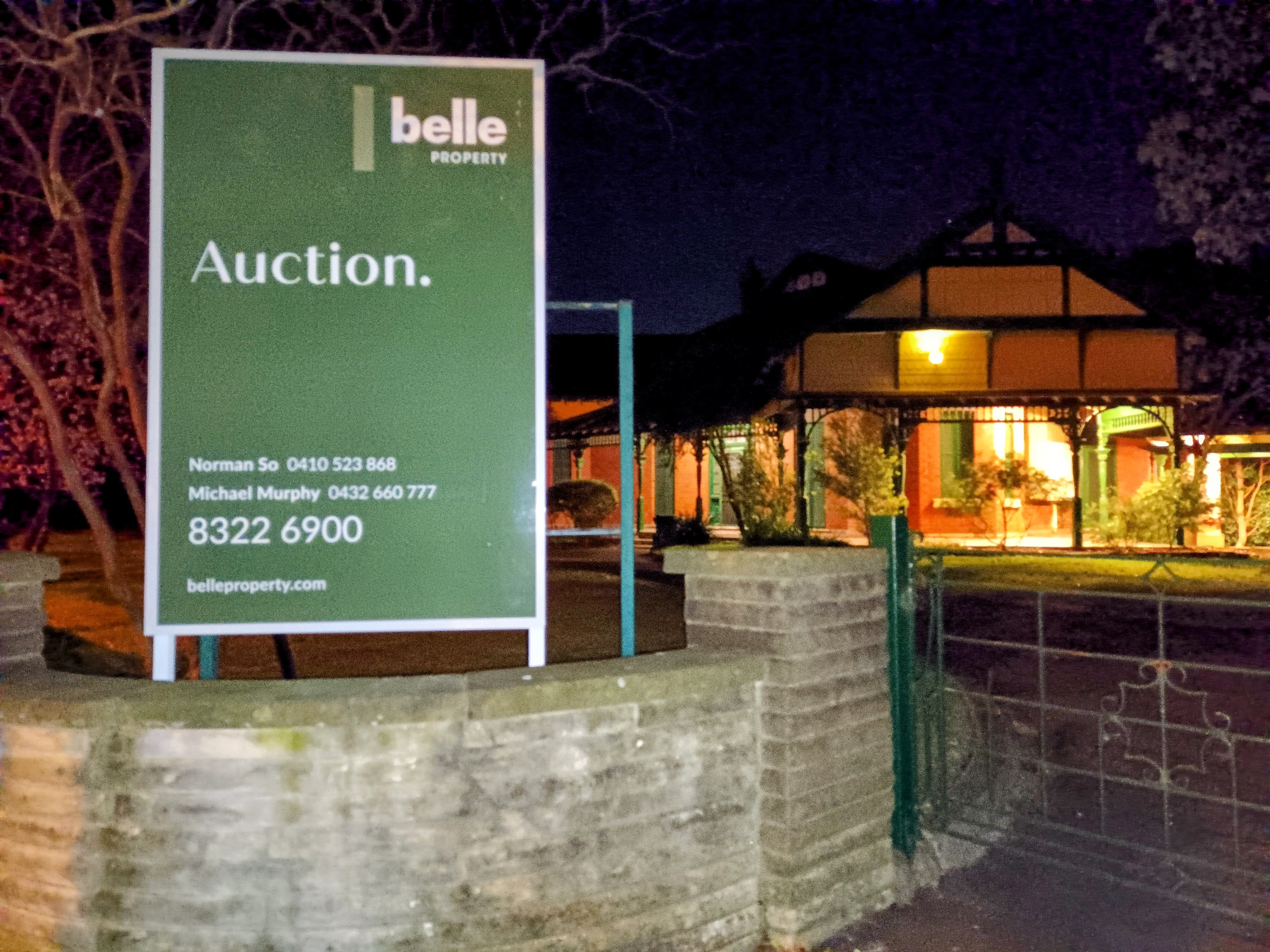
img_20220822_1946580612The Strathfield-Homebush District Historical Society has become aware of the proposed auction of ‘Arnott Holme’, 65-69 Albert Road Strathfield by estate agents, Belle Property.  Until recently, this property was a Technical and Further Education (TAFE) education office, which is owned by the NSW Government. This property was purchased in 1954 for £12,000 by the NSW Department of Education for the purposes of establishing a school for disabled children. Though the use of the premises later changed to a TAFE education office, the property has been maintained in the Strathfield area for nearly 70 years as a public educational institution.

it is obvious from the response of many concerned local residents that there has been no community consultation regarding the sale of this publicly owned asset. 
The Sydney Morning Herald reported on October 28 2021 that up to 19 TAFE campuses across NSW have been earmarked for sale.  The Strathfield property was not mentioned in the article or other public reporting.  Therefore, the erection of an auction notice on the site, has generated significant public concern about the future of the property and the privatisation of a publicly owned asset.  

Given the increases in population and demand for community facilities in the Strathfield area, why is the NSW Government able to sell off public assets without any notification, any apparent consideration about potential community uses of the property or any consultation with the local community?  These assets were acquired and have been maintained from public funding. If TAFE no longer needs the facility, why not commence discussions with other public agencies or Strathfield Council regarding utilisation of the property for community use? 

The property has significant historical and heritage value to the local community.  It is a heritage item listed on Strathfield Council’s Local Environmental Plan and is recognised by the Australian Institute of Architects (AIA) Register of Significant Buildings in NSW as an item of historical and heritage significance.    

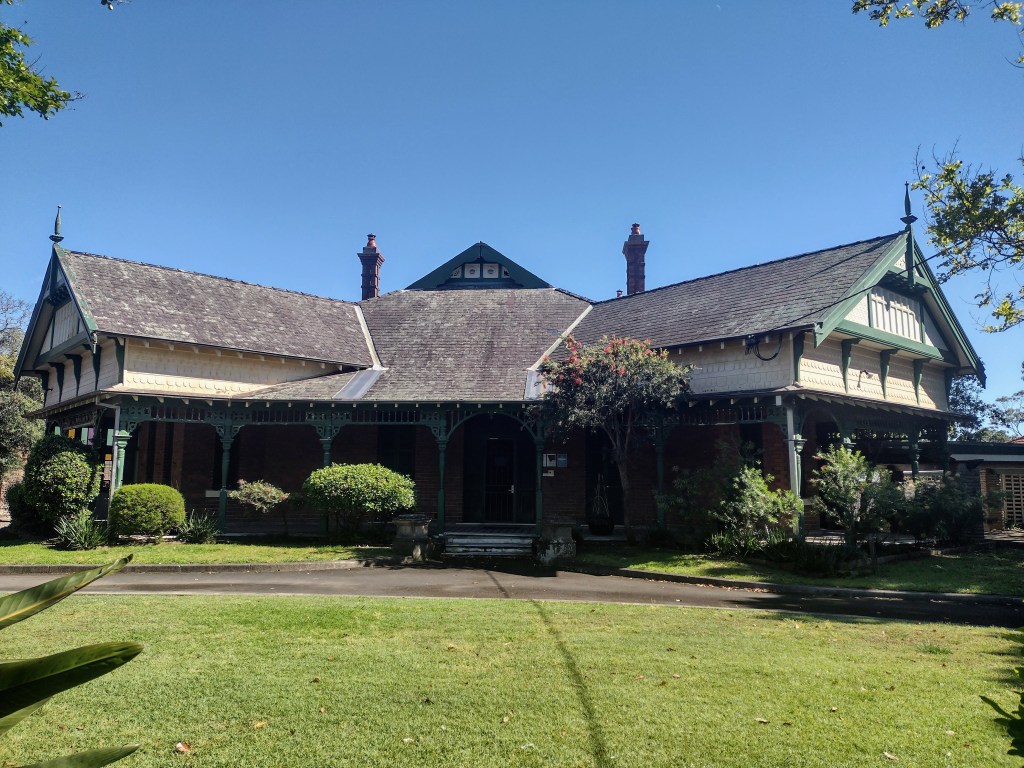
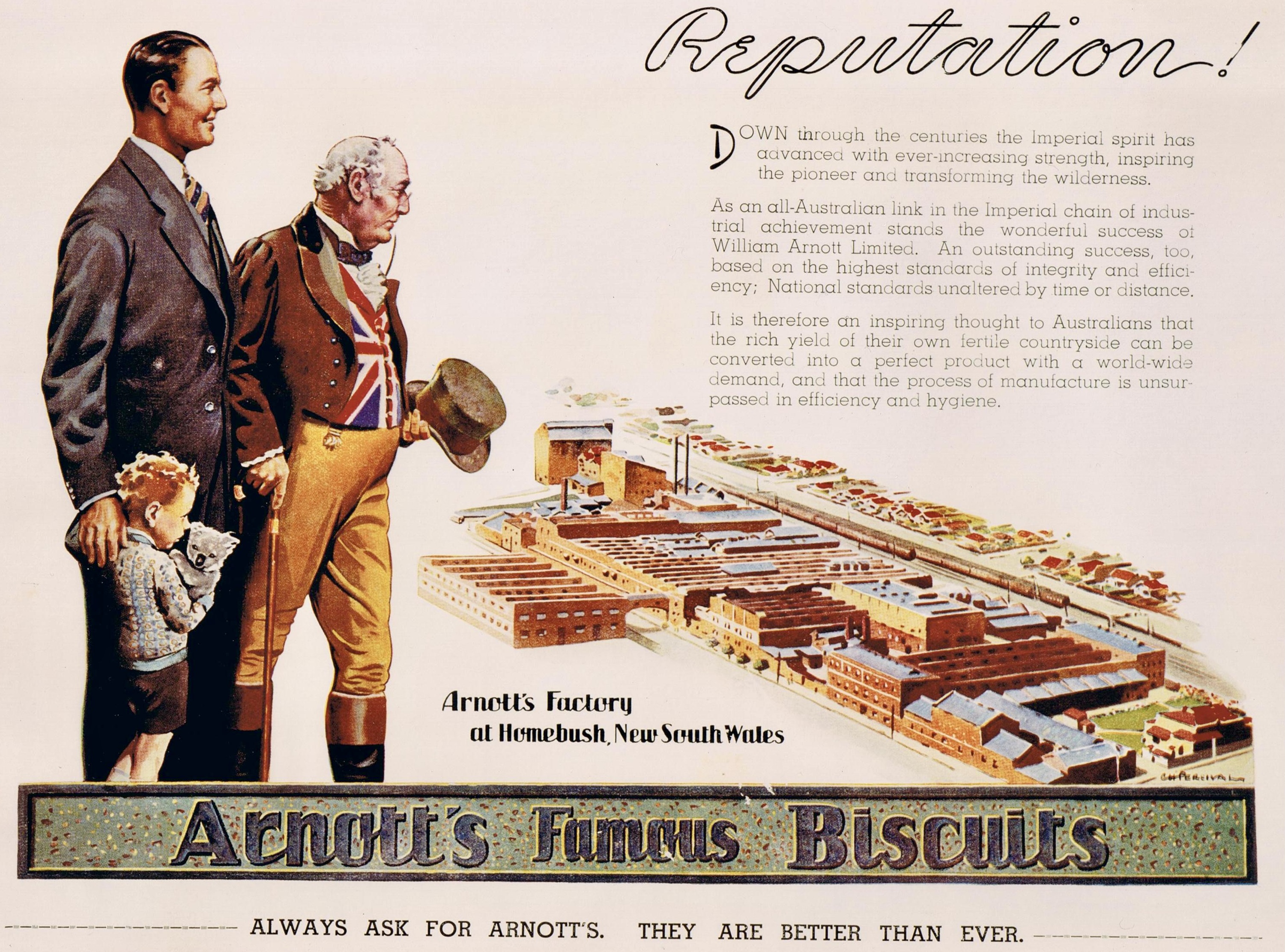
‘Arnott Holme’ was built in 1900 as a home for its owner William Arnott, founder of Arnott’s Biscuits, Australia’s largest biscuit company.  The Federation style house occupies a large site set within a mature garden landscape.  After Arnott’s death and until it was sold in 1954 to the Department of Education, it was owned and/or occupied by a number of prominent residents including Harry Jackett MP and Arthur Cozens, a tobacco merchant.  

The Society has sent a letter to the Member for Parliament for Strathfield, Jason Yat Sen-Li, requesting representations are made to the NSW Government and Department of Education regarding this process, which appears to have not included any transparency regarding the closure of the TAFE office and plans for disposal of a public asset.

Strathfield Shopping Centre 1930s/1940s

A resident of Strathfield, Ethel Lilleblade, recorded her memories of the shopping centre at Strathfield during the 1930s and 1940s for the Strathfield District Historical Society.  These were handwritten and undated but likely to be written in the 1980s.  She died in 1990 at the age of 86 years.

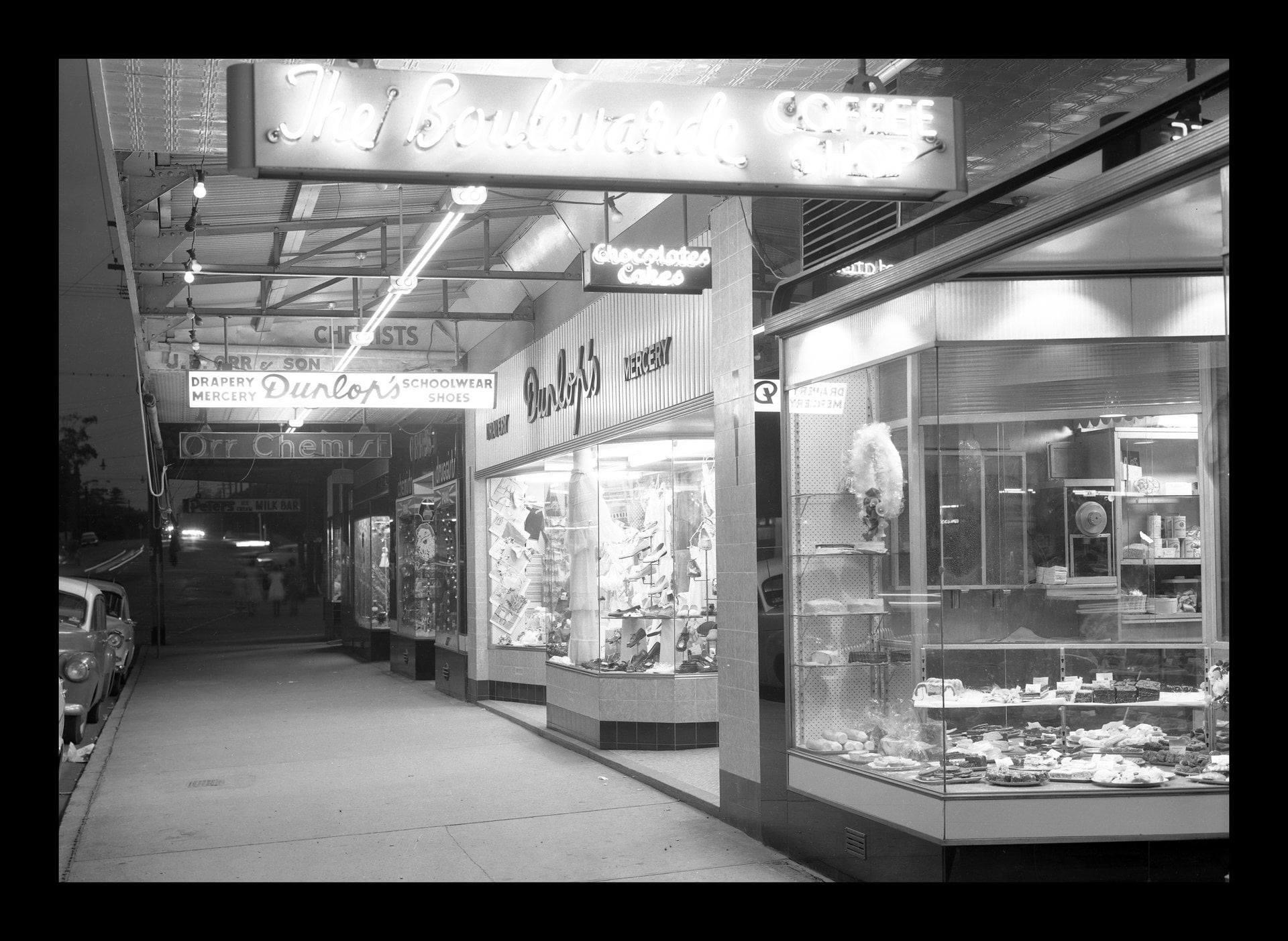
Strathfield Shops c.1930s The Boulevarde

Come with me to The Boulevarde, our shopping centre in the 1930s and 1940s. Remember Mr Jones with his cab (Horse drawn) at the station, sometimes sitting up top and sometimes asleep inside. He retired about 1936 to Narrabeen where he and his son started at the bus run from Narrabeen to Newport. Then across the road to the Rainbow Cake shop. Oh! Those delicious small cakes and sponges. On the corner Cameron and Kentwell, estate agents, Mr Clem Moore would greet you with “Good Morning”.

Alan Clancy, the Chemist who later moved to another shop, and next door, Max Nisbett’s library and interesting curios, Scobles the florist with their dainty work always held my interest, another chemist then – T. H. Dick. Maybe next door it was Lee Jones and family with the delicatessen where I always stopped for fresh homemade brawn. Gumby’s family butcher was always of interest to the children watching sides been cut up. Then the entrance to the professional suites where Dr Mary Manery had her rooms.

Jack O’Shea’s hairdressing ladies and men’s salon was always a bright place to visit and oh what a pleasure it was to visit the shop of Mr and Mrs Dunlop where chairs were provided for you whilst choosing your goods. The newsagent and bookshop was also a good place to spend some time in. Garden and Patrick, another florist, then Riddles the plumbers and Lusty’s Wood Coal and Coke yard. We just had to shop at Keary’s mixed business, where the children had to take a dip into the big lolly jars.  On the eastern side Shaughnessy’s Milk Bar held pride of place, where the scouts would gather after their meeting, Scobles delicatessen where you watch your ham being sliced so thinly it nearly melted in your mouth.

The men and the boys liked Stan Richards store where they could buy their odds and ends for sport and the fishing gear. The fish and chip shop held the children as in the window was a model of a paddlewheel steamer with Popeye guiding it into the water but it never seemed to go anywhere. Mr Hinks, Dry Cleaner and Manton Driving School came next. Pattens grocery store, where it was interesting to see the butter being cut up with wire and it always seem to have a little more patted on to the top to make the weight right.

Treasure Island‘s first shop, which burnt down but later was reopened along further, Natali’s fruit and vegetable store, and a few more shops to the Bank of New South Wales which opened about 1935.

Across Lyon’s Rd, to Alley’s store where you could buy most anything you needed, and Dance bros garage is still there. Don’t let us forget Mr Ottway, the Postmaster and one of his helpers, Mr Ryan.

Being well into my 80s I may have placed some stores in the wrong place and side, but these are the stores I mainly dealt with and oh for those storekeepers who took pleasure to deliver the goods, sometimes they were at my home before I was there and the children rush to get the cornucopia of boiled lollies. Then the war came and then many stopped delivering to the homes. These are just a few memories of the early shopping days.

Strathfield Industrial Heritage Exhibition

The Industrial Heritage of Strathfield Exhibition, Minding Our Business, is presented by Strathfield-Homebush District Historical Society and Strathfield Council. The exhibition is open during Library opening hours from Friday 17 June 2022 to Sunday August 14 2022.AF675189-7951-4FC8-9F20-32D5329EF3F9

This exhibition explores the many businesses which were based on the Strathfield district from the 19th century, usually located close to rivers or transport such as railways and major roads. The district’s central location facilitated transportation of materials and goods across Sydney and beyond from businesses as diverse as Arnotts Biscuits, EMI/HMV records, Ford Car manufacturing, Textile factories, Flour Mills, Cattle and Sheep Stockyards and Brickworks. Industrial development also supported growth of worker populations and housing in the southern and northern ends of the Strathfield Council area in the early to mid 20th century.

Opening: The exhibition opens on Thursday 16 June 2022 at 6pm. View the exhibition and enjoy the refreshments. Please register to attend at https://www.eventbrite.com.au/e/opening-night-industrial-heritage-of-strathfield-exhibition-tickets-353442645467

Talk: A talk will be held on Sunday 31 July 2022 at Strathfield Library commencing at 12.30 for refreshments and 1pm for the talk. The event finishes at 3pm. Bookings at https://www.eventbrite.com.au/e/354877467057


Historic Houses of Strathfield Exhibition 2021

https://www.eventbrite.com.au/e/opening-historic-houses-of-strathfield-exhibition-tickets-206912008387?aff=ebdssbdestsearch

You are invited to attend the Historic Houses of Strathfield exhibition at Strathfield Library.

OFFICIAL OPENING EVENT will be held on Thursday 16 December 2021 6pm. Refreshments served. Free entry. Booking at https://www.eventbrite.com.au/e/opening-historic-houses-of-strathfield-exhibition-tickets-206912008387?aff=ebdssbdestsearch

EXHIBITION – will be shown from 16 December 2021 – 6 February 2022.  Open during Library opening hours. Free entry.

LECTURE – will be held on Sunday 6 February 2022 12.30pm for 1pm lecture. Refreshments served.  Free entry. https://www.eventbrite.com.au/e/lecture-of-historic-houses-of-strathfield-tickets-228196129767

About the Exhibition

Historic Houses of Strathfield explores the rise of the mansion houses in late 19th century and their eventual fate in the 20th and 21st centuries. The first Australia economic boom from the 1850s to 1890s coincided with the residential development of the Strathfield district.  Many wealthy merchants and professionals viewed Strathfield as the ideal place to build large and lavish homes, supported by rail access to the City where their businesses were located.  By the 1890s, Strathfield was considered one of the premium suburbs of Sydney.  

However, this was not to last.  Decline commenced with the 1890s Depression followed by significant and continued economic and social change. The exhibition features photos, maps and illustrations of the stories of the houses and their owners. Visit the exhibition and attend the lecture. Presented by Strathfield-Homebush District Historical Society with support from Strathfield Council.

For further details, email Cathy Jones at strathfieldhistory@gmail.com, or cathy.jones@optusnet.com.au. Phone 02 96423145.

Request IHO – ‘Konubia’ 40 Beresford Road Strathfield

0E6AD785-F477-44CE-866A-0D160DE9FC63The Strathfield-Homebush District Historical Society wrote to Strathfield Council on 8 November 2021 to request that an Interim Heritage Order be placed on 40 Beresford Road Strathfield as a matter of urgency.  This house is currently on the market and is not heritage listed, though is adjacent to a number of heritage listed properties.

The house should meet the criteria for heritage listing of local significance.  The potential loss of this house would affect other heritage properties located close to this house.

The house at 40 Beresford Road Strathfield is called ‘Kobunia’ and is an relatively in-tact Queen Anne style Federation bungalow built c.1909.  It is surrounded by a large number of heritage listed items and areas.  However, this house has not been listed.  The house is currently listed for sale and is being marketed as having no heritage protection and is suitable for re-development. The property is set to go to auction on 13 November 2021. 

40 Beresford Road is consistent with the character and style of the other similar heritage items and areas on Beresford, Albert, Homebush and Broughton Roads.  40 Beresford Rd is a substantial Queen Anne house, very similar in style and design to other very impressive Queen Anne homes situated surrounding this property along Homebush Road and Albert Road at rear. The western side of Homebush Road between Redmyre Road and Beresford Road features some of the most impressive Queen Anne homes in the district and these are recognised for their significance as local heritage items and also covered by the Homebush Road heritage conservation area, which also includes some impressive church buildings on the eastern side of the street.

The potential loss of this house would detract from the heritage character of this area of Strathfield and the other heritage listed properties.

The history of ‘Konubia’ is detailed at
https://strathfieldheritage.com/streetnames/beresford-road-homebush/

The house features most of it’s original details and retains decorative chimneys, roof, lead-light windows and doors, tall ornate ceilings (possibly a mixture of pressed metal and plaster), detailed timber work, etc. It is interesting to note that the house has some resemblance to “Ravenswood”, 67 Homebush Road Strathfield, which is owned by Strathfield Council, in the detailing in/around the gables, chimneys and where the brick is not painted in the chimneys appears to have similar multi-coloured brown colour of brick.

Belfield: Suburb History

Maria Reserve Belfield 2007 following revegetation

The suburb of Belfield is partly located in Strathfield Council and Canterbury-Bankstown Councils. The section of the suburb of Belfield located in the Strathfield Council area is bounded by the Cooks River and Coxs Creek Stormwater Channel at the north and Punchbowl Road at the south, Cosgrove Road (at west) and Coronation Parade (at east).

The Historical Society newsletter discusses the history of this suburb.

SHDHS Newsletter Vol. 3 No.4 July-Aug 2021 Belfield – website

If you wish to receive newsletters, access to our archives and other benefits, please consider joining the Society

Historic Houses of Strathfield exhibition

Strathfield-Homebush District Historical Society is preparing a new exhibition at the Ironbark Gallery, Strathfield Council Library & Innovation Hub from December 2021.  

Historic Houses of Strathfield explores the rise of the mansion houses in late 19th century and their eventual fate in the 20th and 21st centuries. The stories of the houses and the associated people also reflect the social, economic and political changes which occurred over a century of development in the Strathfield area. 

This exhibition will include photos, maps and illustrations.  A lecture accompanying the exhibition will be held during the exhibition period (dates to be determined). 

When: December 2021 – February 2022 (exact dates to be determined) (during Strathfield Council Library & Innovation Hub opening hours)

Where: Ironbark Gallery – Strathfield Council Library & Innovation Hub, Rochester Street Homebush

Railway Station Estate & Stanley Rickard

SHDHS Newsletter Vol. 3 No.3 May-June 2021 Railway Station Estate Strathfield – website

The Federation style cottages located between 42 and 58 Albert Road Strathfield are the last remaining buildings standing from a large estate of thirty buildings located on Albert Road and Churchill Avenue designed by architect Stanley Rickard and built from 1904 to 1906.

There are example of Federation estates in Sydney such as the Haberfield estate developed by real estate agent Richard Stanton or the Daceyville estate, designed by John Sulman, which featured a developed housing estate conformity in styles, form and setting.  Rickard’s estate in Strathfield featured a range of single storey and semi-detached Federation style cottages that was less ambitious than the Haberfield estate, however, it is rare to find examples of planned estate unified by conformity in style and form by a single designer in the Strathfield area.

42-58 Albert Road Strathfield

Former Strathfield District Historical Society

sdhs-1st-meeting-noticeThe first Strathfield District Historical Society was established in 1978. According to NSW Fair Trading, the Society’s incorporation was cancelled and newspaper reports in 2014, stated that some members of the Society voted to wind it up. Many members were not aware of the decision to wind up nor what occurred to the Society after this decision was taken. In tribute to the early members of the Society who left a genuine legacy of research and activity, this article is dedicated to them.

The present Strathfield-Homebush District Historical Society was formed in 2018 to carry on the work of the previous society.

Moves to establish a historical society date back to the early 1970’s, when resident groups made many approaches to Strathfield Council to establish a society. The early 1970’s saw a growing interest in local history, much motivated by concern that Strathfield was undergoing physical and cultural change, yet little of its’ history had been researched, documented or preserved. This concern was not unique to Strathfield, many other local government areas such as Burwood established historical societies in similar timeframes and for similar reasons.

With increasing demand for historical information, particularly from local schools, Strathfield Council produced a booklet entitled ‘Some Notes on the Strathfield Municipality’ in 1974. Primarily written by former Strathfield Council Town Clerk, James Sandry Matthews and with the involvement of Alderman Helen L’Orange, this publication was the first official account of Strathfield’s history and copies are still available from Strathfield Library. Some care should be exercised using this booklet as it contains some inaccuracies, which were uncovered by later research. A frequently quoted ‘fact’ that Strathfield was named after the home of the ‘first Mayor John Hardie’ is contained in this publication and appears with irritating frequency. The first Mayor was George Hardie, who lived at ‘Torrington’, while John Hardy, the jeweller, lived at ‘Strathfield’. In fact Strathfield was chosen as the name of the new Municipality prior to the election of the first Council and the election of the first Mayor.

 On October 19 1976, Strathfield Council adopted resolution from the Council’s General Purposes Committee with recommendations from Alderman Evan Summerfield to investigate establishing a Historical Society. The Mayor’s Report of 4th April 1977 recommended the formation of a steering committee with the purpose of establishing a Strathfield Historical Society and that the rear section of the Homebush Hall be made available to the Society.

The Western Suburbs Courier reported on 19th July 1978 that a public meeting was called by the Mayor of Strathfield Alderman Clarrie Edwards to gauge the interest in forming a Historical Society. This meeting was addressed by Mr Harry Harper of the Royal Australian Historical Society, who spoke of the objects and ideals of a society and of the appropriate steps to prepare for its formation. As over fifty residents attended this meeting, it appeared sufficient interest existed to form a Historical Society.

The first meeting of the Strathfield District Historical Society was held on 9th August 1978 with eighty-five foundation members. Guests at the first meeting included Mr Gordon Jackett MP [Burwood], the Mayor of Strathfield Alderman Clarrie Edwards and Deputy Mayor Rod Thurgar. The Western Suburbs Courier of 23rd August 1978 reported that Sir William and Lady Sonia McMahon supported the establishment of the Society by becoming Foundation members. At the meeting, the Mayor handed over the keys to new premises, the former Homebush Library Building at 75 Parramatta Rd Homebush. Office bearers were elected at the first meeting, which included: President: Mr M B Moroney; Vice-President: Mr Brian McDonald; Secretary: Mrs Trudi O’Neill; Treasurer: Mrs Doreen Rich; Committee Members: Brian McDonald, Syd Malcolm, Mary Farr, Julie Corbett, Lorraine McDonald and Joan Reaby. One of the first resolutions of the Society was to seek affiliation with the Royal Australian Historical Society.

 The Society’s first newsletter issued in February 1979. The objective of the newsletter has been publication of research, particularly relating to the Strathfield District. Over the last 25 years, a number of Society members have been regular contributors to the newsletter. Early editions featured the work of Syd Malcolm, who particularly excelled in his comprehensive and detailed research of many of Strathfield’s historic properties and estates. Syd also recorded and transcribed many oral histories of long-term residents and through this work, Strathfield gained valuable insight into periods such as late nineteenth century Strathfield, which could not be recorded today as too much time has elapsed. Our knowledge of Strathfield’s educational establishments, a major feature of Strathfield, has been greatly enhanced by the contributions of Arthur Hall. Important contributions, notably on ‘Mount Royal’, were made by Brother A I Keenan of Mount St Mary College. Trudi O’Neill, a former Secretary, wrote many articles such as ‘Early Maps of Australia’, which contributed another area of historical interest.

Many of the research tasks were performed by Reg Kennedy after the death of Syd Malcolm in 1983. Reg’s keen interest in history encompassed many fields. His research ranges from biographical works including Thomas Rose, Simeon Lord, Frederick Meredith and James Wilshire to the long historical series on Parramatta Road. His enthusiasm for heritage conservation shines through his many articles on properties either threatened by demolition or redevelopment such as ‘Glen Luna’ or ‘Fairholm’ or his passionate critiques on the changing style of residential buildings in Strathfield. Reg Kennedy provided considerable historical research to the 1986 Council Heritage Study, a critical factor in determining heritage status, and following this work, his writings are notably more focussed on architectural styles and heritage issues. Following Reg’s death in 1991, Lucy Stone was the primary researcher and contributor to the Society’s newsletter, a difficult task she performed for over a decade as well as fulfilling all the administrative demands of her role as Secretary. Her outstanding contribution to the Society was recognised in December 2002 with the award of Life Membership of the Strathfield District Historical Society. Cathy Jones wrote the newsletters from 2001 to 2011, when she stood down as Secretary.  Following 2011, newsletters were issued occasionally until the Society ceased operating in 2014.  

The work of artist Ted De Sauty was synonymous with the Strathfield District Historical Society as Ted’s illustrations provide the visual focus for the work of the Society. In his paintings, Ted recreated visions of historic properties long demolished including ‘Strathfield House’ and ‘Bickley’. His water-colour painting of ‘Strathfield House’ appears on the cover of ‘Oasis in the West’ and his sketch of Strathfield House is featured on the Society’s letterhead. Ted’s paintings offer a stylish interpretation of Strathfield’s past and for many, define the unique qualities of Strathfield.

Formed under the auspices of Strathfield Council, the Society has worked in collaboration with the Council on many projects and events such as the Strathfield Council Centenary celebrations in 1985, many Australia Day Celebrations, Australia Remembers [50th Anniversary of the end of WWII in 1995], 125th Anniversary of the Council in 2010, National Trust Heritage Festival Events and organising photographic displays. The Society has made considerable research contributions to Council projects such as the Strathfield’s official history ‘Oasis in the West’ [1985], and Heritage Studies. 

 There are many members, who have not been mentioned, whose contributions to the Society were considerable such as previous office holders and committee members including long serving President Doreen Rich, officeholders Peter Bourke, Margaret Thurn, Jan Jenkins, Claire Jones, Nancy Hardie, Michael Nicholls, Bernice Harkness and Charles Pitt, who served as the honorary auditor for many years.
Fighting Mosquitos in Strathfield

Health campaigns was a feature of a 2019 Historical Society newsletter.  This article was written by Cathy Jones.

Strathfield Council has a long history of running campaigns to improve the public health of the community which include immunisation, infectious diseases controls, fly reduction, rat eradication, fire safety and mosquito control. 

As noted in the book Oasis in the West (Jones 1985: 107) described actions to reduce flies: “The Inspector of Nuisances was particularly keen to reduce the fly menace, particularly severe at Strathfield because of the proximity of the sale yards and abattoirs at Homebush”. 

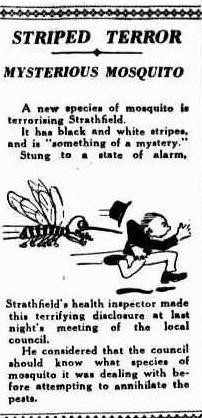
Mosquito The Sun 27-2-1929 p11

1917 saw an extensive anti-fly campaign co-ordinated by a committee.  Council’s health Inspector experimented successfully with treating manure to make it unattractive to flies and Nock and Kirbys provided a free display of fly control equipment, some of which was stolen – a sign of a severe fly problem.  A competition was held and 119 local children wrote essays about flies.

The Council, following and supporting its crusading Inspector, distributed pamphlets and constructed some large flies for advertising the campaign. Some of the signs were pulled down and the Inspector grimly noted in the minutes that this action suggested people who ‘had not evolved from ‘primaeval man who would have to shoulder guns in wars to improve their ‘miserable carcasses”. 

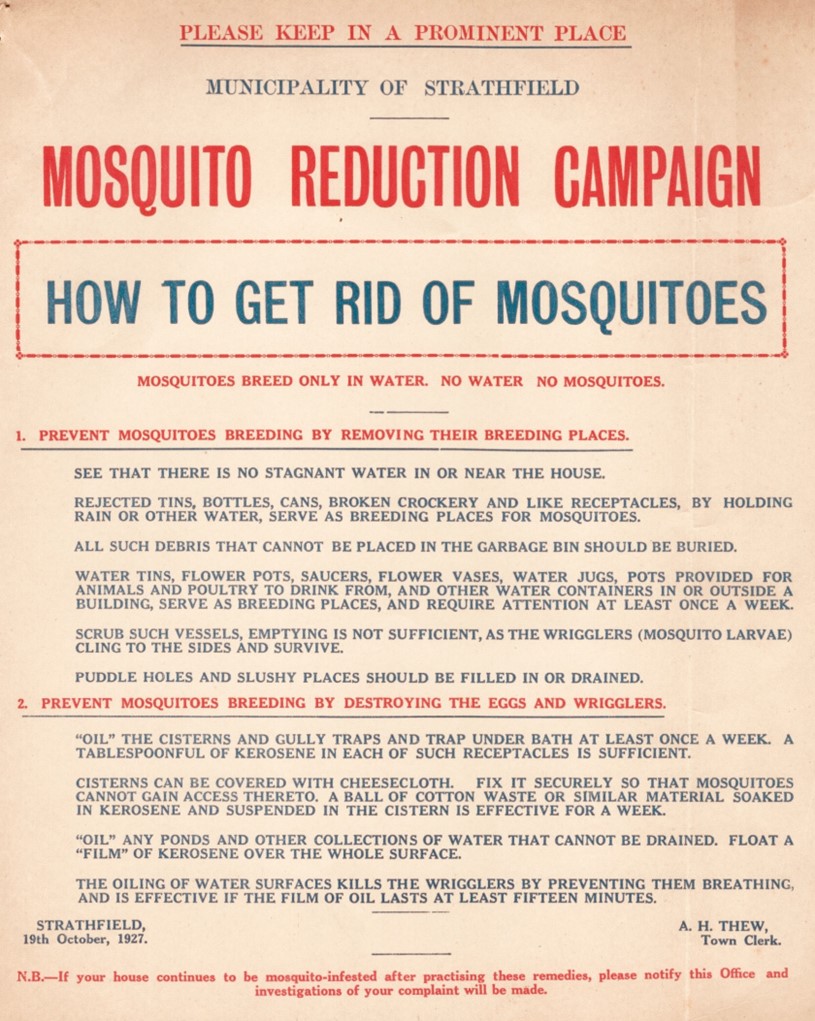
In the 1920s, another campaign involved eradication of mosquitos.  Mosquitos were a problem in Strathfield and Homebush due to the presence of marshes, low lying land particularly around the Cooks River forming puddles with stagnant water, mangroves around Powells Creek and Parramatta River and the nearby sheep and cattle saleyards.  Council invested significant resources into local campaigns and lobbying for action on a regional and state level. 

In 1927, Council initiated a mosquito reduction campaign involving a dedicated clean up week of receptacles such as rubbish bins, old boxes, bags and bulky rubbish that could harbour mosquito breeding places.  Works were also done around the Cooks River to clean out mosquito breeding areas.  This initiative was reported in September 1927 in the Evening News: 

“STRATHFIELD Council is conducting a ‘garage clean up week’ with the object of thoroughly cleaning up all garbage, and other places which are likely to become mosquito breeding grounds during the coming summer. It was announced to-day that council has had pamphlets distributed to every householder in the municipality, urging people to clean up garbage of all descriptions. A motor lorry has been engaged removing loads of this garbage, and it special officer is making an Inspection of all of the premises and streets throughout the municipality. Notices regarding the campaign have been prominently exhibited throughout the district. Last year council conducted an extensive campaign, in which the co-operation of other suburban councils was sought, and it was specially commended on the efficacy of its work. The mosquitoes were practically eliminated from Strathfield.” 

Strathfield Council Mosquito Reduction Campaign October 1927

On 13 April 1928, it was reported in the Mussellbrook Courier that Strathfield Council decided to intensify its’ campaign for the elimination of the mosquito. ‘At a meeting, the health inspector recommended that two ratepayers be prosecuted for having allowed mosquito infestation to take place on their properties. He said that the ratepayers had received sufficient warning and had no excuse for allowing such breeding grounds to remain. He produced three samples of water containing mosquito larvae which he had taken from the places concerned. The health inspector’s report was adopted, and the prosecutions agreed to. The matter later came on at the Burwood Police Court, and each defendant was fined £1, with £1/10/6 costs.’ 

In today’s urban environment in areas like the Inner West of Sydney, mosquitos are viewed as pests and nuisances, rather than being life threatening.  However, the World Health Organisation (WHO) estimates that illnesses transmitted by mosquitoes are a major threat to global public health.  In its report titled ‘Global strategy for dengue prevention and control 2012-2020’, WHO says that nearly 50-100 million dengue infections, caused by mosquitos, are reported every year. 

The WHO estimates that every year there are more than 725,000 deaths caused due to vectorborne diseases. For more reading on what Bill Gates calls the “world’s most lethal animal”. 

References 

Evening News, page 4, Friday 16 September 1927 

Jones, M, 1985, Oasis in the West, Allen & Unwin 

‘Ignoring the Mosquito’, Muswellbrook Chronicle (NSW : 1898 – 1955), Friday 13 April 1928, page 5 

Striped Terror (1929, February 27). The Sun (Sydney, NSW : 1910 – 1954), p. 11. Retrieved January 29, 2019, from http://nla.gov.au/nla.news-article230381192

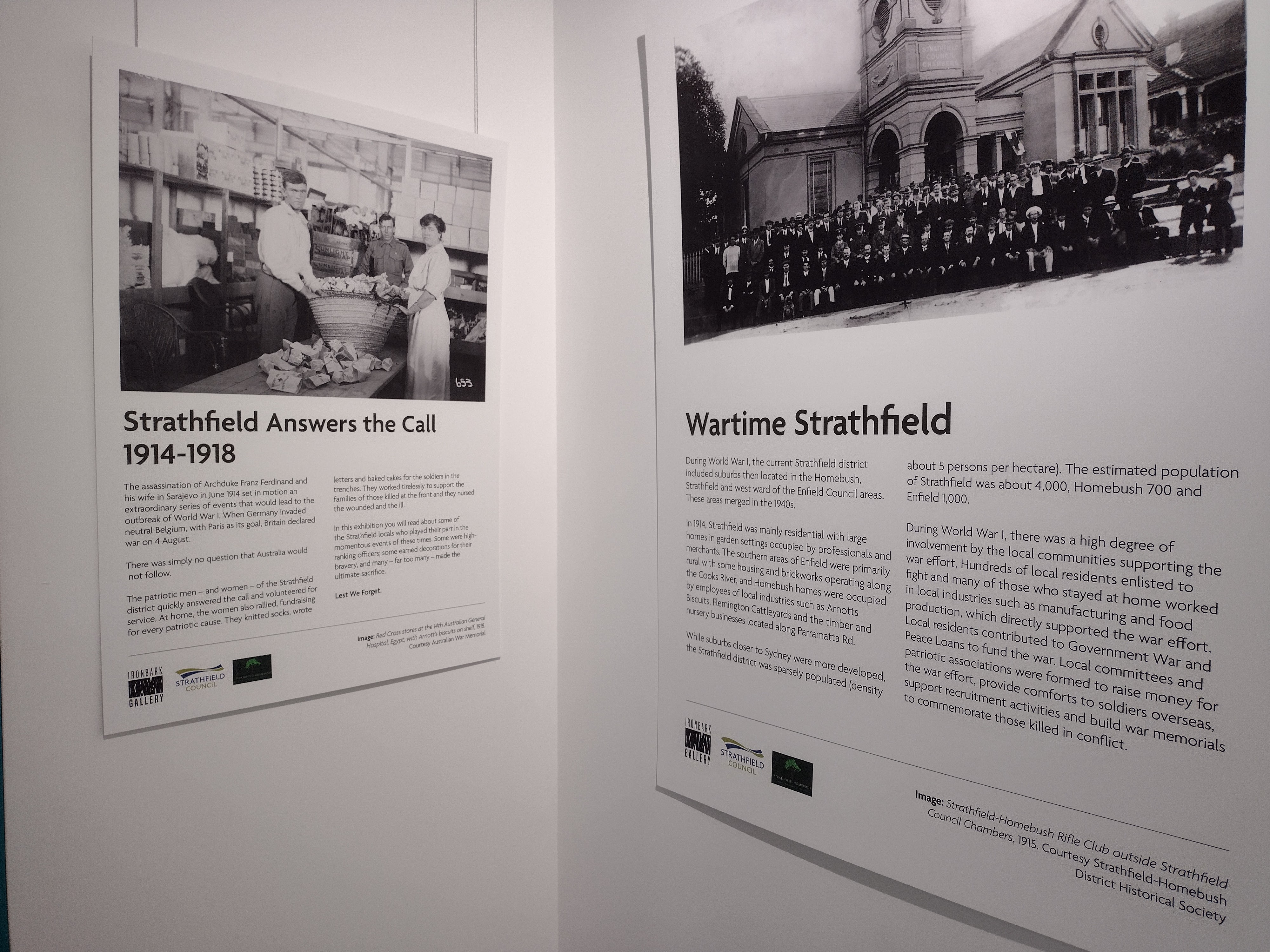
Exhibition Strathfield Answers the Call 1914-1918

Strathfield-Homebush District Historical Society has collaborated with Strathfield Council in preparing a new exhibition.

Strathfield Answers the Call 1914-1918 explores how the people of Strathfield and Homebush participated in the events of WWI on the battlefront and at home.

This exhibition shares the stories from the Strathfield and Homebush district in supporting a war fought far from home.

Learn about the sacrifices of those who fought, the efforts of those at home and the issues that united and divided communities.

When: 23 April – 20 June 2021 (during Strathfield Council Library & Innovation Hub opening hours)

Where: Ironbark Gallery – Strathfield Council Library & Innovation Hub, Rochester Street Homebush

You are invited to discover the many stories of those who answered the call by attending two historical talks at the Ironbark Gallery:

Registrations are essential and can be made by clicking on the above links.

Homebush Racecourse

The Homebush Racecourse was the subject of the Historical Society newsletter in January/February 2019.  This is an excerpt of the essay by Cathy Jones:

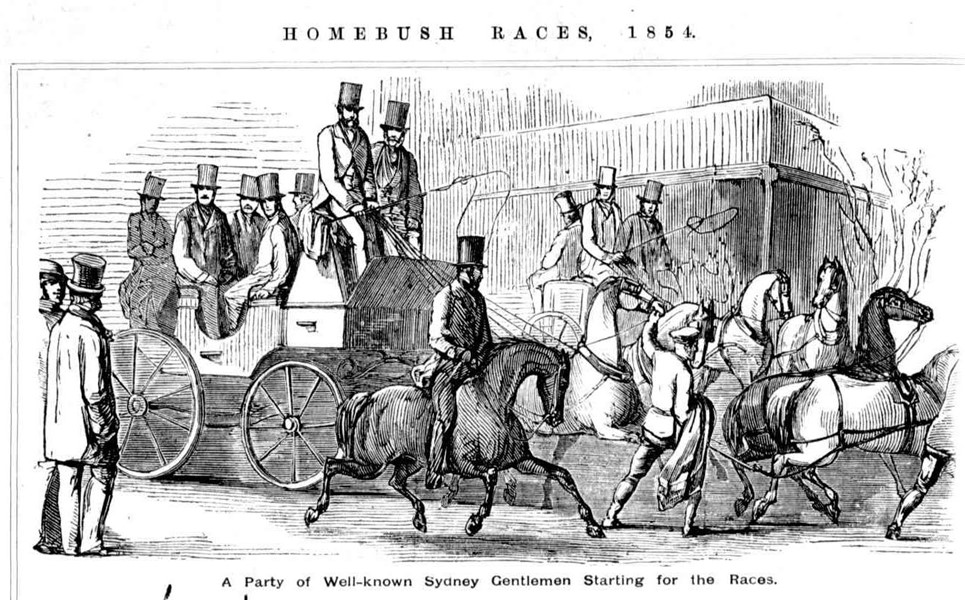
The Racecourse for Sydney was located at Hyde Park from 1810 to 1826, Grose Farm (Sydney University) from 1826 to 1840 and Homebush from 1841 to 1859.  In 1860, the racecourse moved to Randwick, which is its current location (Bethel, 1930).  There is much contention about the actual location of the Homebush Racecourse, but according to historical accounts, maps and research by local historian Dave Patrick (who has provided considerable assistance in the preparation of this article), the course was located between Saleyards Creek and Boundary Creek on undulating ground sloping up to Parramatta Road at Homebush.

Town & Country Journal 1895

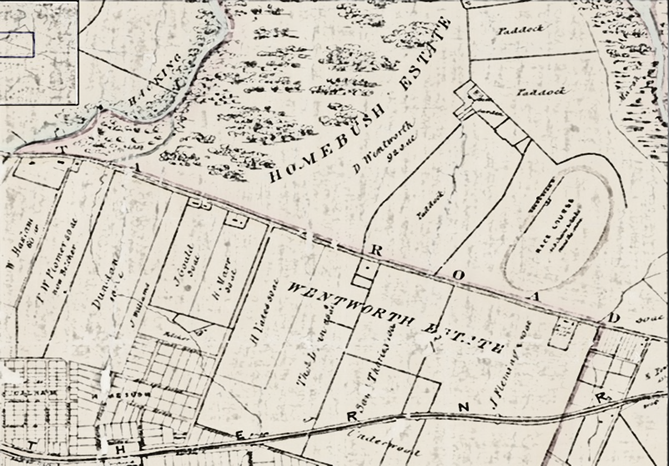
The course was located on land owned by William Charles Wentworth (the “Homebush Estate”).  Based on historic maps, the racecourse was located near Parramatta Road Homebush and opposite John Fleming’s grant and located behind the Wentworth Hotel (which is roughly opposite the location of Sydney Markets on Parramatta Road today).  However, the full course including paddocks would have extended into areas which are located in the current area of Sydney Olympic Park.

Prior to 1825, Wentworth established a private racetrack near Parramatta Road.  Like his father, William Charles Wentworth (one of the three Blue Mountains explorers) had an interest in horsebreeding and turf racing that continued after D’Arcy Wentworth’s death in 1827.  In the same year, William Wentworth was elected steward of the Australian Jockey Club (AJC) and its president in 1832.  In 1840, the Australian Race Company was brought into existence and Homebush was selected as the site for the new racecourse (Bethel 1930: 7). The racecourse was expanded with facilities such as a stand, enclosures, stables and training grounds.

The first race meeting was held on March 16 and 18, 1841 attracting a crowd of 8000 people.  An account of the first day of racing at Homebush stated:

“The day was beautiful in the extreme, and at an early hour parties on foot, on horseback, and in vehicles of every-description, thronged the various thoroughfares, leading to the scene of operations. At about 12 o’clock, the vast concourse, computed, at from eight to ten thousand persons, took up their stations in the vicinity of the grand stand, which presented a most lively and interesting scene. Sydney, Parramatta, Liverpool, Windsor, and the surrounding country, all sent their quota to the field – the young, the old, the rich, the poor, the ugly and the beautiful, were here all intent on spending a happy day, and we trust few were disappointed. The arrangements made by the stewards were deserving of the utmost praise, and contributed to that unanimity, good feeling, and order which prevailed, throughout; police on foot and horseback, paraded the course the whole day. So numerous was the turn out of the elite of Australian society, that it would be invidious to particularise only a few. The band of the 28th regiment, and a band from Sydney contributed not a little to keep up the attraction of the proceedings, which from commencement to end, went off to the heart’s content of the most sanguine admirer of the turf.”

Early parish map showing land included in the Homebush Estate (D Wentworth) NSW Department of Lands

A special ferry was established for race days along the Sydney to Parramatta route. The services were advertised as: ‘THE STEAM PACK RAPID….will start from the Commercial Wharf at Ten O’Clock precisely on each day of the Races – land Passengers at the Course and return with them to Sydney each night. FARES – four shillings each.’ The river transport depended on the tides for Homebush Bay, which were fringed with mangroves along the shore and mud flats around the Powell Creek entrance prevented a wharf or jetty being built. At low tide ferry boats had to stop at a distance from the shore and racegoers had to wade through a stretch of mud to get to the racecourse.

The article in The Sun in 1930 questioned why the racecourse moved from Homebush to Randwick and stated:

“What led to the transfer of racing operations to Randwick was the in ability of the turf club to obtain conditions that would enable them to have definite control of the ground. They had no spending power to erect buildings and effect necessary improvements. The land was privately owned, and those concerned evidently were not imbued with ideas favourable to the perpetuation of racing at Homebush. It is said of it that as a natural course it was far superior to the Randwick land, known then as the Sand Track. It also had the advantage of being within easy distance of the new railway line, which was opened in 1855. On May 30 and June 1, 1859, the A.J.C. held its last race meeting at Homebush and started racing at Randwick on May 29, 30, and 31, 1860”.

Although the AJC moved operations to Randwick in 1860, the Homebush course continued holding major races until the 1870’s.  A new course was constructed in the mid 1860’s overlapping the old course. This new course had Boundary Creek directly down it’s centre. The creek was bridged with an earthern viaduct 200 yards long and 20 wide allowing the horses to race around the rim of the creek valley. The arches of the viaduct were later blocked to form a dam during the abattoir era.