Many people have asked about the status of this proposal as there didn’t appear to have been a public notification issued. We contacted Council this week and received the following response:
“The issues raised in your submission, including heritage considerations, impacts on local identity, resource allocation, and concerns regarding the basis of the proposal, were noted and considered alongside broader community feedback.
Following this evaluation, Council resolved not to proceed with the original boundary change proposal, noting it did not receive overwhelming community support. This resolution was made at the 25 November Council meeting and is recorded in the meeting minutes.
A revised boundary proposal has since been developed for consideration at the upcoming Council meeting. Should this proposal progress, further community consultation will be undertaken. In the meantime, the area remains part of Homebush.”
The Strathfield-Homebush District Historical Society has submitted detailed comments on the draft Heritage Development Control Plan (DCP) 2025. A primary focus of the submission is the mapping and classification of Heritage Conservation Areas (HCAs).
The Society questions the criteria used to assess properties, particularly the broad definition of ‘neutral’ properties, which uses the same definition for historic buildings with minor modifications as those that are substantially altered or new development. This may undermines incentives for property owners to restore or maintain heritage features. There are examples in Strathfield where properties have been restored from poor condition to significant heritage status, highlighting the need for a more nuanced and dynamic approach to classification.
The use of the term ‘intrusive’ for non-original properties is also challenged, as it carries negative connotations. The Society suggests ‘infill’ as a more appropriate term, noting that some new developments are sympathetic to the heritage character and should not be automatically deemed detrimental. They advocate for clearer guidelines on how infill properties can be designed to support HCAs and call for stricter enforcement against unsympathetic developments and violations such as illegal demolitions.
A letter was sent to Strathfield Council to request that historic street lettering be preserved with upgrades or replacements to footpaths.
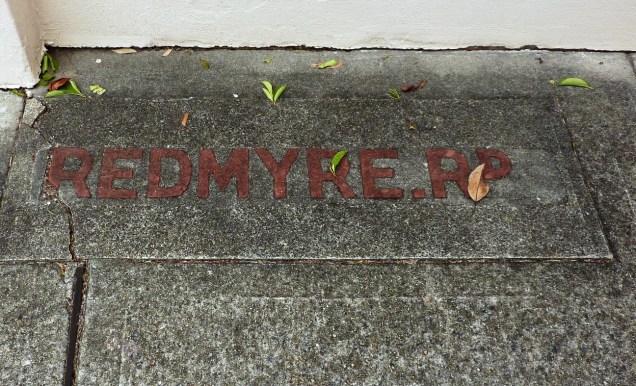
The Society expresses concern over the removal of historic street lettering, a feature dating back to around 1926, which involved embedding red street names into concrete footpaths. This practice was not unique to Strathfield and has been preserved in other areas, but recent upgrades in Strathfield have led to the loss of these historical markers. The Society requests that the Council restore the removed lettering and adopt a policy to preserve and reinstate existing historic street name lettering, emphasizing its cultural and historical value to the community.
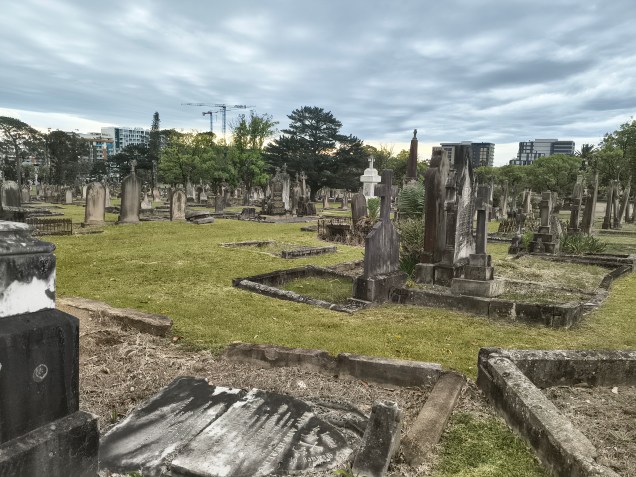
The Strathfield-Homebush District Historical Society has formally objected to the proposal to redevelop Carnarvon Golf Course and Coleman Park in Lidcombe as an extension of Rookwood Cemetery. They also oppose any suggestion to convert Hudson Park in Strathfield into cemetery land. Their objections are based on several key points:
Carnarvon Golf Course and Coleman Park are Crown Land designated for public recreation, and converting them to cemetery land would contradict their intended purpose. These areas provide vital recreational opportunities for the community, including sports, walking, and family gatherings. The loss of these spaces would negatively impact the health, social, and cultural well-being of local residents, especially as population growth and unit developments reduce private open space.
While acknowledging the need for more burial land in Sydney, the Society contends that repurposing these parks would only offer a temporary solution. We urge the government to seek long-term alternatives further west, rather than taking away land currently used for recreation.
The Society specifically objects to suggestions about converting Hudson Park into cemetery land, noting its historic, environmental, and recreational significance. The Society highlights the investments made by Strathfield Council to upgrade Hudson Park for current and future needs.
The Society warns that repurposing these lands sets a dangerous precedent, undermining the integrity of public open spaces. That the proposals be rejected alternative solutions for burial space be investigated that do not involve the loss of parkland.
The Strathfield-Homebush District Historical Society is a community-based, incorporated organisation dedicated to conserving, protecting, and promoting the history and heritage of the Strathfield–Homebush district. Due to the impact of the proposal to rename parts of Homebush as Strathfield, the Society opposes the proposal and urges Council to withdraw it.
Homebush is one of Sydney’s oldest suburb names, dating back to the early 19th century, and has been part of the Strathfield Municipality since its incorporation in 1885. Removing or replacing this name would blur the historic and geographic distinction between neighbouring suburbs and risk erasing an important part of Sydney’s heritage.
Council’s notification does not provide background studies, costings, or a balanced analysis of the proposal’s impacts. Further, the notification information appears to assume that the impacts are wholly positive, despite clear and significant consequences for community identity, local institutions, and heritage.
Claims of “confusion” regarding location are not substantiated. On the contrary, renaming an area serviced by Homebush Railway Station and containing long-established institutions such as Homebush Public School, Homebush Boys High School, Homebush Village Shopping Centre and Homebush Post Office as Strathfield would increase confusion for residents, businesses, and visitors.
If clarity of location is the actual concern, a more obvious issue is the shared postcode (2140) for the distinct suburbs of Homebush and Homebush West. This anomaly regularly causes misreporting in postal, demographic, and statistical records and is more deserving of correction. Council could also consider restoring Flemington as the suburb name of Homebush West, which would provide greater differentiation with the suburb of Homebush.
The Society has no objection to the inclusion of the isolated property ‘Strathbelle’ on Beresford Road (which does not contain an address on the notification) being included in the suburb of Strathfield which is consistent with other properties in this street location.
Renaming a suburb involves significant practical costs, from updating signage, maps, and government records to requiring businesses, schools, and households to amend their documentation and communications. These resources could be better directed towards improving community facilities and infrastructure
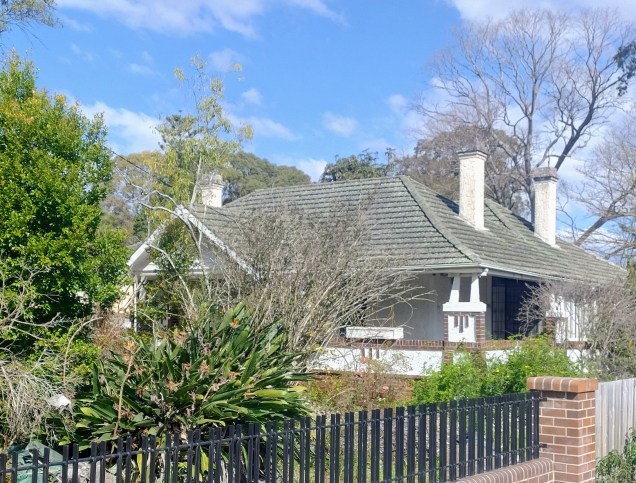
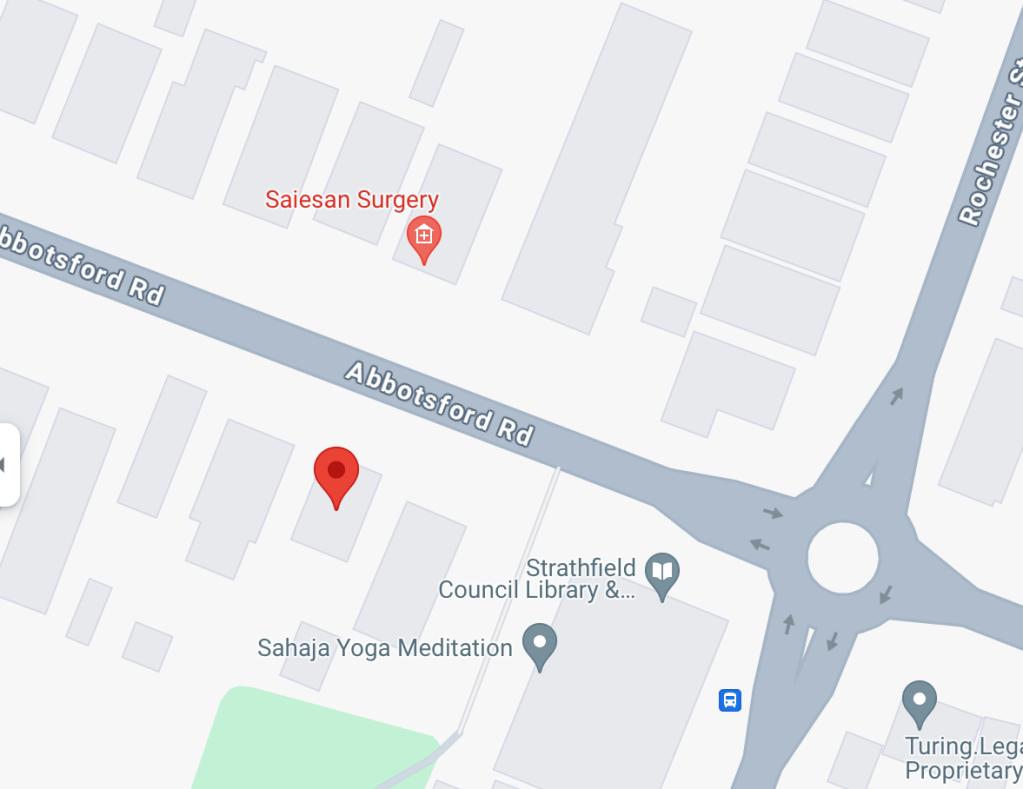
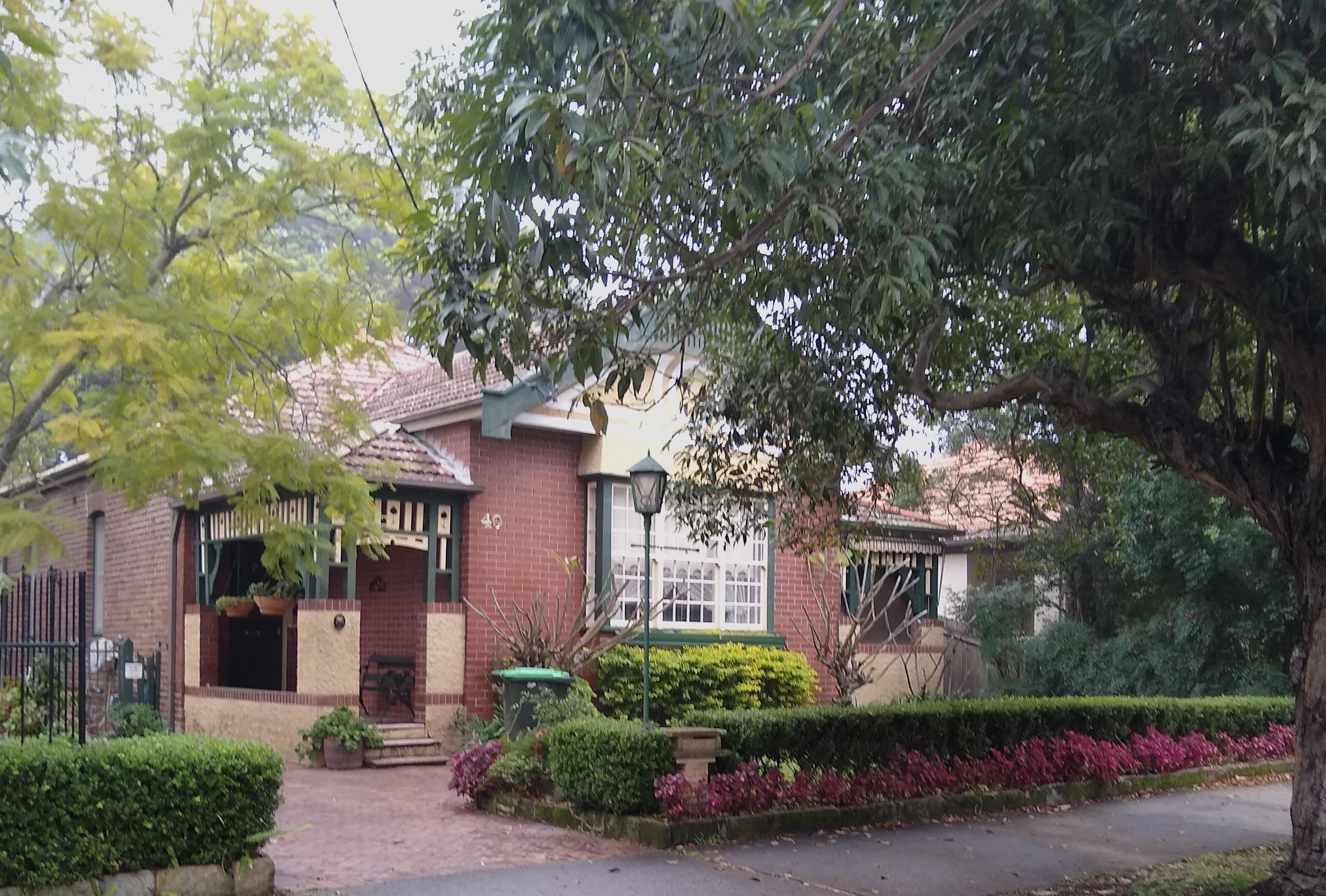
The Strathfield-Homebush District Historical Society have written to Strathfield Council to demand action on the demolition of a heritage property at 40 Abbotsford Road, located within the Abbotsford Road Heritage Conservation area
Recently approval for extension of a rear addition was granted. However, local residents have observed, behind large black fencing, the increasing demolition of the front of the house facing Abbotsford Road which was supposed to remain in-tact. Last weekend, the rest of the house appeared to be demolished.
The house ‘Kiloyth’ was built in 1915/16 and is a late Federation bungalow. It shares a history with 38 Abbotsford Rd, both built by the same owner/builder and both contribute to this much loved heritage conservation area of Strathfield and Homebush. They are located close to the Strathfield Library.
Please contact Strathfield Council and Jason Ya-Sen Li, State MP for Strathfield to support our actions.
The Strathfield-Homebush District Historical Society has installed historic plaques throughout Strathfield to commemorate historical places. These plaques were installed by the Historical Society:
Plaque located in Cotswold Road Strathfield outside ‘Strathfield Gardens’ (formerly ‘Fairholm’ built c.1880)
Plaque located in Strathfield Avenue Strathfield where the house ‘Strathfield’ was formerly located
Plaque located at 24 Homebush Road Strathfield outside the house ‘Verani’
Plaque located at 65 Homebush Road Strathfield outside the Strathfield Council Chambers built 1887
Plaque located on Homebush Road near where ‘Seven Oaks Farm’ first house on the 1867 Redmire Estate was located
Seven Oaks Farm plaque. Photo Cathy Jones 2022
‘Fairholm’ brass plaque installed on naturestrip outside the former house ‘Fairholm’ c.1880. Erected 2000
Plaque erected in Strathfield Avenue near the site of the original Strathfield House x.1868. Erected in 2000
Figure 3 Newcastle Morning Herald and Miners’ Advocate (NSW : 1876 – 1954), Saturday 6 February 1954, page 4
The September-October 2022 Newsletter features an article on the auction of ‘Arnott-Holme’ as well as the Society Year in Review and the death of Queen Elizabeth.
On 8 September 2022, Elizabeth II, Queen of the United Kingdom and the other Commonwealth realms, including Australia, and the oldest living and longest-reigning British monarch, died at the age of 96 at Balmoral Castle in Scotland. She was succeeded by her eldest child, Charles. Charles III was proclaimed King Charles as head of state of Australia on 11 September 2022 at a ceremony at Parliament House in Canberra.
A state funeral service was held for the Queen at Westminster Abbey on 19 September 2022, followed by a committal service later that day at St George’s Chapel at Windsor Castle. The Queen was interred in the King George VI Memorial Chapel at St George’s. A commemorative public holiday was announced in Australia for the 22 September 2022.
The Queen celebrated her 70th Anniversary or Platinum Jubilee of her ascension to the throne earlier in 2022. The Queen visited Australia on sixteen occasions. She is not known to have visited the Strathfield district, though on her 1954 tour, she visited the nearby Concord Park and the then Concord Repatriation Hospital (now Concord Hospital).
The Prime Minister of Australia, Anthony Albanese said:
“With the passing of Queen Elizabeth the Second, an historic reign and a long life devoted to duty, family, faith and service has come to an end. This is a morning of sadness for the world, for the Commonwealth and all Australians. It is a day of profound sadness and grief for the Royal Family who have lost a beloved mother, grandmother and great-grandmother. The person who for so long was their greatest inner strength.
Australian hearts go out to the people of the United Kingdom who mourn today, knowing they will feel they have lost part of what makes their nation whole. It is a time of mourning for the people in Britain, across the Commonwealth, and indeed around the world. There is comfort to be found in Her Majesty’s own words: “Grief is the price we pay for love.”
This is a loss we feel deeply in Australia. Queen Elizabeth II is the only reigning monarch most of us have known—and the only one to ever visit Australia. And over the course of a remarkable seven decades, Her Majesty was a rare and reassuring constant amidst rapid change. Through the noise and turbulence of the years, she embodied and exhibited a timeless decency and an enduring calm. Her Majesty served our nation and the Commonwealth for 70 years.
She is the longest-reigning monarch in British history and, remarkably, the second longest reigning monarch of a sovereign state in world history. Her life of faithful service will be remembered for centuries to come. From the moment the young princess became Queen, Her Majesty’s dedication to duty and service over self were the hallmarks of her reign. Performing her duty with fidelity, integrity, and respect for everyone she met. We saw those qualities each time she visited our shores — and she graced us on 16 occasions during her reign, travelling to every state and territory across our vast continent.
Her first visit, with Philip, began on the 3rd of February 1954 — just eight months after her coronation. It was the biggest single event ever organised in Australia and it remains a defining moment in our nation’s history. Some 7 million Australians — or 70 per cent of our population at the time — turned out to catch a glimpse of the young Queen passing by. Queen Elizabeth II was a wise and enduring presence in our national life. Sixteen prime ministers consulted with her – and sixteen governors-general served in her name.




 Strathfield-Homebush District Historical Society