Strathfield Shopping Centre 1930s/1940s

A resident of Strathfield, Ethel Lilleblade, recorded her memories of the shopping centre at Strathfield during the 1930s and 1940s for the Strathfield District Historical Society.  These were handwritten and undated but likely to be written in the 1980s.  She died in 1990 at the age of 86 years.

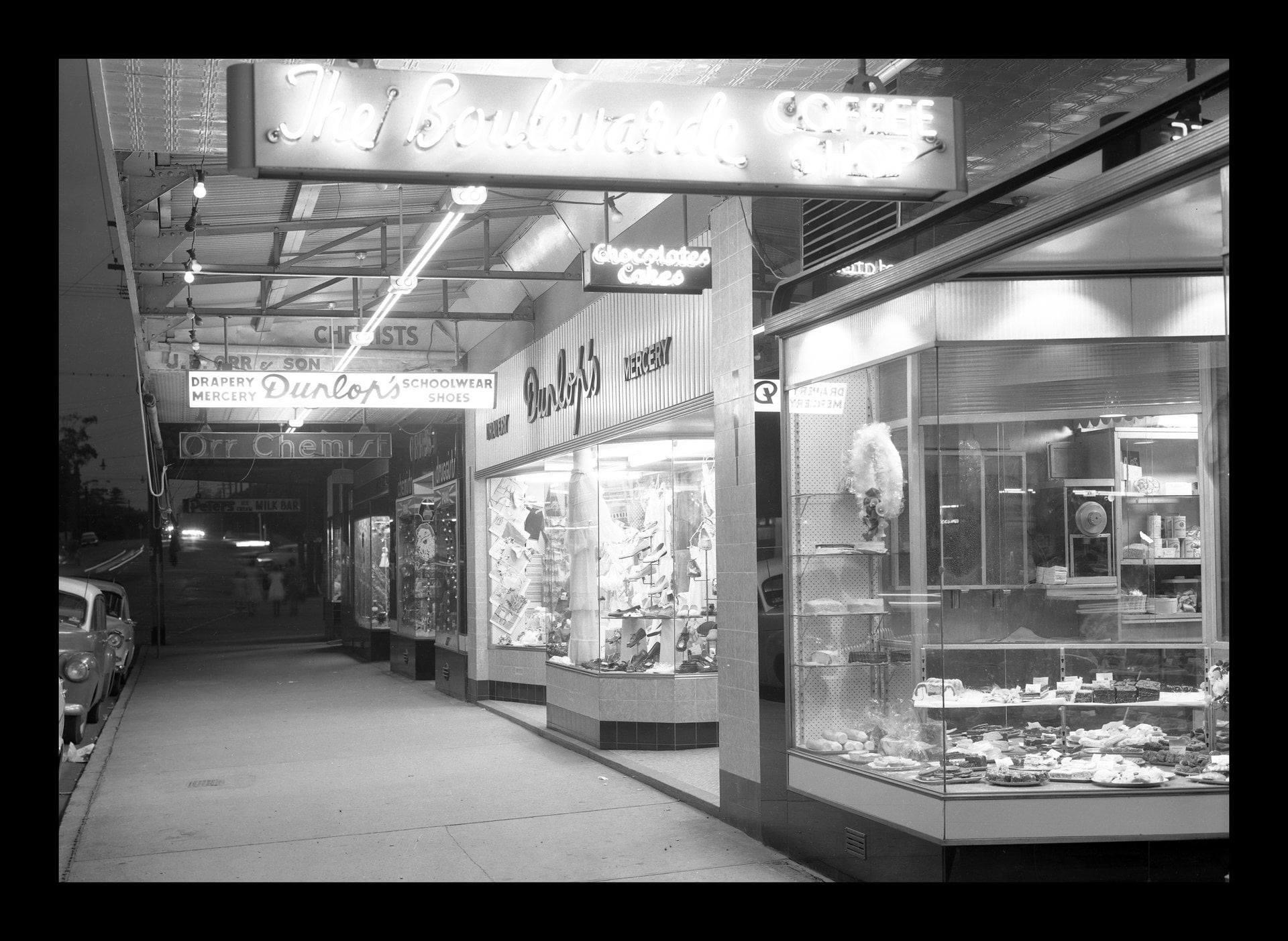
Strathfield Shops c.1930s The Boulevarde

Come with me to The Boulevarde, our shopping centre in the 1930s and 1940s. Remember Mr Jones with his cab (Horse drawn) at the station, sometimes sitting up top and sometimes asleep inside. He retired about 1936 to Narrabeen where he and his son started at the bus run from Narrabeen to Newport. Then across the road to the Rainbow Cake shop. Oh! Those delicious small cakes and sponges. On the corner Cameron and Kentwell, estate agents, Mr Clem Moore would greet you with “Good Morning”.

Alan Clancy, the Chemist who later moved to another shop, and next door, Max Nisbett’s library and interesting curios, Scobles the florist with their dainty work always held my interest, another chemist then – T. H. Dick. Maybe next door it was Lee Jones and family with the delicatessen where I always stopped for fresh homemade brawn. Gumby’s family butcher was always of interest to the children watching sides been cut up. Then the entrance to the professional suites where Dr Mary Manery had her rooms.

Jack O’Shea’s hairdressing ladies and men’s salon was always a bright place to visit and oh what a pleasure it was to visit the shop of Mr and Mrs Dunlop where chairs were provided for you whilst choosing your goods. The newsagent and bookshop was also a good place to spend some time in. Garden and Patrick, another florist, then Riddles the plumbers and Lusty’s Wood Coal and Coke yard. We just had to shop at Keary’s mixed business, where the children had to take a dip into the big lolly jars.  On the eastern side Shaughnessy’s Milk Bar held pride of place, where the scouts would gather after their meeting, Scobles delicatessen where you watch your ham being sliced so thinly it nearly melted in your mouth.

The men and the boys liked Stan Richards store where they could buy their odds and ends for sport and the fishing gear. The fish and chip shop held the children as in the window was a model of a paddlewheel steamer with Popeye guiding it into the water but it never seemed to go anywhere. Mr Hinks, Dry Cleaner and Manton Driving School came next. Pattens grocery store, where it was interesting to see the butter being cut up with wire and it always seem to have a little more patted on to the top to make the weight right.

Treasure Island‘s first shop, which burnt down but later was reopened along further, Natali’s fruit and vegetable store, and a few more shops to the Bank of New South Wales which opened about 1935.

Across Lyon’s Rd, to Alley’s store where you could buy most anything you needed, and Dance bros garage is still there. Don’t let us forget Mr Ottway, the Postmaster and one of his helpers, Mr Ryan.

Being well into my 80s I may have placed some stores in the wrong place and side, but these are the stores I mainly dealt with and oh for those storekeepers who took pleasure to deliver the goods, sometimes they were at my home before I was there and the children rush to get the cornucopia of boiled lollies. Then the war came and then many stopped delivering to the homes. These are just a few memories of the early shopping days.

Historic Houses of Strathfield Exhibition 2021

https://www.eventbrite.com.au/e/opening-historic-houses-of-strathfield-exhibition-tickets-206912008387?aff=ebdssbdestsearch

You are invited to attend the Historic Houses of Strathfield exhibition at Strathfield Library.

OFFICIAL OPENING EVENT will be held on Thursday 16 December 2021 6pm. Refreshments served. Free entry. Booking at https://www.eventbrite.com.au/e/opening-historic-houses-of-strathfield-exhibition-tickets-206912008387?aff=ebdssbdestsearch

EXHIBITION – will be shown from 16 December 2021 – 6 February 2022.  Open during Library opening hours. Free entry.

LECTURE – will be held on Sunday 6 February 2022 12.30pm for 1pm lecture. Refreshments served.  Free entry. https://www.eventbrite.com.au/e/lecture-of-historic-houses-of-strathfield-tickets-228196129767

About the Exhibition

Historic Houses of Strathfield explores the rise of the mansion houses in late 19th century and their eventual fate in the 20th and 21st centuries. The first Australia economic boom from the 1850s to 1890s coincided with the residential development of the Strathfield district.  Many wealthy merchants and professionals viewed Strathfield as the ideal place to build large and lavish homes, supported by rail access to the City where their businesses were located.  By the 1890s, Strathfield was considered one of the premium suburbs of Sydney.  

However, this was not to last.  Decline commenced with the 1890s Depression followed by significant and continued economic and social change. The exhibition features photos, maps and illustrations of the stories of the houses and their owners. Visit the exhibition and attend the lecture. Presented by Strathfield-Homebush District Historical Society with support from Strathfield Council.

For further details, email Cathy Jones at strathfieldhistory@gmail.com, or cathy.jones@optusnet.com.au. Phone 02 96423145.

Belfield: Suburb History

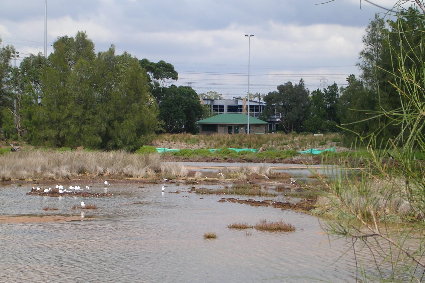
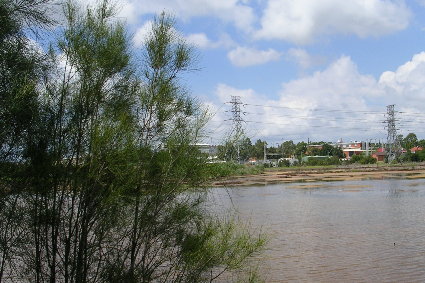
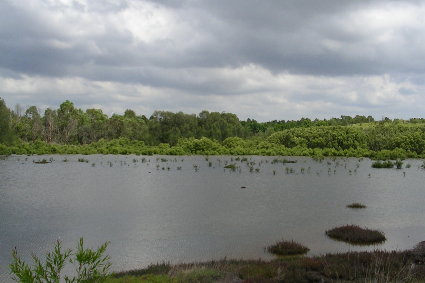
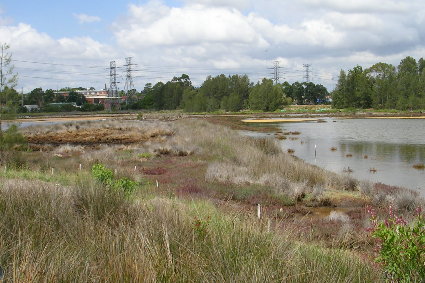
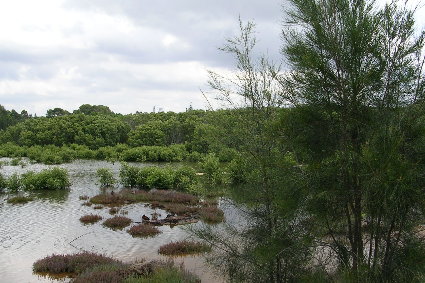
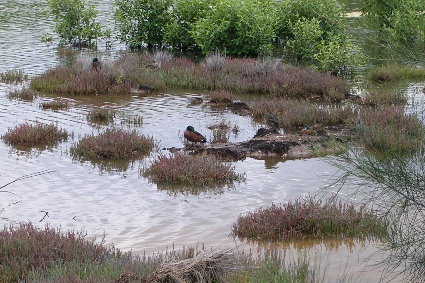
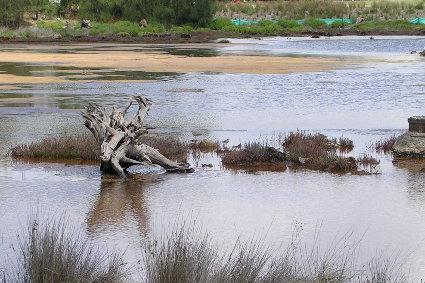
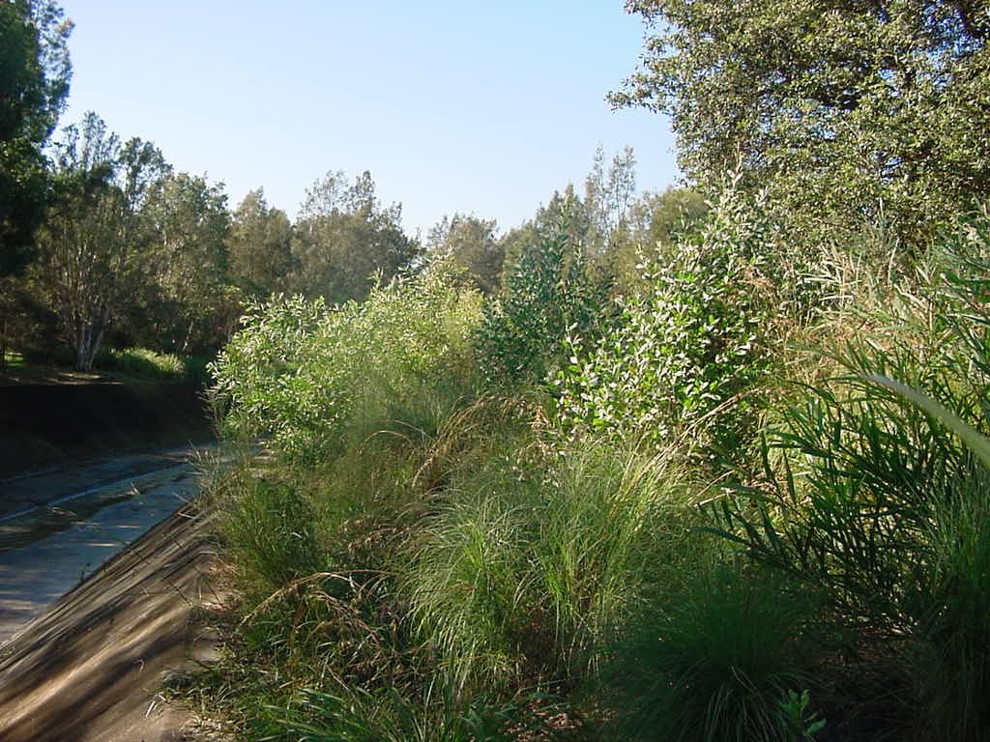
Maria Reserve Belfield 2007 following revegetation

The suburb of Belfield is partly located in Strathfield Council and Canterbury-Bankstown Councils. The section of the suburb of Belfield located in the Strathfield Council area is bounded by the Cooks River and Coxs Creek Stormwater Channel at the north and Punchbowl Road at the south, Cosgrove Road (at west) and Coronation Parade (at east).

The Historical Society newsletter discusses the history of this suburb.

SHDHS Newsletter Vol. 3 No.4 July-Aug 2021 Belfield – website

If you wish to receive newsletters, access to our archives and other benefits, please consider joining the Society

Historic Houses of Strathfield exhibition

Strathfield-Homebush District Historical Society is preparing a new exhibition at the Ironbark Gallery, Strathfield Council Library & Innovation Hub from December 2021.  

Historic Houses of Strathfield explores the rise of the mansion houses in late 19th century and their eventual fate in the 20th and 21st centuries. The stories of the houses and the associated people also reflect the social, economic and political changes which occurred over a century of development in the Strathfield area. 

This exhibition will include photos, maps and illustrations.  A lecture accompanying the exhibition will be held during the exhibition period (dates to be determined). 

When: December 2021 – February 2022 (exact dates to be determined) (during Strathfield Council Library & Innovation Hub opening hours)

Where: Ironbark Gallery – Strathfield Council Library & Innovation Hub, Rochester Street Homebush

Railway Station Estate & Stanley Rickard

SHDHS Newsletter Vol. 3 No.3 May-June 2021 Railway Station Estate Strathfield – website

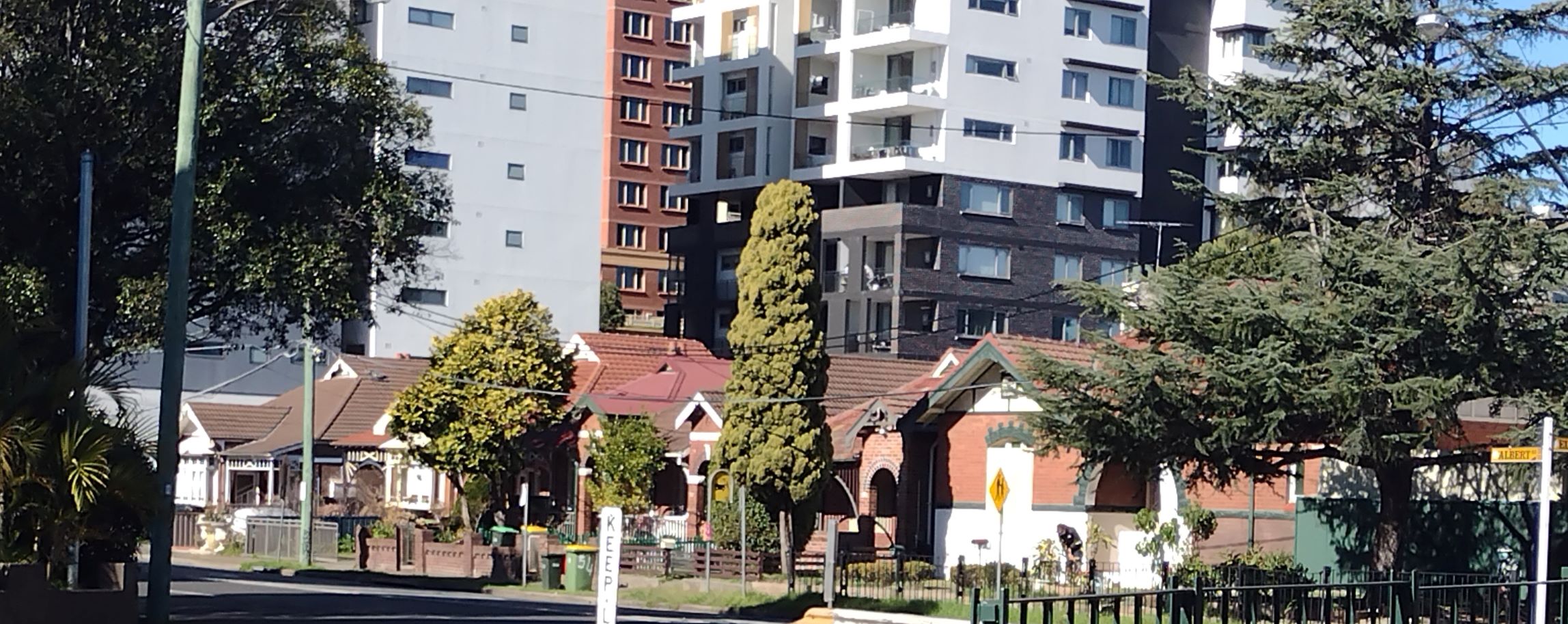
The Federation style cottages located between 42 and 58 Albert Road Strathfield are the last remaining buildings standing from a large estate of thirty buildings located on Albert Road and Churchill Avenue designed by architect Stanley Rickard and built from 1904 to 1906.

There are example of Federation estates in Sydney such as the Haberfield estate developed by real estate agent Richard Stanton or the Daceyville estate, designed by John Sulman, which featured a developed housing estate conformity in styles, form and setting.  Rickard’s estate in Strathfield featured a range of single storey and semi-detached Federation style cottages that was less ambitious than the Haberfield estate, however, it is rare to find examples of planned estate unified by conformity in style and form by a single designer in the Strathfield area.

42-58 Albert Road Strathfield

Former Strathfield District Historical Society

sdhs-1st-meeting-noticeThe first Strathfield District Historical Society was established in 1978. According to NSW Fair Trading, the Society’s incorporation was cancelled and newspaper reports in 2014, stated that some members of the Society voted to wind it up. Many members were not aware of the decision to wind up nor what occurred to the Society after this decision was taken. In tribute to the early members of the Society who left a genuine legacy of research and activity, this article is dedicated to them.

The present Strathfield-Homebush District Historical Society was formed in 2018 to carry on the work of the previous society.

Moves to establish a historical society date back to the early 1970’s, when resident groups made many approaches to Strathfield Council to establish a society. The early 1970’s saw a growing interest in local history, much motivated by concern that Strathfield was undergoing physical and cultural change, yet little of its’ history had been researched, documented or preserved. This concern was not unique to Strathfield, many other local government areas such as Burwood established historical societies in similar timeframes and for similar reasons.

With increasing demand for historical information, particularly from local schools, Strathfield Council produced a booklet entitled ‘Some Notes on the Strathfield Municipality’ in 1974. Primarily written by former Strathfield Council Town Clerk, James Sandry Matthews and with the involvement of Alderman Helen L’Orange, this publication was the first official account of Strathfield’s history and copies are still available from Strathfield Library. Some care should be exercised using this booklet as it contains some inaccuracies, which were uncovered by later research. A frequently quoted ‘fact’ that Strathfield was named after the home of the ‘first Mayor John Hardie’ is contained in this publication and appears with irritating frequency. The first Mayor was George Hardie, who lived at ‘Torrington’, while John Hardy, the jeweller, lived at ‘Strathfield’. In fact Strathfield was chosen as the name of the new Municipality prior to the election of the first Council and the election of the first Mayor.

 On October 19 1976, Strathfield Council adopted resolution from the Council’s General Purposes Committee with recommendations from Alderman Evan Summerfield to investigate establishing a Historical Society. The Mayor’s Report of 4th April 1977 recommended the formation of a steering committee with the purpose of establishing a Strathfield Historical Society and that the rear section of the Homebush Hall be made available to the Society.

The Western Suburbs Courier reported on 19th July 1978 that a public meeting was called by the Mayor of Strathfield Alderman Clarrie Edwards to gauge the interest in forming a Historical Society. This meeting was addressed by Mr Harry Harper of the Royal Australian Historical Society, who spoke of the objects and ideals of a society and of the appropriate steps to prepare for its formation. As over fifty residents attended this meeting, it appeared sufficient interest existed to form a Historical Society.

The first meeting of the Strathfield District Historical Society was held on 9th August 1978 with eighty-five foundation members. Guests at the first meeting included Mr Gordon Jackett MP [Burwood], the Mayor of Strathfield Alderman Clarrie Edwards and Deputy Mayor Rod Thurgar. The Western Suburbs Courier of 23rd August 1978 reported that Sir William and Lady Sonia McMahon supported the establishment of the Society by becoming Foundation members. At the meeting, the Mayor handed over the keys to new premises, the former Homebush Library Building at 75 Parramatta Rd Homebush. Office bearers were elected at the first meeting, which included: President: Mr M B Moroney; Vice-President: Mr Brian McDonald; Secretary: Mrs Trudi O’Neill; Treasurer: Mrs Doreen Rich; Committee Members: Brian McDonald, Syd Malcolm, Mary Farr, Julie Corbett, Lorraine McDonald and Joan Reaby. One of the first resolutions of the Society was to seek affiliation with the Royal Australian Historical Society.

 The Society’s first newsletter issued in February 1979. The objective of the newsletter has been publication of research, particularly relating to the Strathfield District. Over the last 25 years, a number of Society members have been regular contributors to the newsletter. Early editions featured the work of Syd Malcolm, who particularly excelled in his comprehensive and detailed research of many of Strathfield’s historic properties and estates. Syd also recorded and transcribed many oral histories of long-term residents and through this work, Strathfield gained valuable insight into periods such as late nineteenth century Strathfield, which could not be recorded today as too much time has elapsed. Our knowledge of Strathfield’s educational establishments, a major feature of Strathfield, has been greatly enhanced by the contributions of Arthur Hall. Important contributions, notably on ‘Mount Royal’, were made by Brother A I Keenan of Mount St Mary College. Trudi O’Neill, a former Secretary, wrote many articles such as ‘Early Maps of Australia’, which contributed another area of historical interest.

Many of the research tasks were performed by Reg Kennedy after the death of Syd Malcolm in 1983. Reg’s keen interest in history encompassed many fields. His research ranges from biographical works including Thomas Rose, Simeon Lord, Frederick Meredith and James Wilshire to the long historical series on Parramatta Road. His enthusiasm for heritage conservation shines through his many articles on properties either threatened by demolition or redevelopment such as ‘Glen Luna’ or ‘Fairholm’ or his passionate critiques on the changing style of residential buildings in Strathfield. Reg Kennedy provided considerable historical research to the 1986 Council Heritage Study, a critical factor in determining heritage status, and following this work, his writings are notably more focussed on architectural styles and heritage issues. Following Reg’s death in 1991, Lucy Stone was the primary researcher and contributor to the Society’s newsletter, a difficult task she performed for over a decade as well as fulfilling all the administrative demands of her role as Secretary. Her outstanding contribution to the Society was recognised in December 2002 with the award of Life Membership of the Strathfield District Historical Society. Cathy Jones wrote the newsletters from 2001 to 2011, when she stood down as Secretary.  Following 2011, newsletters were issued occasionally until the Society ceased operating in 2014.  

The work of artist Ted De Sauty was synonymous with the Strathfield District Historical Society as Ted’s illustrations provide the visual focus for the work of the Society. In his paintings, Ted recreated visions of historic properties long demolished including ‘Strathfield House’ and ‘Bickley’. His water-colour painting of ‘Strathfield House’ appears on the cover of ‘Oasis in the West’ and his sketch of Strathfield House is featured on the Society’s letterhead. Ted’s paintings offer a stylish interpretation of Strathfield’s past and for many, define the unique qualities of Strathfield.

Formed under the auspices of Strathfield Council, the Society has worked in collaboration with the Council on many projects and events such as the Strathfield Council Centenary celebrations in 1985, many Australia Day Celebrations, Australia Remembers [50th Anniversary of the end of WWII in 1995], 125th Anniversary of the Council in 2010, National Trust Heritage Festival Events and organising photographic displays. The Society has made considerable research contributions to Council projects such as the Strathfield’s official history ‘Oasis in the West’ [1985], and Heritage Studies. 

 There are many members, who have not been mentioned, whose contributions to the Society were considerable such as previous office holders and committee members including long serving President Doreen Rich, officeholders Peter Bourke, Margaret Thurn, Jan Jenkins, Claire Jones, Nancy Hardie, Michael Nicholls, Bernice Harkness and Charles Pitt, who served as the honorary auditor for many years.

Fighting Mosquitos in Strathfield

Health campaigns was a feature of a 2019 Historical Society newsletter.  This article was written by Cathy Jones.

Strathfield Council has a long history of running campaigns to improve the public health of the community which include immunisation, infectious diseases controls, fly reduction, rat eradication, fire safety and mosquito control. 

As noted in the book Oasis in the West (Jones 1985: 107) described actions to reduce flies: “The Inspector of Nuisances was particularly keen to reduce the fly menace, particularly severe at Strathfield because of the proximity of the sale yards and abattoirs at Homebush”. 

Mosquito The Sun 27-2-1929 p11

1917 saw an extensive anti-fly campaign co-ordinated by a committee.  Council’s health Inspector experimented successfully with treating manure to make it unattractive to flies and Nock and Kirbys provided a free display of fly control equipment, some of which was stolen – a sign of a severe fly problem.  A competition was held and 119 local children wrote essays about flies.

The Council, following and supporting its crusading Inspector, distributed pamphlets and constructed some large flies for advertising the campaign. Some of the signs were pulled down and the Inspector grimly noted in the minutes that this action suggested people who ‘had not evolved from ‘primaeval man who would have to shoulder guns in wars to improve their ‘miserable carcasses”. 

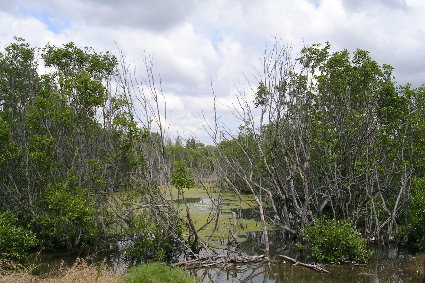
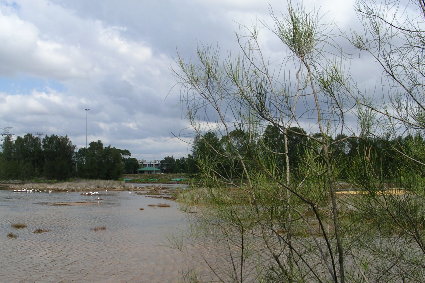
In the 1920s, another campaign involved eradication of mosquitos.  Mosquitos were a problem in Strathfield and Homebush due to the presence of marshes, low lying land particularly around the Cooks River forming puddles with stagnant water, mangroves around Powells Creek and Parramatta River and the nearby sheep and cattle saleyards.  Council invested significant resources into local campaigns and lobbying for action on a regional and state level. 

In 1927, Council initiated a mosquito reduction campaign involving a dedicated clean up week of receptacles such as rubbish bins, old boxes, bags and bulky rubbish that could harbour mosquito breeding places.  Works were also done around the Cooks River to clean out mosquito breeding areas.  This initiative was reported in September 1927 in the Evening News: 

“STRATHFIELD Council is conducting a ‘garage clean up week’ with the object of thoroughly cleaning up all garbage, and other places which are likely to become mosquito breeding grounds during the coming summer. It was announced to-day that council has had pamphlets distributed to every householder in the municipality, urging people to clean up garbage of all descriptions. A motor lorry has been engaged removing loads of this garbage, and it special officer is making an Inspection of all of the premises and streets throughout the municipality. Notices regarding the campaign have been prominently exhibited throughout the district. Last year council conducted an extensive campaign, in which the co-operation of other suburban councils was sought, and it was specially commended on the efficacy of its work. The mosquitoes were practically eliminated from Strathfield.” 

Strathfield Council Mosquito Reduction Campaign October 1927

On 13 April 1928, it was reported in the Mussellbrook Courier that Strathfield Council decided to intensify its’ campaign for the elimination of the mosquito. ‘At a meeting, the health inspector recommended that two ratepayers be prosecuted for having allowed mosquito infestation to take place on their properties. He said that the ratepayers had received sufficient warning and had no excuse for allowing such breeding grounds to remain. He produced three samples of water containing mosquito larvae which he had taken from the places concerned. The health inspector’s report was adopted, and the prosecutions agreed to. The matter later came on at the Burwood Police Court, and each defendant was fined £1, with £1/10/6 costs.’ 

In today’s urban environment in areas like the Inner West of Sydney, mosquitos are viewed as pests and nuisances, rather than being life threatening.  However, the World Health Organisation (WHO) estimates that illnesses transmitted by mosquitoes are a major threat to global public health.  In its report titled ‘Global strategy for dengue prevention and control 2012-2020’, WHO says that nearly 50-100 million dengue infections, caused by mosquitos, are reported every year. 

The WHO estimates that every year there are more than 725,000 deaths caused due to vectorborne diseases. For more reading on what Bill Gates calls the “world’s most lethal animal”. 

References 

Evening News, page 4, Friday 16 September 1927 

Jones, M, 1985, Oasis in the West, Allen & Unwin 

‘Ignoring the Mosquito’, Muswellbrook Chronicle (NSW : 1898 – 1955), Friday 13 April 1928, page 5 

Striped Terror (1929, February 27). The Sun (Sydney, NSW : 1910 – 1954), p. 11. Retrieved January 29, 2019, from http://nla.gov.au/nla.news-article230381192

Exhibition Strathfield Answers the Call 1914-1918

Strathfield-Homebush District Historical Society has collaborated with Strathfield Council in preparing a new exhibition.

Strathfield Answers the Call 1914-1918 explores how the people of Strathfield and Homebush participated in the events of WWI on the battlefront and at home.

This exhibition shares the stories from the Strathfield and Homebush district in supporting a war fought far from home.

Learn about the sacrifices of those who fought, the efforts of those at home and the issues that united and divided communities.

When: 23 April – 20 June 2021 (during Strathfield Council Library & Innovation Hub opening hours)

Where: Ironbark Gallery – Strathfield Council Library & Innovation Hub, Rochester Street Homebush

You are invited to discover the many stories of those who answered the call by attending two historical talks at the Ironbark Gallery:

Registrations are essential and can be made by clicking on the above links.