Come along to a talk and hear some of the stories featured in the Pictorial History of Strathfield district book. The book and talk explores many important chapters from our past, from the Aboriginal history and early settlement to the arrival of the rail and homes as well as events including the 1930s Depression and World Wars.
Speakers are the book authors, Cathy Jones and Jenny Macritchie.
Books will be available for purchase ($30) and author signing on the day.
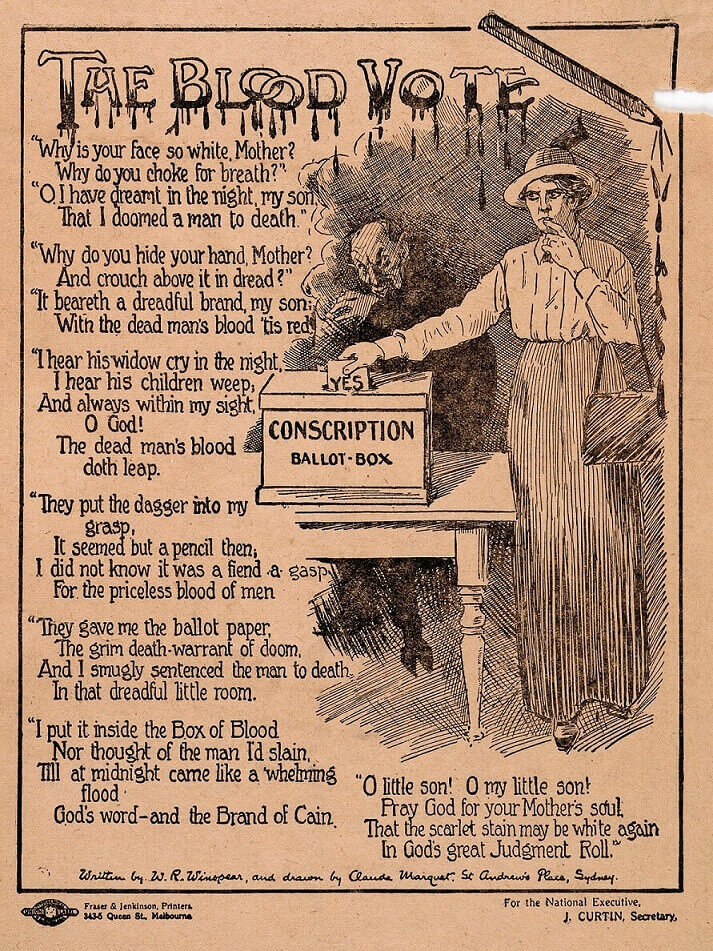
ANZAC Day is commemorated on 25th April each year. It marks the anniversary of the first major military action fought by Australian and New Zealand forces during World War 1. This March-April 2023 SHDHS newsletter features an essay by Cathy Jones discussing the impact of the World War 1 in the Strathfield district, particularly enlistment and the Conscription Referendums of 1916 and 1917.
An excerpt from the Newsletter:
“With the outbreak of World War 1 in 1914, recruitment of men and women to serve in the Australian Imperial Forces was on a voluntary basis only. Despite intense and divisive campaigns in Australia to introduce conscription to allow compulsory overseas military service, only Australia, South Africa, and India of the countries participating in the conflict did not introduce conscription during World War I.
The proposal to introduce conscription provoked furious debate within the Australian and local community. Both pro and anti-conscription meetings were held in Strathfield, Homebush and Enfield. Meetings and rallies for and against conscription were held in Strathfield prior to the 1916 plebiscite. An anti-conscription meeting was held in Strathfield on 19 October 1916. However, meetings and rallies against conscription appear to be out-numbered by those supporting conscription.
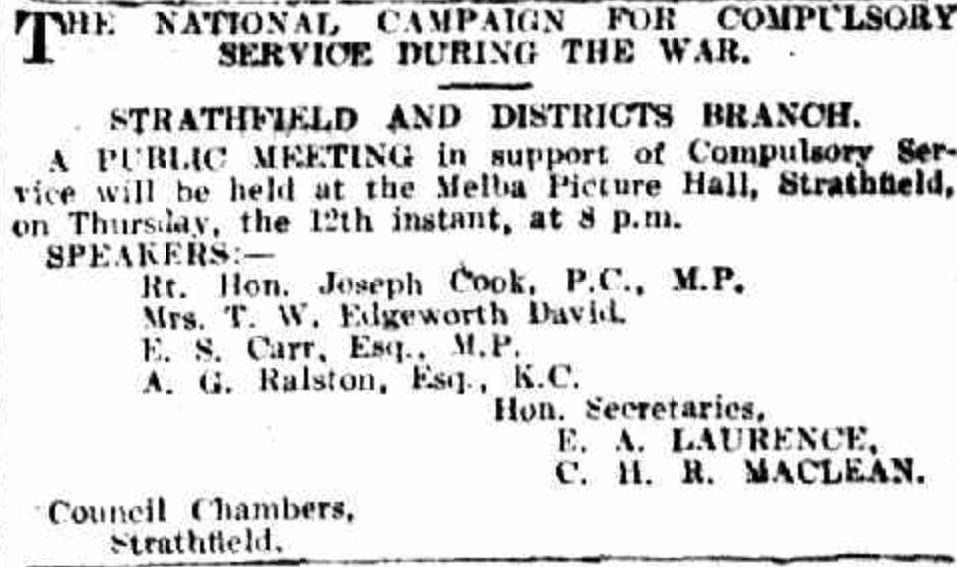
A pro-conscription meeting was held on Wednesday 11 October 1916 at Homebush at Railway Station near A G Ball’s Chemist Shop with Sgt Morehouse and W A Windeyer , at Enfield (opposite Ireland’s Hotel) with W E V Robson MLA and Alexander Ralston. A large pro-conscription gathering was held at the Strathfield Melba Picture Show on October 1916 with the key speaker former Prime Minister Joseph Cook and Alexander G Ralston, barrister. Cook in his address argued for the need of conscription to recruit sufficient men to win the war. Alderman John Price of Strathfield Council told the gathering that the ‘said question to be decided was whether ……we were going to place Australia on a pinnacle of fame, or whether we should be disgraced forever among the nations’.
The referendum question on 28 October 1916, asked the nation ‘Are you in favour of the government having in this grave emergency, the same compulsory powers over citizens in regard to requiring their military service, for the term of this war, outside the Commonwealth, as it now has in regard to military service within the Commonwealth?’
In 1916, the areas of Strathfield and Homebush were located in the Homebush sub-division of the Electorate of Nepean. Polling booths were located at Flemington Public School, Homebush Public School, South Strathfield Public School and a temporary structure in Redmyre Road near The Boulevarde . While the Yes vote in the Nepean Electorate lost by a majority of 4272, the Homebush sub-division which included Strathfield defied the trend across the electorate and voted Yes (63%) for the referendum. The Yes vote in the Homebush subdivision was the highest in the Nepean electorate .
Enfield and Burwood were sub-divisions of the Electorate of Parkes in the 1916 Referendum. Polling booths were located at Enfield Council Chambers, Croydon Public School, Burwood Public School and Milham’s Hall, Water St, West Enfield .
The results of the 1916 plebiscite were very close. 51.6% of the population voted against conscription and 48.4% for it. New South Wales returned majorities against and without a majority of states, the referendum was defeated.
In the ensuing political fall-out, the Labor Party split and Hughes formed a new political party called the Nationalist Party from the pro-conscriptionist Labor members. The Labor Party was severely divided on the issue and split within weeks of the ballot. After leaving the party, Prime Minister Hughes and other pro-conscription supporters created the ‘National Labor Party’, which was in competition with the Labor Party.
Enlistment numbers continued to fall, and in 1917 Hughes called for a second referendum for 20 December 1917. The second referendum also failed to pass.
The debates concerning the second referendum were ‘vindictive and vicious’ following the aftermath of the great strikes in August and September 1917 and Third Battle of Ypres . Hughes increased restrictions on reporting of anti-conscriptionist meetings, but ordered censors not to interfere with pro-conscriptionist reporting in the Sydney Morning Herald . The ‘Yes’ campaign was strongly supported by Hughes and his political supporters, most Church and business leaders, and most newspapers . Many in the ‘Yes’ camp hysterically portrayed anti-conscriptionists as the ‘enemy within’ .
The ‘No’ camp centred on the labour movement, many arguing that conscripting more men from Australia would have negligible impact on the fighting abroad and the final result . While the union movement were short of funds after the recent strikes, the ‘no’ campaign was well organised based on its experience from the 1916 campaign.
Figure 3 Newcastle Morning Herald and Miners’ Advocate (NSW : 1876 – 1954), Saturday 6 February 1954, page 4
The September-October 2022 Newsletter features an article on the auction of ‘Arnott-Holme’ as well as the Society Year in Review and the death of Queen Elizabeth.
On 8 September 2022, Elizabeth II, Queen of the United Kingdom and the other Commonwealth realms, including Australia, and the oldest living and longest-reigning British monarch, died at the age of 96 at Balmoral Castle in Scotland. She was succeeded by her eldest child, Charles. Charles III was proclaimed King Charles as head of state of Australia on 11 September 2022 at a ceremony at Parliament House in Canberra.
A state funeral service was held for the Queen at Westminster Abbey on 19 September 2022, followed by a committal service later that day at St George’s Chapel at Windsor Castle. The Queen was interred in the King George VI Memorial Chapel at St George’s. A commemorative public holiday was announced in Australia for the 22 September 2022.
The Queen celebrated her 70th Anniversary or Platinum Jubilee of her ascension to the throne earlier in 2022. The Queen visited Australia on sixteen occasions. She is not known to have visited the Strathfield district, though on her 1954 tour, she visited the nearby Concord Park and the then Concord Repatriation Hospital (now Concord Hospital).
The Prime Minister of Australia, Anthony Albanese said:
“With the passing of Queen Elizabeth the Second, an historic reign and a long life devoted to duty, family, faith and service has come to an end. This is a morning of sadness for the world, for the Commonwealth and all Australians. It is a day of profound sadness and grief for the Royal Family who have lost a beloved mother, grandmother and great-grandmother. The person who for so long was their greatest inner strength.
Australian hearts go out to the people of the United Kingdom who mourn today, knowing they will feel they have lost part of what makes their nation whole. It is a time of mourning for the people in Britain, across the Commonwealth, and indeed around the world. There is comfort to be found in Her Majesty’s own words: “Grief is the price we pay for love.”
This is a loss we feel deeply in Australia. Queen Elizabeth II is the only reigning monarch most of us have known—and the only one to ever visit Australia. And over the course of a remarkable seven decades, Her Majesty was a rare and reassuring constant amidst rapid change. Through the noise and turbulence of the years, she embodied and exhibited a timeless decency and an enduring calm. Her Majesty served our nation and the Commonwealth for 70 years.
She is the longest-reigning monarch in British history and, remarkably, the second longest reigning monarch of a sovereign state in world history. Her life of faithful service will be remembered for centuries to come. From the moment the young princess became Queen, Her Majesty’s dedication to duty and service over self were the hallmarks of her reign. Performing her duty with fidelity, integrity, and respect for everyone she met. We saw those qualities each time she visited our shores — and she graced us on 16 occasions during her reign, travelling to every state and territory across our vast continent.
Her first visit, with Philip, began on the 3rd of February 1954 — just eight months after her coronation. It was the biggest single event ever organised in Australia and it remains a defining moment in our nation’s history. Some 7 million Australians — or 70 per cent of our population at the time — turned out to catch a glimpse of the young Queen passing by. Queen Elizabeth II was a wise and enduring presence in our national life. Sixteen prime ministers consulted with her – and sixteen governors-general served in her name.
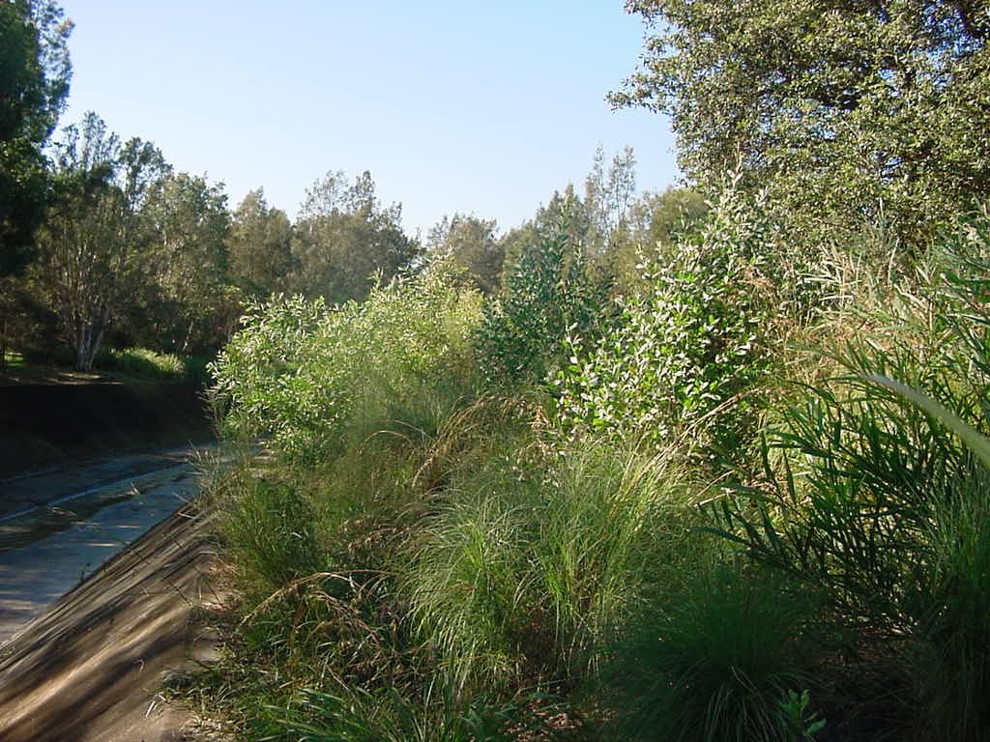
Maria Reserve Belfield 2007 following revegetation
The suburb of Belfield is partly located in Strathfield Council and Canterbury-Bankstown Councils. The section of the suburb of Belfield located in the Strathfield Council area is bounded by the Cooks River and Coxs Creek Stormwater Channel at the north and Punchbowl Road at the south, Cosgrove Road (at west) and Coronation Parade (at east).
The Historical Society newsletter discusses the history of this suburb.
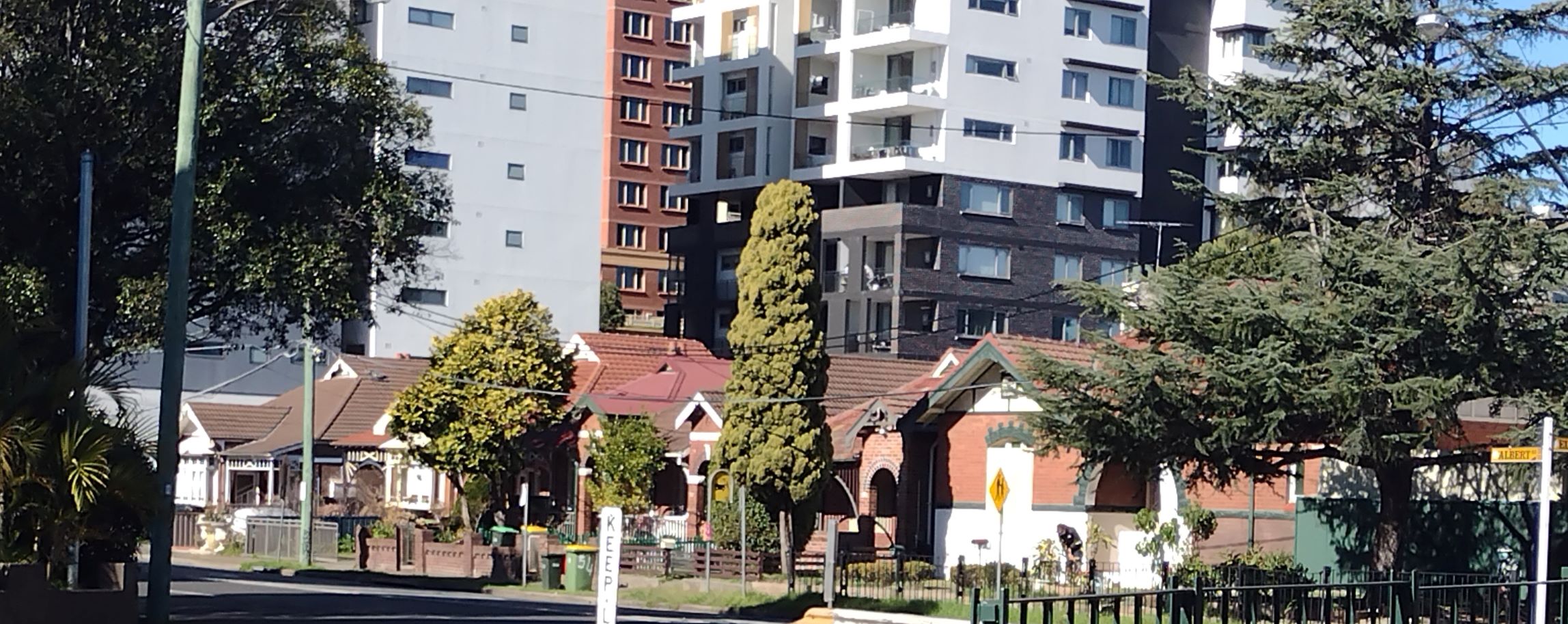
The Federation style cottages located between 42 and 58 Albert Road Strathfield are the last remaining buildings standing from a large estate of thirty buildings located on Albert Road and Churchill Avenue designed by architect Stanley Rickard and built from 1904 to 1906.
There are example of Federation estates in Sydney such as the Haberfield estate developed by real estate agent Richard Stanton or the Daceyville estate, designed by John Sulman, which featured a developed housing estate conformity in styles, form and setting. Rickard’s estate in Strathfield featured a range of single storey and semi-detached Federation style cottages that was less ambitious than the Haberfield estate, however, it is rare to find examples of planned estate unified by conformity in style and form by a single designer in the Strathfield area.
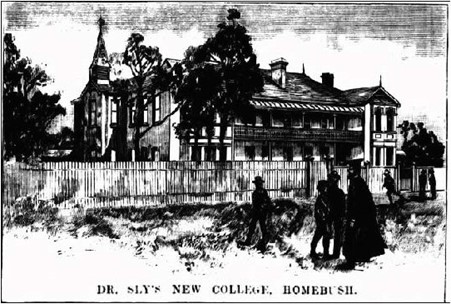
A school called ‘Eton College’ was once located in Redmyre Road Strathfield. It was operated by Dr J. David Sly from 1888 to 1892. This newsletter discusses the rise and fall of Strathfield’s own Eton College. This is an excerpt written by Cathy Jones:
Dr. Sly’s New School Premises — Eton College, Homebush.” The Sydney Mail and New South Wales Advertiser (NSW : 1871 – 1912) 8 December 1888
“Helped by his father’s legacy, Dr J. David Sly in 1888 opened Eton College in Redmyre Road Strathfield (often referred to as Homebush). An advertisement for Eton College on 10th November 1888 states:
‘Eton College, Homebush – Headmaster J David Sly. This Collage has been recently erected on the most modern design. It stands in an elevated position. The rooms are spacious and there is an ample supply of water. A COTTAGE HOSPITAL has been added. The PLAYGROUND contains an asphalt tennis court, weather shed, summer house and gymnasium. There will be vacancies for Day and Resident pupils in January next, for which early application is requested’.
Eton College commenced its school activities on Monday 28th January 1889. As Hall (1985) writes “it was not intended as a purely local school, though it certainly catered for local day pupils and was typical of the many schools set up to cater for the sons of well-to-do folk who could pay for bard and tuition”.
At this stage the school appeared to be well established and was advertised as:
“Eton College, Homebush. Headmaster J. David Sly, MA LLD; second master C.E, Robin BA. Homebush ls one of the healthy suburbs of Sydney and is eminently suitable as a residence for boarders, for whom special provision has been made. Pupils are prepared for the University or mercantile pursuits. There is also a Preparatory Class for young boys. The College was specifically designed by the Headmaster.”
On 5th January 1892, Strathfield Council wrote to Sly stating that his house was now the only house in the Municipality on which the rates remained unpaid and asked him to send the balance or action would be taken (Hall 1985). Payment of the rates was one of the obligations accepted by Sly when he occupied the Collage.
The College advertisement in January 1892 gave no hint of its financial distress:
“Eton College, Homebush. Headmaster J David Sly MA LLD; Assistant, Teachers W.B. Scott; Trinity College Dublin, Miss Hewison, Miss Read, F.A. Price, G.H. D’Arcourt. The buildings stand in an elevated position and ware specially erected for school purposes. There is a Preparatory Department for young boys. Boarders 13 to 16 guineas per quarter; day pupils 2 to 4 guineas per quarter”.
On 22nd June 1892 Dr Sly, being unable to pay his debts, petitioned to be made bankrupt. He had a wife and six children to support, and no way of paying his debts. He blamed his financial failure on the competition between schools and the high rent he had to pay for the College premises and bad debts.
Its final demise came on 23rd July 1892, when an auction sale was held of J.D. Sly’s school fittings and equipment. His main creditors were his brothers and sister. He attributed his failure to high rents and, ironically, competition among schools. Economic conditions may have played a part but the depression did not generally affect enrolments in private schools. He was discharged from bankruptcy in October 1892.
On 24 August 1895 Sly was admitted as a solicitor and practiced in Pitt Street Sydney until 1933. He died of heart failure and nephritis at Neutral Bay on 7 December 1934 at the age of 91 year, having outlived his brothers and practiced law for about 38 years (SMH 1934). He was buried in the Anglican section of the Northern Suburbs cemetery. He was survived by two sons and three daughters Mrs M Walcott, Mrs N Royle, Mrs N Davies of his wife Annie, née Macalister, whom he had married at Pitt Town in 1875 (Mitchell 1976, SMH 1934).
For many years there has been discussion as to where Eton College was located and whether it is still standing. Hall (1985) suggested that Eton College was located at Redmyre Lodge, 89 Redmyre Road, rather than ‘Allerton’’ 91 Redmyre Road.
The confusion existed because all uncertainty lies in the fact that both houses stand on land originally designated as Lots 26, 25, 24; both were owned by Allan Maclean and rented out by him and all had the same lot numbers in various records. Redmyre Lodge, which has since been demolished, may have been Eton College. Based on the published sketch of Eton College, the building is clearly not ‘Allerton’, which is still standing.
 Enfield and Burwood were sub-divisions of the Electorate of Parkes in the 1916 Referendum. Polling booths were located at Enfield Council Chambers, Croydon Public School, Burwood Public School and Milham’s Hall, Water St, West Enfield .
 Strathfield-Homebush District Historical Society