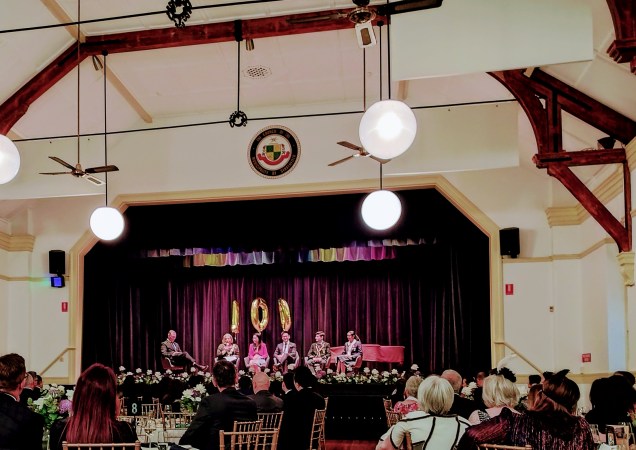
Strathfield Town Hall opening 9 October 2023. Photo Cathy Jones 2023.
The Strathfield Town Hall celebrated the 100th anniversary of its opening at an event held on Monday October 9 2023. The event featured a history talk, panel discussion with the Mayor, local MPs and students from St Patrick’s College and Strathfield Girls High with music by the Strathfield Symphony Orchestra. The Town Hall History Exhibition was opened and available for viewing from 10 – 14 October 2023. The exhibition and talks were a collaboration between Council and the Society.
An expanded history talk was held on Wednesday 11th October at a well attended event at the Town Hall. The talks were given by Jenny McRitchie, Council’s Local Studies Advisor and Cathy Jones, Secretary of the Historical Society (& Chief Strategy Officer, Strathfield Council).
The Town Hall History Exhibition will be exhibited from 1 November to 10 December 2023 at the Ironbark Gallery at Strathfield Library. The exhibition will feature additional exhibits, videos and photographs. A talk is likely to announced during November. Details will be posted when dates confirmed.
The Strathfield Town Hall celebrates the 100th anniversary of its opening on October 9 2023. The Town Hall has recently had significant restoration works.
The celebrations include an official opening dinner, a morning tea with a historical talk and a historical exhibition. The Town Hall History Exhibition will be open to the community from 10 – 14 October and will also be exhibited at the Ironbark Gallery at Strathfield Library in late 2023. This exhibition was organised in collaboration with the Strathfield-Homebush District Historical Society.
Morning Tea Historical Talk
Council, in collaboration with the Strathfield-Homebush District History Society, will exhibit and host a historical morning tea.
Join us for a historical talk with Jenny MacRitchie and Cathy Jones as they highlight stories of the Town Hall’s rich history.
This exhibition is open to the community at the Town Hall from Tuesday 10 October to Friday 13 October from 9am – 5pm, and Saturday 14 October from 10am to 2pm.
Official Opening Dinner
The event promises a special evening including live music performance by the Strathfield Symphony Orchestra, an enlightening historical discussion, and an engaging panel discussion.
When: Monday 9 October 2023
Cost: Tickets for this event will be $75 per person with all proceeds being donated to Suicide Prevention Australia.
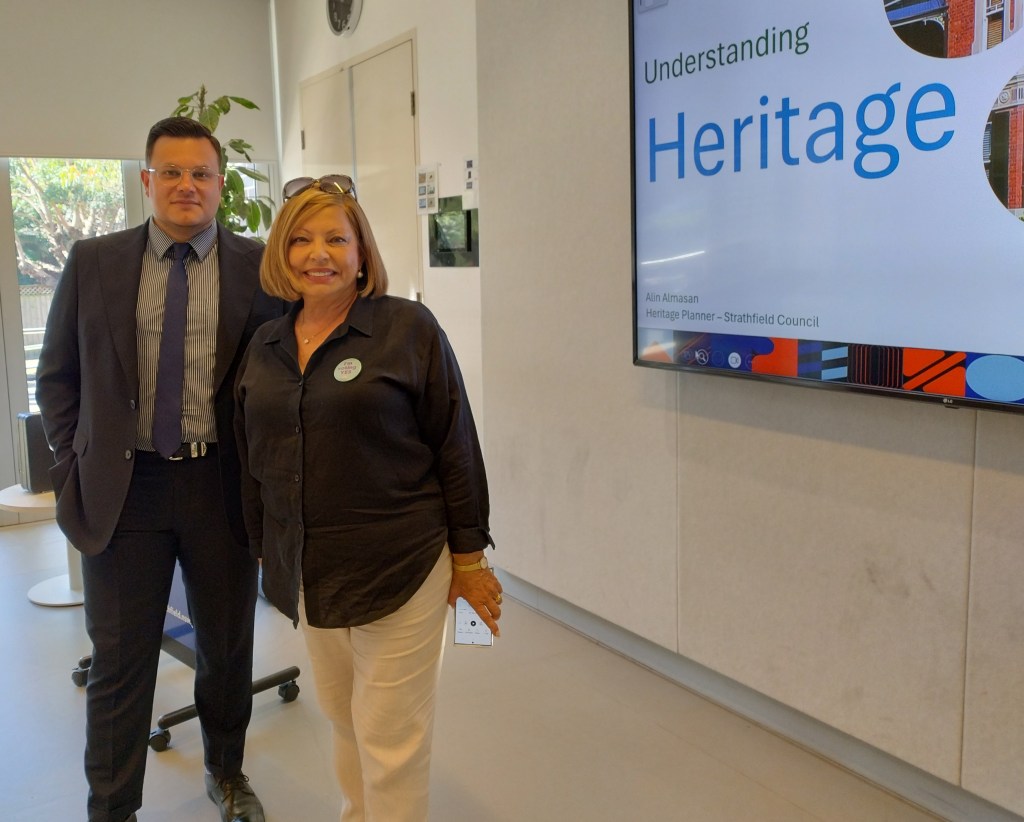
Thanks to everybody who attended the ‘Understanding Heritage’ talk yesterday at Strathfield Library. The afternoon session was opened by the Mayor of Strathfield Karen Pensabene followed by the talk by Alin Almasan, Strathfield Council’s Heritage Advisor, on heritage in the Strathfield area.
The talk provided an overview of heritage in the Strathfield area, many tips on maintaining older buildings and processes for development consent for alterations to heritage properties. The session was presented by the Strathfield Homebush District Historical Society, with support from Strathfield Council.
The booking system is not working properly. If you want to come, please attend on the day. There should be space. Any problems, contact Cathy on 96421345 or email strathfieldhistory@gmail.com
A talk ‘Understanding Heritage’ will be held at 2pm Sunday 24 September by Strathfield’s Council’s Heritage Advisor.
Join us for a talk that discusses the diversity of Strathfield’s cultural and built heritage and provides tips on how to maintain residential heritage properties. This in-person event will take place on Sunday Sep 24 2023 at 2pm.
We invite you to attend an interesting talk and afternoon tea. This is a free event.
Also submit any history questions (relating to the Strathfield district) prior to the talk and hopefully we may have the answers!
Location: 65-67 Rochester Street, Homebush
Don’t miss out on this unique opportunity to expand your knowledge and gain a fresh perspective on our shared heritage. Mark your calendars and join us for an afternoon of learning. We can’t wait to see you there!
This event is organised by the Strathfield-Homebush District Historical Society. Thanks to Strathfield Council for their support.
Any inquiries, contact Cathy Jones at strathfieldhistory@gmail.com or phone 96423145
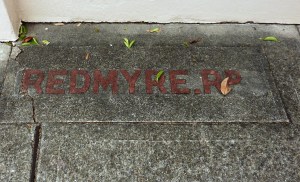
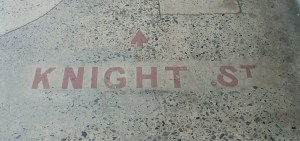
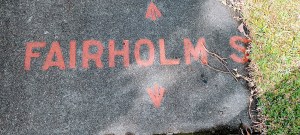
There are still some streets with the historic red lettering in the Strathfield area. Strathfield Council started installing metal plate street signs in the early 1920s along with numbering of streets. There was an old metal street sign on a pole on Albert Road, near Homebush Road.
The majority of early footpaths appear to have been asphalted, while concrete was used on footpaths near shops with heavy foot traffic. Council required that the owner contribute 50% of costs.
There is reference to the installation of the red lettered street names on footpaths in Strathfield Council minutes in 1926. It is likely that as footpaths were increasingly concreted that lettering was added. The lettering was embedded into the concrete and was red coloured in contrast to the surrounding concrete. The red letters were made by a contractor and was held together by a wire formwork when the letters were set into the concrete. The footpath names are not stencilled.
It is unsure when Council stopped installing street name lettering on footpaths, however the practice of installing lettering on pavements was not unique to Strathfield Council. In Woollahra Council and parts of the former Municipality of Petersham (Petersham, Lewisham and Stanmore) which is now part of Inner West Council, street names were frequently embedded into footpaths.
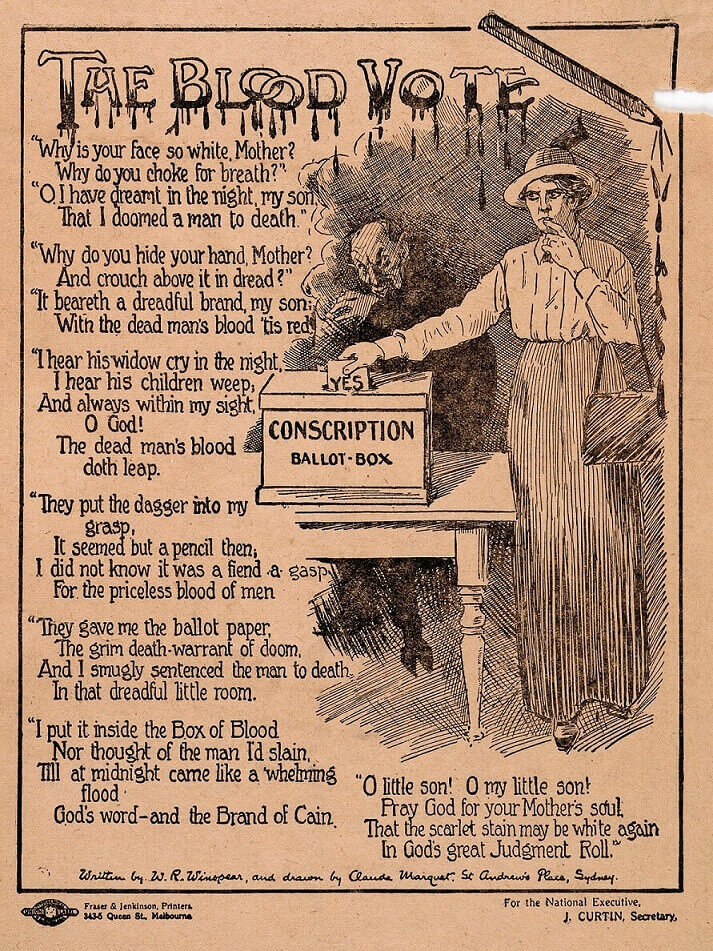
ANZAC Day is commemorated on 25th April each year. It marks the anniversary of the first major military action fought by Australian and New Zealand forces during World War 1. This March-April 2023 SHDHS newsletter features an essay by Cathy Jones discussing the impact of the World War 1 in the Strathfield district, particularly enlistment and the Conscription Referendums of 1916 and 1917.
An excerpt from the Newsletter:
“With the outbreak of World War 1 in 1914, recruitment of men and women to serve in the Australian Imperial Forces was on a voluntary basis only. Despite intense and divisive campaigns in Australia to introduce conscription to allow compulsory overseas military service, only Australia, South Africa, and India of the countries participating in the conflict did not introduce conscription during World War I.
The proposal to introduce conscription provoked furious debate within the Australian and local community. Both pro and anti-conscription meetings were held in Strathfield, Homebush and Enfield. Meetings and rallies for and against conscription were held in Strathfield prior to the 1916 plebiscite. An anti-conscription meeting was held in Strathfield on 19 October 1916. However, meetings and rallies against conscription appear to be out-numbered by those supporting conscription.
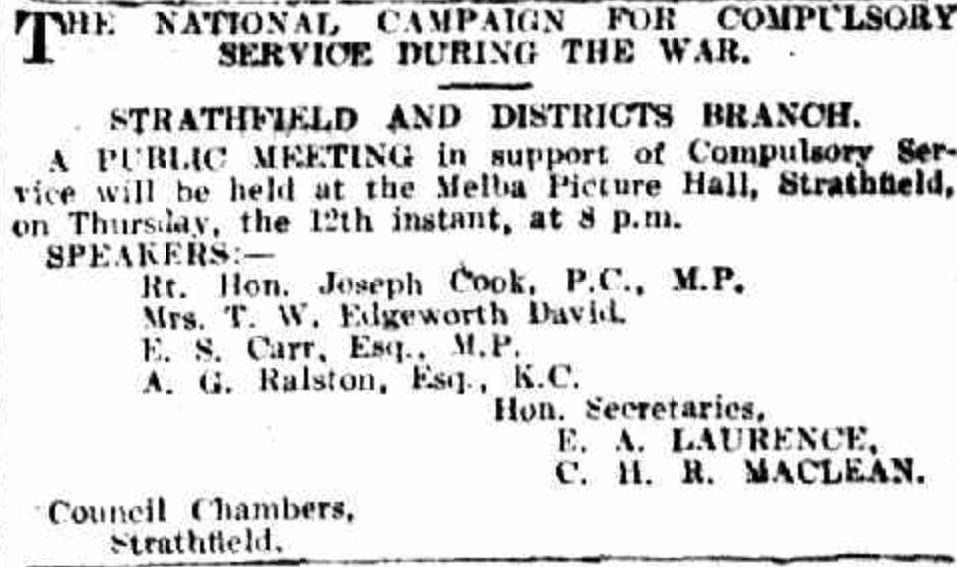
A pro-conscription meeting was held on Wednesday 11 October 1916 at Homebush at Railway Station near A G Ball’s Chemist Shop with Sgt Morehouse and W A Windeyer , at Enfield (opposite Ireland’s Hotel) with W E V Robson MLA and Alexander Ralston. A large pro-conscription gathering was held at the Strathfield Melba Picture Show on October 1916 with the key speaker former Prime Minister Joseph Cook and Alexander G Ralston, barrister. Cook in his address argued for the need of conscription to recruit sufficient men to win the war. Alderman John Price of Strathfield Council told the gathering that the ‘said question to be decided was whether ……we were going to place Australia on a pinnacle of fame, or whether we should be disgraced forever among the nations’.
The referendum question on 28 October 1916, asked the nation ‘Are you in favour of the government having in this grave emergency, the same compulsory powers over citizens in regard to requiring their military service, for the term of this war, outside the Commonwealth, as it now has in regard to military service within the Commonwealth?’
In 1916, the areas of Strathfield and Homebush were located in the Homebush sub-division of the Electorate of Nepean. Polling booths were located at Flemington Public School, Homebush Public School, South Strathfield Public School and a temporary structure in Redmyre Road near The Boulevarde . While the Yes vote in the Nepean Electorate lost by a majority of 4272, the Homebush sub-division which included Strathfield defied the trend across the electorate and voted Yes (63%) for the referendum. The Yes vote in the Homebush subdivision was the highest in the Nepean electorate .
Enfield and Burwood were sub-divisions of the Electorate of Parkes in the 1916 Referendum. Polling booths were located at Enfield Council Chambers, Croydon Public School, Burwood Public School and Milham’s Hall, Water St, West Enfield .
The results of the 1916 plebiscite were very close. 51.6% of the population voted against conscription and 48.4% for it. New South Wales returned majorities against and without a majority of states, the referendum was defeated.
In the ensuing political fall-out, the Labor Party split and Hughes formed a new political party called the Nationalist Party from the pro-conscriptionist Labor members. The Labor Party was severely divided on the issue and split within weeks of the ballot. After leaving the party, Prime Minister Hughes and other pro-conscription supporters created the ‘National Labor Party’, which was in competition with the Labor Party.
Enlistment numbers continued to fall, and in 1917 Hughes called for a second referendum for 20 December 1917. The second referendum also failed to pass.
The debates concerning the second referendum were ‘vindictive and vicious’ following the aftermath of the great strikes in August and September 1917 and Third Battle of Ypres . Hughes increased restrictions on reporting of anti-conscriptionist meetings, but ordered censors not to interfere with pro-conscriptionist reporting in the Sydney Morning Herald . The ‘Yes’ campaign was strongly supported by Hughes and his political supporters, most Church and business leaders, and most newspapers . Many in the ‘Yes’ camp hysterically portrayed anti-conscriptionists as the ‘enemy within’ .
The ‘No’ camp centred on the labour movement, many arguing that conscripting more men from Australia would have negligible impact on the fighting abroad and the final result . While the union movement were short of funds after the recent strikes, the ‘no’ campaign was well organised based on its experience from the 1916 campaign.
In an announcement made on Monday 3 April 2023 the Arts Minister Tony Burke and Finance Minister Katy Gallagher has ended any funding uncertainty over the future of Trove. Trove is a much used and beloved online access to a wide range of Australia’s cultural and social historical documents, photos, magazines etc.
The National Library will receive $33m over the next four years in the May Federal budget, then $9.2m per annum ongoing and indexed from July 2027, securing Trove’s future.
The Historic Houses of Strathfield exhibition will open on 20 December 2022 until 22 January 2023 at the Ironbark Gallery at Strathfield Library.
Historic Houses of Strathfield explores the rise of the mansion houses in late 19th century and their eventual fate in the 20th and 21st centuries. The stories of the houses and the associated people also reflect the social, economic and political changes which occurred over a century of development in the Strathfield area.
This exhibition will include photos, maps, videos and illustrations.
Talk and Afternoon Tea
An afternoon tea and talk will be held on Sunday January 22 2023 at 2pm – 3.30pm at Strathfield Library.
The November-December 2023 Newsletter features an article on Nigel Love and NB Love Industries which is still operating in Strathfield South.
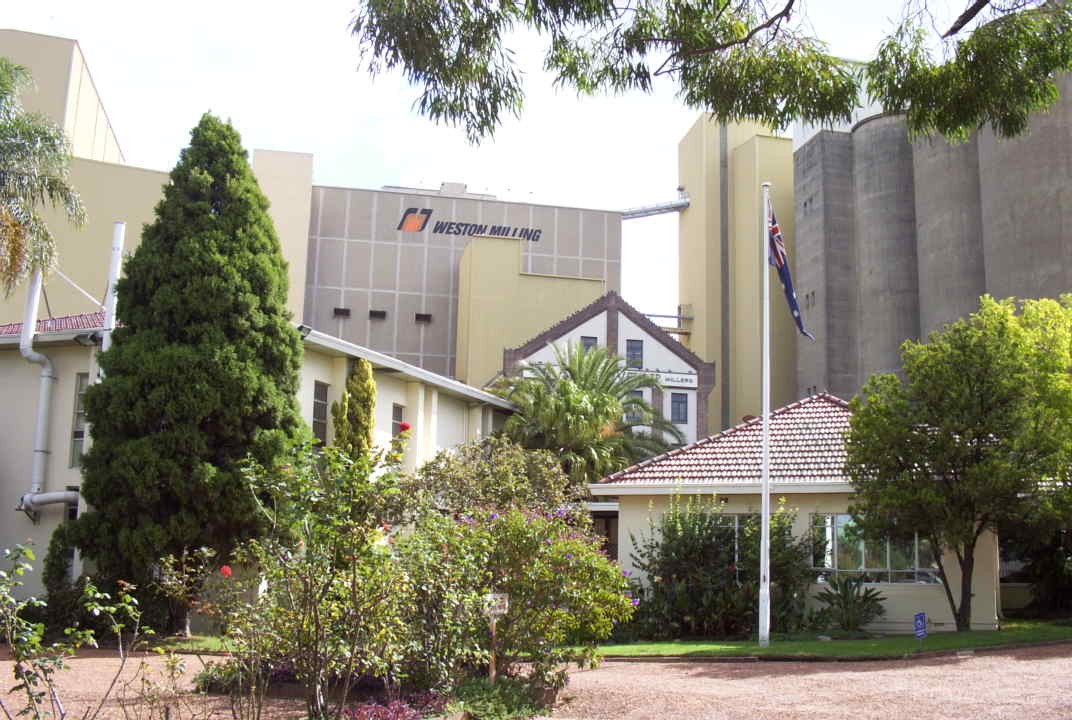
Nigel Love was an important figure in the history of aviation and flour milling in Australia. He was born in Strathfield and spent much of life as a resident but also as founder of N B Love Industries at Enfield in 1935, a major local industry and employer which still trades at the same site today under George Weston Foods.
A resident of Strathfield, Ethel Lilleblade, recorded her memories of the shopping centre at Strathfield during the 1930s and 1940s for the Strathfield District Historical Society. These were handwritten and undated but likely to be written in the 1980s. She died in 1990 at the age of 86 years.
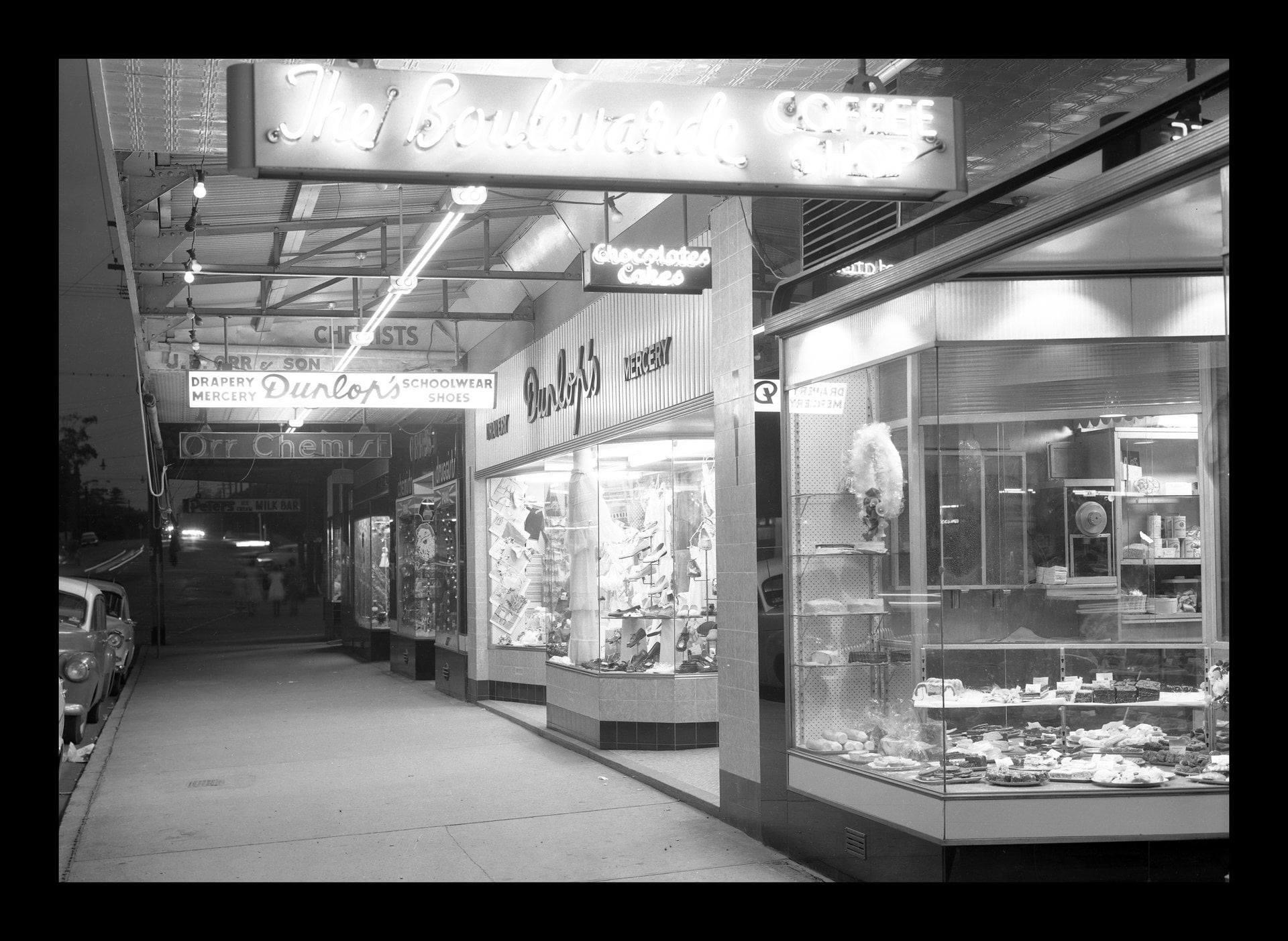
Strathfield Shops c.1930s The Boulevarde
Come with me to The Boulevarde, our shopping centre in the 1930s and 1940s. Remember Mr Jones with his cab (Horse drawn) at the station, sometimes sitting up top and sometimes asleep inside. He retired about 1936 to Narrabeen where he and his son started at the bus run from Narrabeen to Newport. Then across the road to the Rainbow Cake shop. Oh! Those delicious small cakes and sponges. On the corner Cameron and Kentwell, estate agents, Mr Clem Moore would greet you with “Good Morning”.
Alan Clancy, the Chemist who later moved to another shop, and next door, Max Nisbett’s library and interesting curios, Scobles the florist with their dainty work always held my interest, another chemist then – T. H. Dick. Maybe next door it was Lee Jones and family with the delicatessen where I always stopped for fresh homemade brawn. Gumby’s family butcher was always of interest to the children watching sides been cut up. Then the entrance to the professional suites where Dr Mary Manery had her rooms.
Jack O’Shea’s hairdressing ladies and men’s salon was always a bright place to visit and oh what a pleasure it was to visit the shop of Mr and Mrs Dunlop where chairs were provided for you whilst choosing your goods. The newsagent and bookshop was also a good place to spend some time in. Garden and Patrick, another florist, then Riddles the plumbers and Lusty’s Wood Coal and Coke yard. We just had to shop at Keary’s mixed business, where the children had to take a dip into the big lolly jars. On the eastern side Shaughnessy’s Milk Bar held pride of place, where the scouts would gather after their meeting, Scobles delicatessen where you watch your ham being sliced so thinly it nearly melted in your mouth.
The men and the boys liked Stan Richards store where they could buy their odds and ends for sport and the fishing gear. The fish and chip shop held the children as in the window was a model of a paddlewheel steamer with Popeye guiding it into the water but it never seemed to go anywhere. Mr Hinks, Dry Cleaner and Manton Driving School came next. Pattens grocery store, where it was interesting to see the butter being cut up with wire and it always seem to have a little more patted on to the top to make the weight right.
Treasure Island‘s first shop, which burnt down but later was reopened along further, Natali’s fruit and vegetable store, and a few more shops to the Bank of New South Wales which opened about 1935.
Across Lyon’s Rd, to Alley’s store where you could buy most anything you needed, and Dance bros garage is still there. Don’t let us forget Mr Ottway, the Postmaster and one of his helpers, Mr Ryan.
Being well into my 80s I may have placed some stores in the wrong place and side, but these are the stores I mainly dealt with and oh for those storekeepers who took pleasure to deliver the goods, sometimes they were at my home before I was there and the children rush to get the cornucopia of boiled lollies. Then the war came and then many stopped delivering to the homes. These are just a few memories of the early shopping days.
 The Strathfield Town Hall celebrates the 100th anniversary of its opening on October 9 2023. The Town Hall has recently had significant restoration works.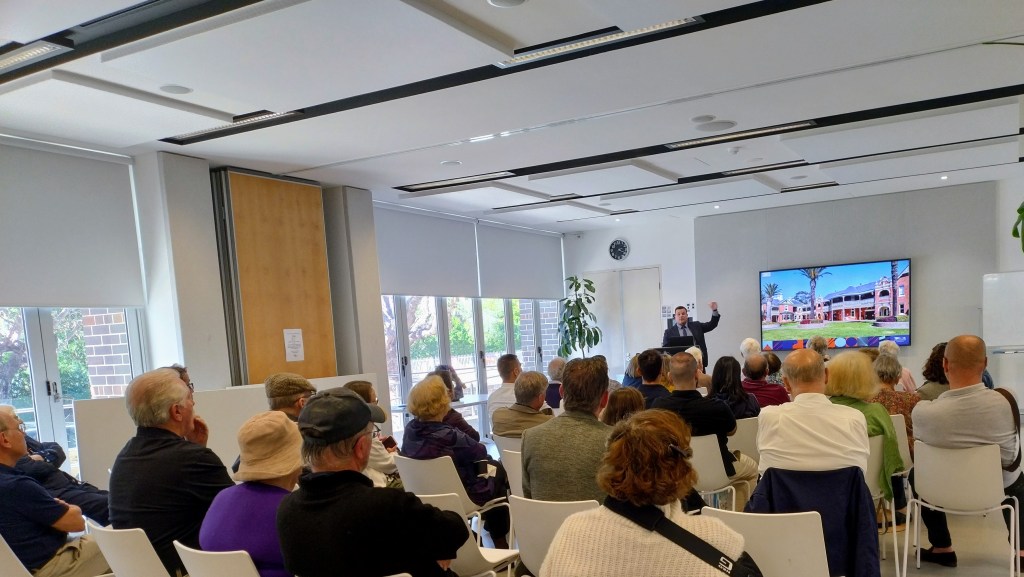

 Enfield and Burwood were sub-divisions of the Electorate of Parkes in the 1916 Referendum. Polling booths were located at Enfield Council Chambers, Croydon Public School, Burwood Public School and Milham’s Hall, Water St, West Enfield .

 Strathfield-Homebush District Historical Society