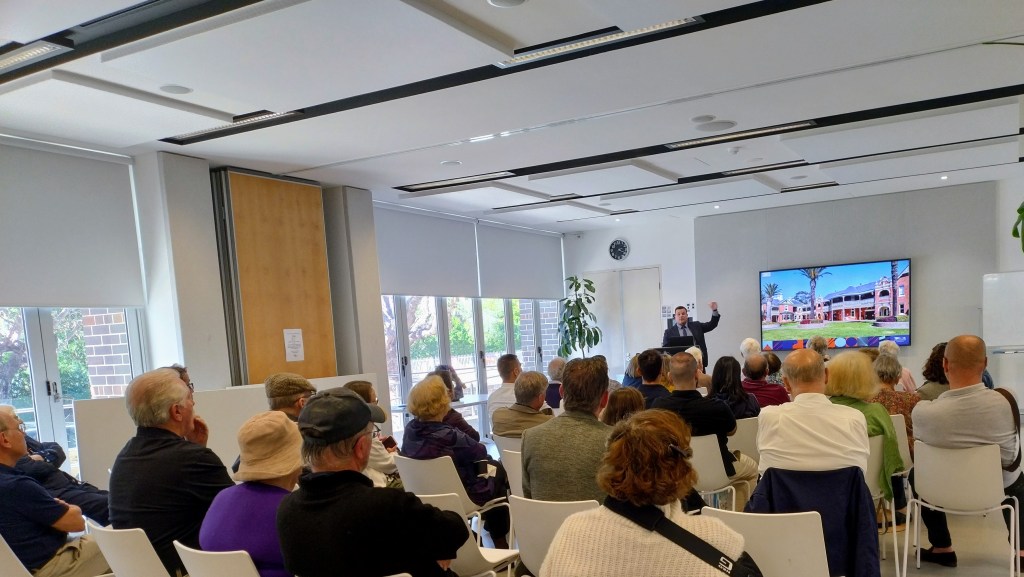
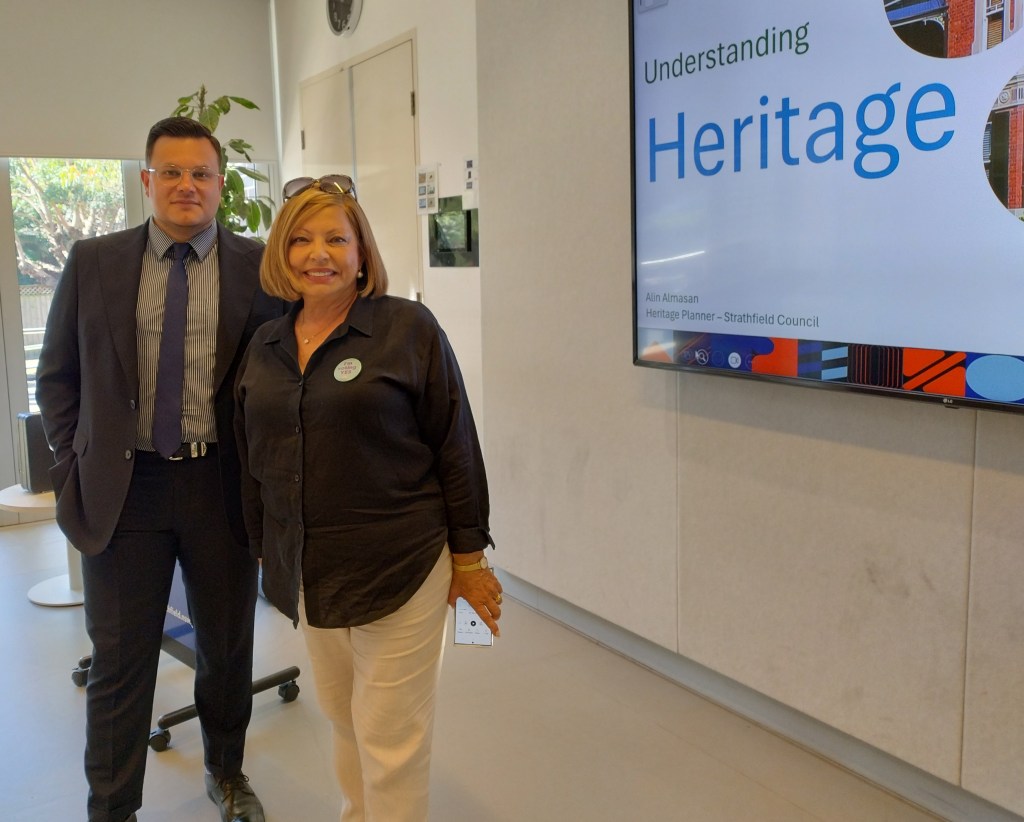
Thanks to everybody who attended the ‘Understanding Heritage’ talk yesterday at Strathfield Library. The afternoon session was opened by the Mayor of Strathfield Karen Pensabene followed by the talk by Alin Almasan, Strathfield Council’s Heritage Advisor, on heritage in the Strathfield area.
The talk provided an overview of heritage in the Strathfield area, many tips on maintaining older buildings and processes for development consent for alterations to heritage properties. The session was presented by the Strathfield Homebush District Historical Society, with support from Strathfield Council.
The booking system is not working properly. If you want to come, please attend on the day. There should be space. Any problems, contact Cathy on 96421345 or email strathfieldhistory@gmail.com
A talk ‘Understanding Heritage’ will be held at 2pm Sunday 24 September by Strathfield’s Council’s Heritage Advisor.
Join us for a talk that discusses the diversity of Strathfield’s cultural and built heritage and provides tips on how to maintain residential heritage properties. This in-person event will take place on Sunday Sep 24 2023 at 2pm.
We invite you to attend an interesting talk and afternoon tea. This is a free event.
Also submit any history questions (relating to the Strathfield district) prior to the talk and hopefully we may have the answers!
Location: 65-67 Rochester Street, Homebush
Don’t miss out on this unique opportunity to expand your knowledge and gain a fresh perspective on our shared heritage. Mark your calendars and join us for an afternoon of learning. We can’t wait to see you there!
This event is organised by the Strathfield-Homebush District Historical Society. Thanks to Strathfield Council for their support.
Any inquiries, contact Cathy Jones at strathfieldhistory@gmail.com or phone 96423145
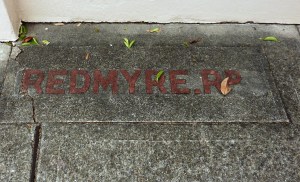
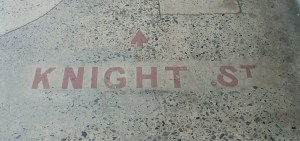
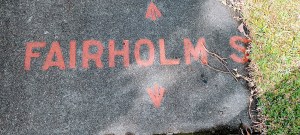
There are still some streets with the historic red lettering in the Strathfield area. Strathfield Council started installing metal plate street signs in the early 1920s along with numbering of streets. There was an old metal street sign on a pole on Albert Road, near Homebush Road.
The majority of early footpaths appear to have been asphalted, while concrete was used on footpaths near shops with heavy foot traffic. Council required that the owner contribute 50% of costs.
There is reference to the installation of the red lettered street names on footpaths in Strathfield Council minutes in 1926. It is likely that as footpaths were increasingly concreted that lettering was added. The lettering was embedded into the concrete and was red coloured in contrast to the surrounding concrete. The red letters were made by a contractor and was held together by a wire formwork when the letters were set into the concrete. The footpath names are not stencilled.
It is unsure when Council stopped installing street name lettering on footpaths, however the practice of installing lettering on pavements was not unique to Strathfield Council. In Woollahra Council and parts of the former Municipality of Petersham (Petersham, Lewisham and Stanmore) which is now part of Inner West Council, street names were frequently embedded into footpaths.
ANZAC Day is commemorated on 25th April each year. It marks the anniversary of the first major military action fought by Australian and New Zealand forces during World War 1. This March-April 2023 SHDHS newsletter features an essay by Cathy Jones discussing the impact of the World War 1 in the Strathfield district, particularly enlistment and the Conscription Referendums of 1916 and 1917.
An excerpt from the Newsletter:
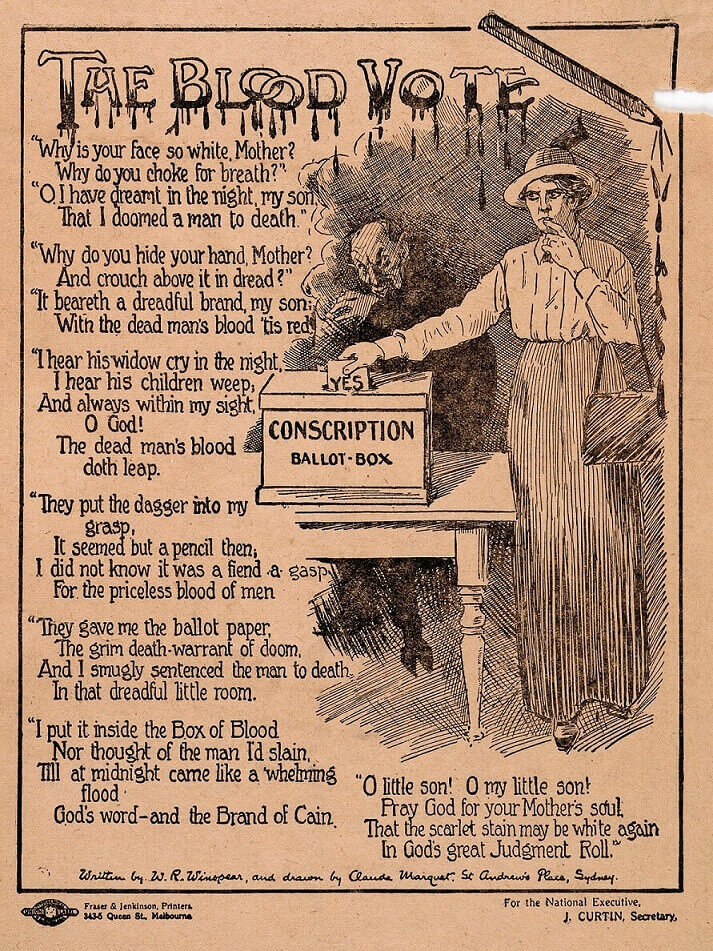
“With the outbreak of World War 1 in 1914, recruitment of men and women to serve in the Australian Imperial Forces was on a voluntary basis only. Despite intense and divisive campaigns in Australia to introduce conscription to allow compulsory overseas military service, only Australia, South Africa, and India of the countries participating in the conflict did not introduce conscription during World War I.
The proposal to introduce conscription provoked furious debate within the Australian and local community. Both pro and anti-conscription meetings were held in Strathfield, Homebush and Enfield. Meetings and rallies for and against conscription were held in Strathfield prior to the 1916 plebiscite. An anti-conscription meeting was held in Strathfield on 19 October 1916. However, meetings and rallies against conscription appear to be out-numbered by those supporting conscription.
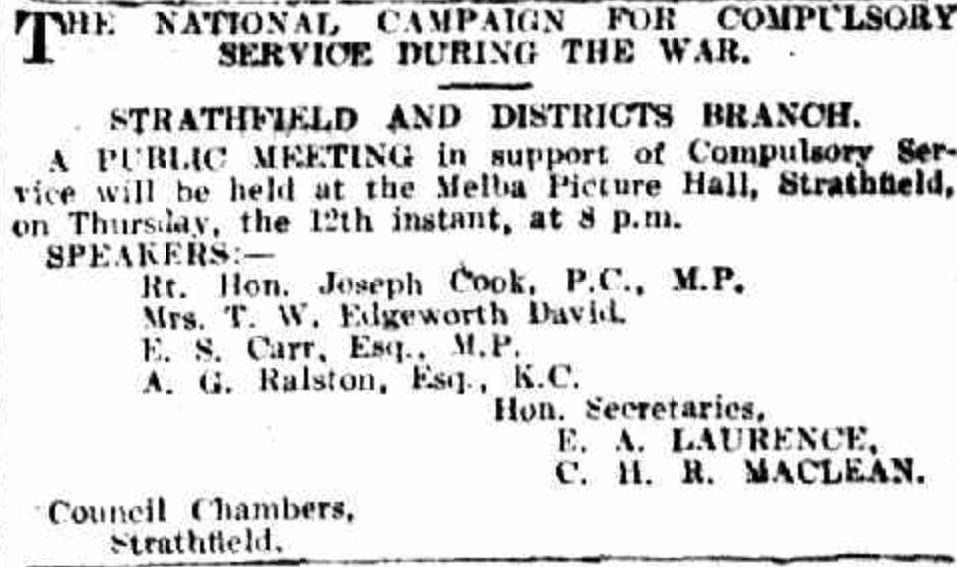
A pro-conscription meeting was held on Wednesday 11 October 1916 at Homebush at Railway Station near A G Ball’s Chemist Shop with Sgt Morehouse and W A Windeyer , at Enfield (opposite Ireland’s Hotel) with W E V Robson MLA and Alexander Ralston. A large pro-conscription gathering was held at the Strathfield Melba Picture Show on October 1916 with the key speaker former Prime Minister Joseph Cook and Alexander G Ralston, barrister. Cook in his address argued for the need of conscription to recruit sufficient men to win the war. Alderman John Price of Strathfield Council told the gathering that the ‘said question to be decided was whether ……we were going to place Australia on a pinnacle of fame, or whether we should be disgraced forever among the nations’.
The referendum question on 28 October 1916, asked the nation ‘Are you in favour of the government having in this grave emergency, the same compulsory powers over citizens in regard to requiring their military service, for the term of this war, outside the Commonwealth, as it now has in regard to military service within the Commonwealth?’
In 1916, the areas of Strathfield and Homebush were located in the Homebush sub-division of the Electorate of Nepean. Polling booths were located at Flemington Public School, Homebush Public School, South Strathfield Public School and a temporary structure in Redmyre Road near The Boulevarde . While the Yes vote in the Nepean Electorate lost by a majority of 4272, the Homebush sub-division which included Strathfield defied the trend across the electorate and voted Yes (63%) for the referendum. The Yes vote in the Homebush subdivision was the highest in the Nepean electorate .
Enfield and Burwood were sub-divisions of the Electorate of Parkes in the 1916 Referendum. Polling booths were located at Enfield Council Chambers, Croydon Public School, Burwood Public School and Milham’s Hall, Water St, West Enfield .
The results of the 1916 plebiscite were very close. 51.6% of the population voted against conscription and 48.4% for it. New South Wales returned majorities against and without a majority of states, the referendum was defeated.
In the ensuing political fall-out, the Labor Party split and Hughes formed a new political party called the Nationalist Party from the pro-conscriptionist Labor members. The Labor Party was severely divided on the issue and split within weeks of the ballot. After leaving the party, Prime Minister Hughes and other pro-conscription supporters created the ‘National Labor Party’, which was in competition with the Labor Party.
Enlistment numbers continued to fall, and in 1917 Hughes called for a second referendum for 20 December 1917. The second referendum also failed to pass.
The debates concerning the second referendum were ‘vindictive and vicious’ following the aftermath of the great strikes in August and September 1917 and Third Battle of Ypres . Hughes increased restrictions on reporting of anti-conscriptionist meetings, but ordered censors not to interfere with pro-conscriptionist reporting in the Sydney Morning Herald . The ‘Yes’ campaign was strongly supported by Hughes and his political supporters, most Church and business leaders, and most newspapers . Many in the ‘Yes’ camp hysterically portrayed anti-conscriptionists as the ‘enemy within’ .
The ‘No’ camp centred on the labour movement, many arguing that conscripting more men from Australia would have negligible impact on the fighting abroad and the final result . While the union movement were short of funds after the recent strikes, the ‘no’ campaign was well organised based on its experience from the 1916 campaign.
In an announcement made on Monday 3 April 2023 the Arts Minister Tony Burke and Finance Minister Katy Gallagher has ended any funding uncertainty over the future of Trove. Trove is a much used and beloved online access to a wide range of Australia’s cultural and social historical documents, photos, magazines etc.
The National Library will receive $33m over the next four years in the May Federal budget, then $9.2m per annum ongoing and indexed from July 2027, securing Trove’s future.
The Historic Houses of Strathfield exhibition will open on 20 December 2022 until 22 January 2023 at the Ironbark Gallery at Strathfield Library.
Historic Houses of Strathfield explores the rise of the mansion houses in late 19th century and their eventual fate in the 20th and 21st centuries. The stories of the houses and the associated people also reflect the social, economic and political changes which occurred over a century of development in the Strathfield area.
This exhibition will include photos, maps, videos and illustrations.
Talk and Afternoon Tea
An afternoon tea and talk will be held on Sunday January 22 2023 at 2pm – 3.30pm at Strathfield Library.
The Strathfield-Homebush District Historical Society has installed historic plaques throughout Strathfield to commemorate historical places. These plaques were installed by the Historical Society:
Plaque located in Cotswold Road Strathfield outside ‘Strathfield Gardens’ (formerly ‘Fairholm’ built c.1880)
Plaque located in Strathfield Avenue Strathfield where the house ‘Strathfield’ was formerly located
Plaque located at 24 Homebush Road Strathfield outside the house ‘Verani’
Plaque located at 65 Homebush Road Strathfield outside the Strathfield Council Chambers built 1887
Plaque located on Homebush Road near where ‘Seven Oaks Farm’ first house on the 1867 Redmire Estate was located
Seven Oaks Farm plaque. Photo Cathy Jones 2022
‘Fairholm’ brass plaque installed on naturestrip outside the former house ‘Fairholm’ c.1880. Erected 2000
Plaque erected in Strathfield Avenue near the site of the original Strathfield House x.1868. Erected in 2000
The November-December 2023 Newsletter features an article on Nigel Love and NB Love Industries which is still operating in Strathfield South.
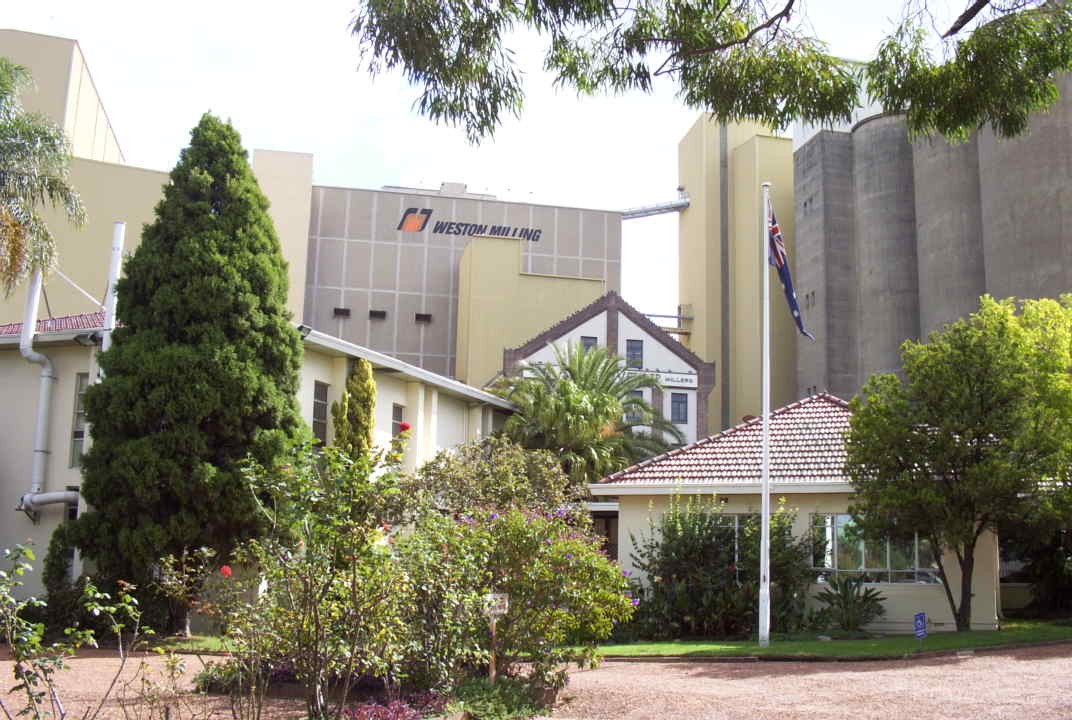
Nigel Love was an important figure in the history of aviation and flour milling in Australia. He was born in Strathfield and spent much of life as a resident but also as founder of N B Love Industries at Enfield in 1935, a major local industry and employer which still trades at the same site today under George Weston Foods.
Figure 3 Newcastle Morning Herald and Miners’ Advocate (NSW : 1876 – 1954), Saturday 6 February 1954, page 4
The September-October 2022 Newsletter features an article on the auction of ‘Arnott-Holme’ as well as the Society Year in Review and the death of Queen Elizabeth.
On 8 September 2022, Elizabeth II, Queen of the United Kingdom and the other Commonwealth realms, including Australia, and the oldest living and longest-reigning British monarch, died at the age of 96 at Balmoral Castle in Scotland. She was succeeded by her eldest child, Charles. Charles III was proclaimed King Charles as head of state of Australia on 11 September 2022 at a ceremony at Parliament House in Canberra.
A state funeral service was held for the Queen at Westminster Abbey on 19 September 2022, followed by a committal service later that day at St George’s Chapel at Windsor Castle. The Queen was interred in the King George VI Memorial Chapel at St George’s. A commemorative public holiday was announced in Australia for the 22 September 2022.
The Queen celebrated her 70th Anniversary or Platinum Jubilee of her ascension to the throne earlier in 2022. The Queen visited Australia on sixteen occasions. She is not known to have visited the Strathfield district, though on her 1954 tour, she visited the nearby Concord Park and the then Concord Repatriation Hospital (now Concord Hospital).
The Prime Minister of Australia, Anthony Albanese said:
“With the passing of Queen Elizabeth the Second, an historic reign and a long life devoted to duty, family, faith and service has come to an end. This is a morning of sadness for the world, for the Commonwealth and all Australians. It is a day of profound sadness and grief for the Royal Family who have lost a beloved mother, grandmother and great-grandmother. The person who for so long was their greatest inner strength.
Australian hearts go out to the people of the United Kingdom who mourn today, knowing they will feel they have lost part of what makes their nation whole. It is a time of mourning for the people in Britain, across the Commonwealth, and indeed around the world. There is comfort to be found in Her Majesty’s own words: “Grief is the price we pay for love.”
This is a loss we feel deeply in Australia. Queen Elizabeth II is the only reigning monarch most of us have known—and the only one to ever visit Australia. And over the course of a remarkable seven decades, Her Majesty was a rare and reassuring constant amidst rapid change. Through the noise and turbulence of the years, she embodied and exhibited a timeless decency and an enduring calm. Her Majesty served our nation and the Commonwealth for 70 years.
She is the longest-reigning monarch in British history and, remarkably, the second longest reigning monarch of a sovereign state in world history. Her life of faithful service will be remembered for centuries to come. From the moment the young princess became Queen, Her Majesty’s dedication to duty and service over self were the hallmarks of her reign. Performing her duty with fidelity, integrity, and respect for everyone she met. We saw those qualities each time she visited our shores — and she graced us on 16 occasions during her reign, travelling to every state and territory across our vast continent.
Her first visit, with Philip, began on the 3rd of February 1954 — just eight months after her coronation. It was the biggest single event ever organised in Australia and it remains a defining moment in our nation’s history. Some 7 million Australians — or 70 per cent of our population at the time — turned out to catch a glimpse of the young Queen passing by. Queen Elizabeth II was a wise and enduring presence in our national life. Sixteen prime ministers consulted with her – and sixteen governors-general served in her name.
The Strathfield-Homebush District Historical Society has become aware of the proposed auction of ‘Arnott Holme’, 65-69 Albert Road Strathfield by estate agents, Belle Property. Until recently, this property was a Technical and Further Education (TAFE) education office, which is owned by the NSW Government. This property was purchased in 1954 for £12,000 by the NSW Department of Education for the purposes of establishing a school for disabled children. Though the use of the premises later changed to a TAFE education office, the property has been maintained in the Strathfield area for nearly 70 years as a public educational institution. it is obvious from the response of many concerned local residents that there has been no community consultation regarding the sale of this publicly owned asset. The Sydney Morning Herald reported on October 28 2021 that up to 19 TAFE campuses across NSW have been earmarked for sale. The Strathfield property was not mentioned in the article or other public reporting. Therefore, the erection of an auction notice on the site, has generated significant public concern about the future of the property and the privatisation of a publicly owned asset.
Given the increases in population and demand for community facilities in the Strathfield area, why is the NSW Government able to sell off public assets without any notification, any apparent consideration about potential community uses of the property or any consultation with the local community? These assets were acquired and have been maintained from public funding. If TAFE no longer needs the facility, why not commence discussions with other public agencies or Strathfield Council regarding utilisation of the property for community use?
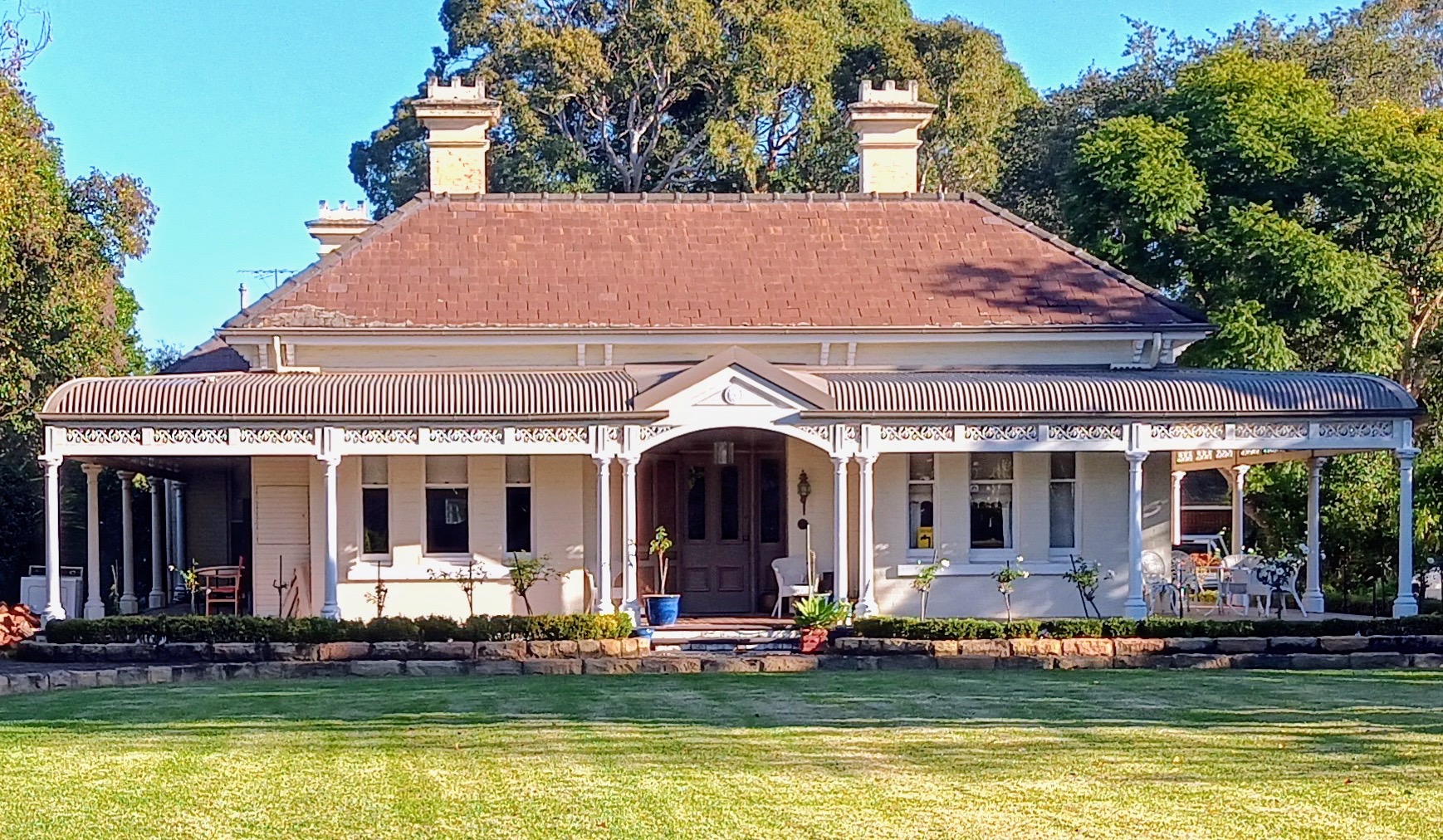
The property has significant historical and heritage value to the local community. It is a heritage item listed on Strathfield Council’s Local Environmental Plan and is recognised by the Australian Institute of Architects (AIA) Register of Significant Buildings in NSW as an item of historical and heritage significance.
‘Arnott Holme’ was built in 1900 as a home for its owner William Arnott, founder of Arnott’s Biscuits, Australia’s largest biscuit company. The Federation style house occupies a large site set within a mature garden landscape. After Arnott’s death and until it was sold in 1954 to the Department of Education, it was owned and/or occupied by a number of prominent residents including Harry Jackett MP and Arthur Cozens, a tobacco merchant.
The Society has sent a letter to the Member for Parliament for Strathfield, Jason Yat Sen-Li, requesting representations are made to the NSW Government and Department of Education regarding this process, which appears to have not included any transparency regarding the closure of the TAFE office and plans for disposal of a public asset.

 Enfield and Burwood were sub-divisions of the Electorate of Parkes in the 1916 Referendum. Polling booths were located at Enfield Council Chambers, Croydon Public School, Burwood Public School and Milham’s Hall, Water St, West Enfield .




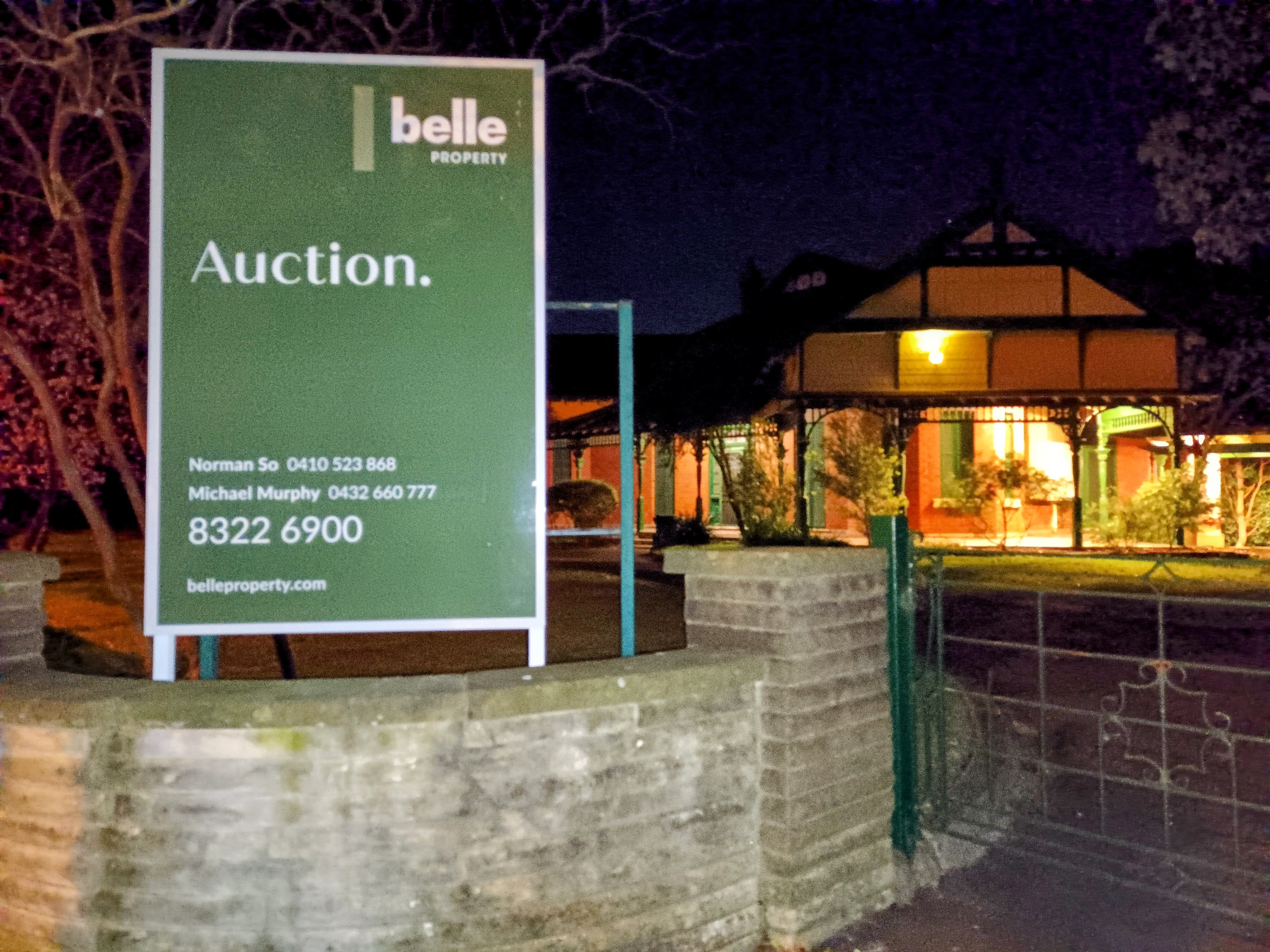 The Strathfield-Homebush District Historical Society has become aware of the proposed auction of ‘Arnott Holme’, 65-69 Albert Road Strathfield by estate agents,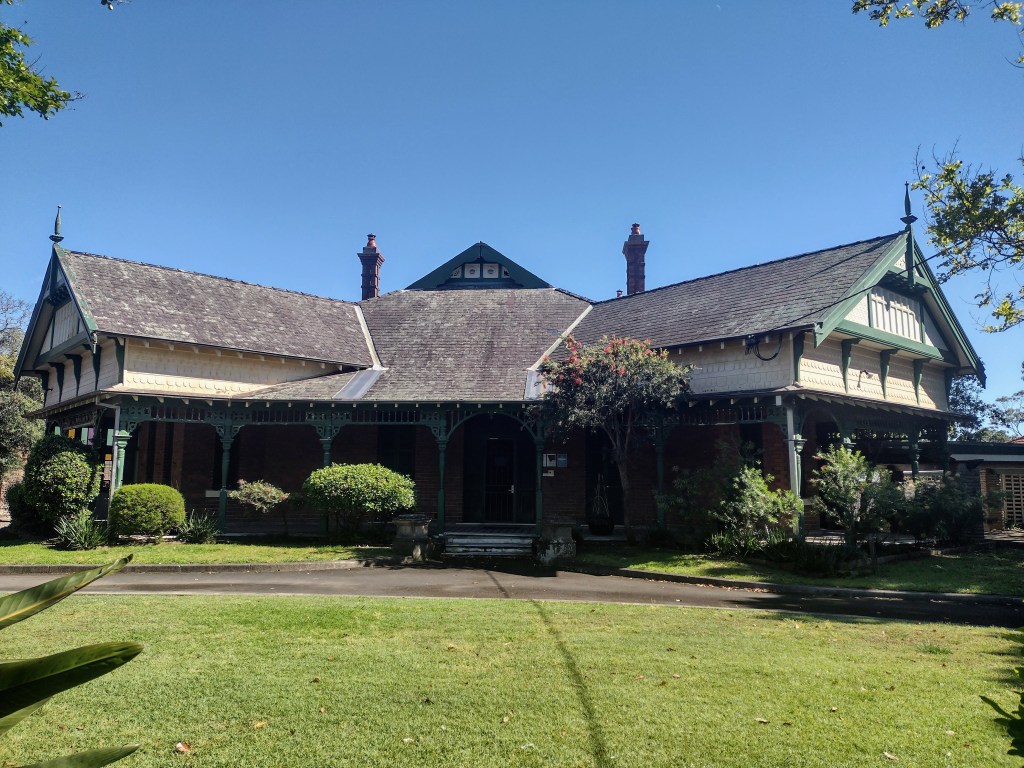


 Strathfield-Homebush District Historical Society